
How fresh is this fish?
New mathematical model predicts fish freshness in real time
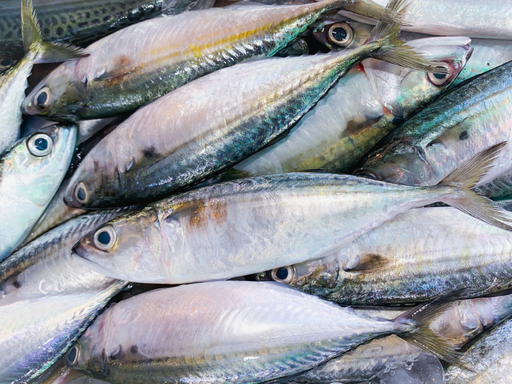
Every day, fish caught in oceans and seas around the world pass through a long journey before reaching supermarkets, restaurants, and home kitchens. Along the way, their freshness steadily declines, often in ways that are difficult to detect. Now imagine being able to measure how fresh a fish is at any point along this journey. Researchers at Hokkaido University have developed a mathematical model that can do exactly this. The latest development could help reduce food waste and improve seafood quality.
“As is well known, the freshness of fish and shellfish begins to deteriorate immediately after death, but these changes are difficult to track across complex distribution networks,” says Associate Professor Naoto Tsubouchi of Hokkaido University. “As a result, appropriate decisions cannot always be made accurately because the time-dependent changes related to freshness are not fully understood.”
This uncertainty affects not only the safety and quality of fish, but also its economic value. Decisions about pricing, storage, and transport are often made without precise information, affecting logistics and inventory across retail seafood centers, fishmongers, supermarkets, conveyor-belt sushi restaurants, and convenience stores—often leading to inefficiencies and unnecessary waste.
The new study, published in the Journal of Food Engineering, introduces a mathematical model based on the well-known degradation pathway of adenosine triphosphate (ATP) in fish muscle after death. “When a fish dies, the ATP stored in its muscle tissue undergoes sequential decomposition, and we used this naturally occurring process to create a predictive mathematical model,” explains Tsubouchi.
By describing this biochemical process mathematically through what is known as the K-value, the model can help estimate the current freshness of a fish and predict how it will change over time. So, it can tell you not only how fresh a fish is now but also how fresh it will be hours or days later.
More than 60 years ago, a freshness index based on the K-value was first proposed by researchers at Hokkaido University. Today, it is used globally as a scientific indicator of fish freshness. However, conventional methods for estimating the K-value require sampling fish tissue and analysing it in the laboratory, making the process time-consuming and destructive. The new model instead predicts the K-value by modelling ATP degradation. It uses basic information like fish species, storage time, and temperature to offer a non-destructive and potentially real-time alternative.
Because the same biochemical pathway also determines fish taste, the new model can provide insight into fish quality as well. Inosinic acid (IMP) is a compound that is produced during the ATP degradation pathway, and which contributes to the desirable umami flavour. Some other late-stage compounds in this pathway are associated with bitterness and off-odours. This means the model can estimate both freshness and flavour.
The researchers tested the model across multiple fish species, including mackerel, and found that its predictions closely matched the measured freshness values in the laboratory. “This research shows that a single model structure can be applied across multiple fish species, while maintaining predictive accuracy,” Tsubouchi notes.
The researchers have patented related aspects of the technology in multiple countries and see its future application in sensor devices and automated freshness monitoring systems.
Seafood supply chains are expanding globally, with increasing exports and long-distance distribution. Here, the new model could support real-time monitoring systems that can estimate remaining shelf life, reduce waste, and improve decision-making across the industry.
Original article:
Yuji Shinohara et al., Predictive model for estimating fish freshness based on adenosine triphosphate degradation in marine fish: Application to Atka mackerel (Pleurogrammus azonus). Journal of Food Engineering. January 20, 2026. DOI: 10.1016/j.jfoodeng.2026.112987.
Funding:
This work was supported by the Consortium-based Robust Agricultural, Forestry and Fisheries Engineering Research Program, Hokkaido University International Collaborative Research and Education Center for Robust Agriculture, Forestry and Fisheries Engineering.
Contacts:
Associate Professor Naoto Tsubouchi
Laboratory of Chemical Energy Conversion Systems
Center for Advanced Research of Energy and Materials
Faculty of Engineering
Hokkaido University
Email: tsubon[at]eng.hokudai.ac.jp
Megha Kalra
Public Relations & Communications Division
Office of Public Relations and Social Collaboration
Hokkaido University
Email: en-press[at]general.hokudai.ac.jp