

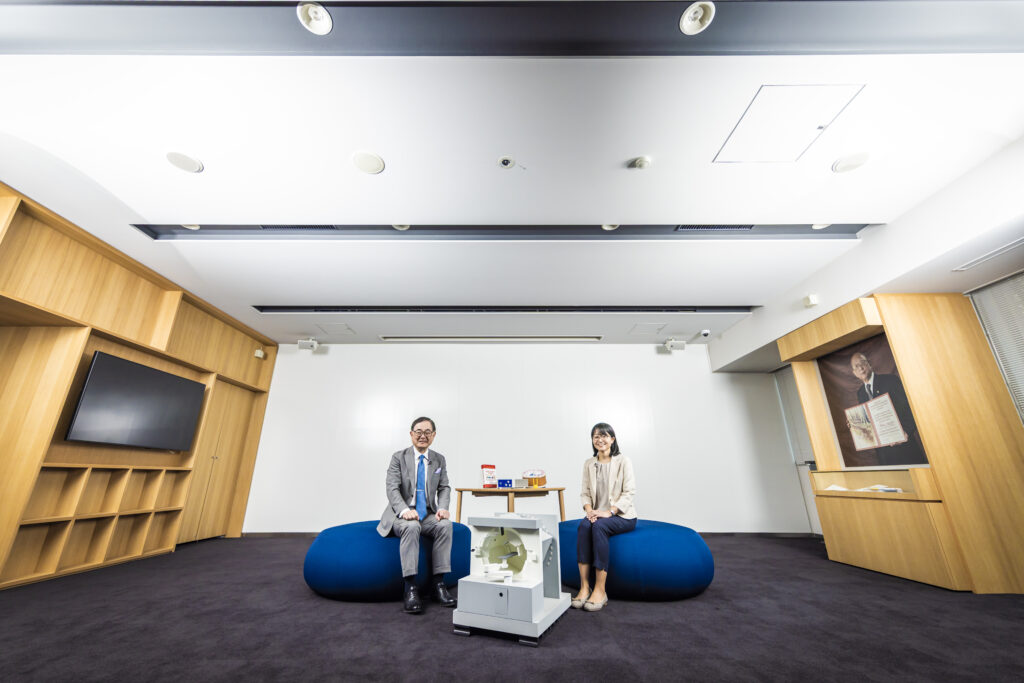
The President’s Adventures in Knowledge-Land is a series in which Hokkaido University president Kiyohiro Houkin, a neurosurgeon, visits fascinating researchers at Hokkaido University.
The fifth installment, titled “Physics at the Forefront of Cancer Therapy”, features a discussion with Professor Taeko Matsuura of the Faculty of Engineering. She applies physics to medicine, engaging in research on proton beam therapy, a promising new option for cancer treatment. Together, they discussed the fascination of her research and the future of medical–engineering collaboration at Hokkaido University.
Childhood Fascination with Space
Houkin: First, could you tell us what led you to the field of radiation therapy? I understand you originally studied physics—when did your interest in medicine begin?
Matsuura: Yes, I graduated from the School of Science and joined a theoretical physics laboratory in graduate school. In my childhood, I was fascinated by space and time, reading works related to Dr. Stephen Hawking and Einstein, and I longed to study physics. At university, I worked on experiments using accelerators, and in graduate school, I researched particle properties.
Matsuura: The turning point came during my postdoctoral work in Italy. At that time, I was uncertain whether to continue pure physics research. I attended a seminar by researchers involved in establishing a proton therapy center. I strongly felt, “If my knowledge of physics can be applied to medicine, I want to pursue that path.” That was when I decided to enter radiation therapy.
Houkin: The application of physics to medicine is truly a symbol of interdisciplinary fusion. For Hokkaido University, having researchers like you is very encouraging.
Protecting Healthy Organs: Proton Beam Therapy
Houkin: Could you explain the features of proton beam therapy used in cancer treatment? How does it differ from conventional radiation therapy?
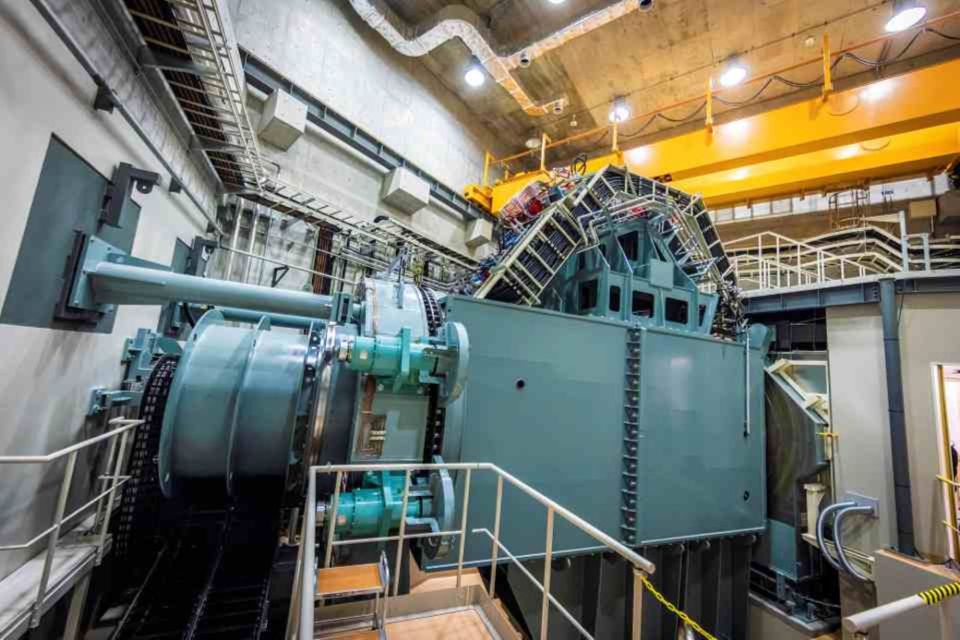
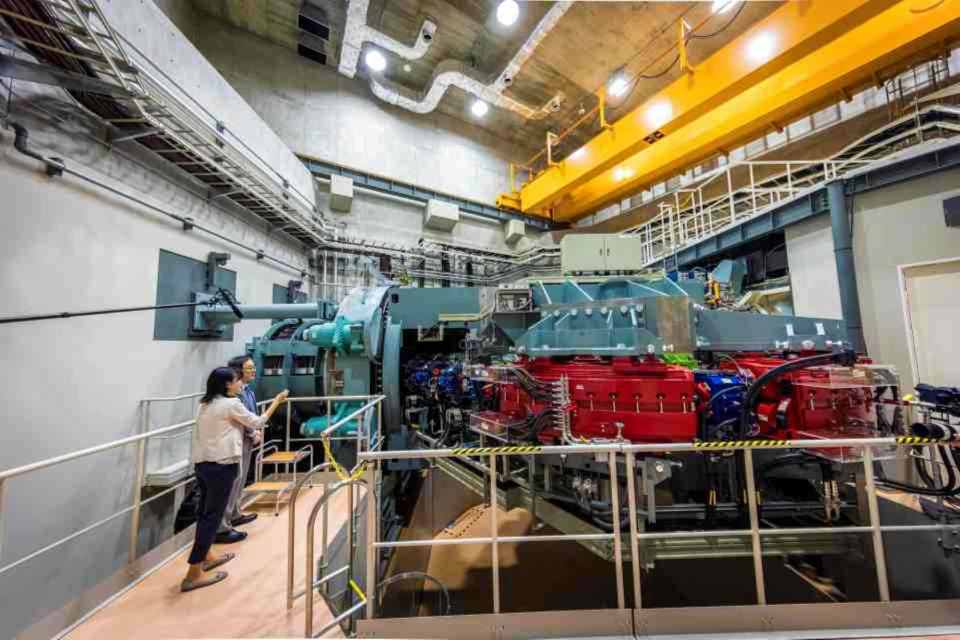
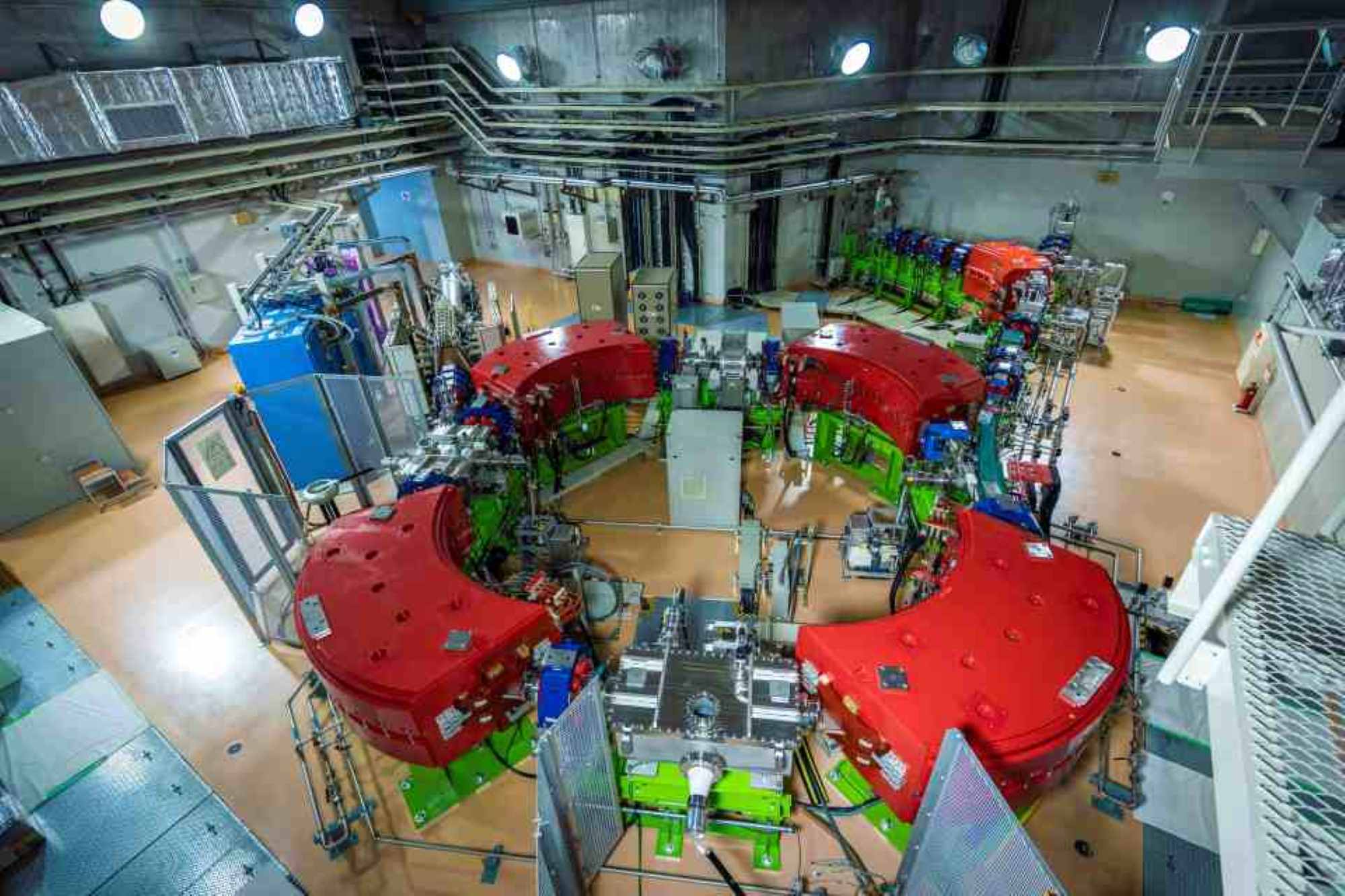
Matsuura: Protons stop at a specific depth inside the body and release concentrated energy there. By aligning the beam with the tumor’s position, we minimize damage to surrounding healthy tissue. Conventional X-ray therapy passes through the body, affecting other healthy tissues as well. Proton therapy overcomes this problem and greatly reduces the adverse effects on patients.
Houkin: So, one advantage is that it is less invasive, correct?
Matsuura: Yes. Currently, we use a technique called spot scanning, which allows us to irradiate the tumor with the proton beam following its shape and deliver the appropriate dose.
Houkin: And in terms of effectiveness compared to conventional radiation?
Matsuura: At the same dose, protons are said to be slightly more effective against tumors. But the greatest benefit is the ability to protect surrounding organs.
Toward the Future of Proton Therapy
Houkin: How are you involved in treatment planning?
Matsuura: Physicians first identify the tumor and organs using CT images. Based on that, we design how to deliver the beam—where to enter and how to concentrate the dose. Much of this is automated, but we continue to research to improve precision.
Houkin: Could you tell us about your current research?
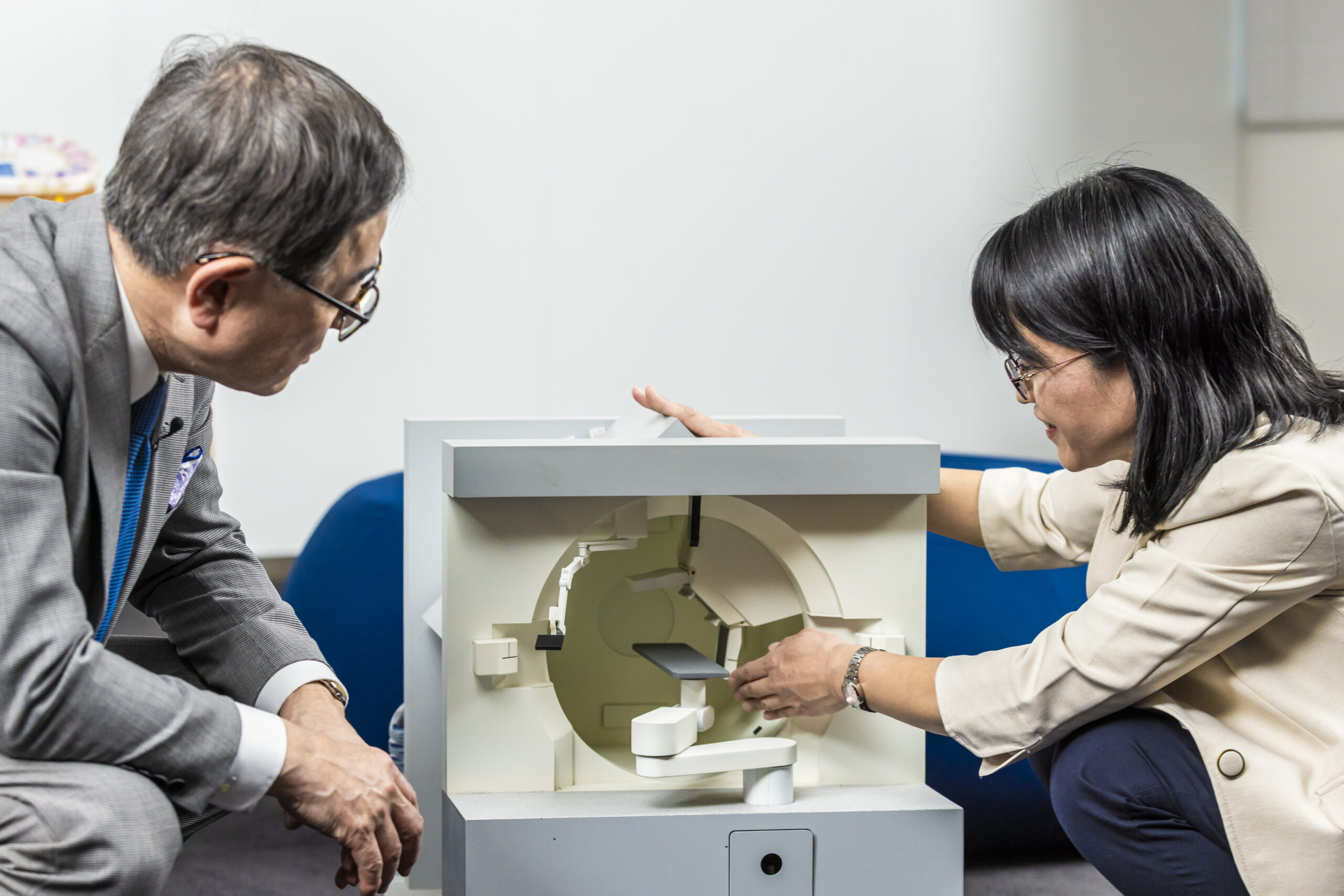
Matsuura: There are two main areas. The first tries to combine MRI with proton therapy equipment. MRI uses magnetic fields to visualize internal structures in real time, allowing us to see organs during irradiation. We are studying how to integrate MRI into the proton beam delivery system, working with manufacturers and conducting numerical simulations.
Houkin: That sounds technically very challenging. MRI uses magnets, and proton therapy also uses magnetic fields to steer beams, which might affect each other. Is it physically possible to combine them?
Matsuura: There are many challenges, but we are progressing step by step. We are working on conceptual designs and simulations.
Houkin: I see. And how do you confirm whether the proton beam actually hit the tumor?
Matsuura: That is my second research area. We are developing a method using ultrasound. When protons strike the tumor, tiny ultrasonic signals are generated. By placing sensors on the patient’s body surface, we can in principle detect these signals and determine where the beam is delivered.
Houkin: What level of accuracy can you achieve?
Matsuura: In homogeneous materials like agar or water, the error is less than 1 millimeter. For organs suitable for ultrasound, this method could be very effective.
Houkin: That’s impressive. It allows precise explanation to patients about where the beam worked.
Ideal Environment for Medical–Engineering Collaboration
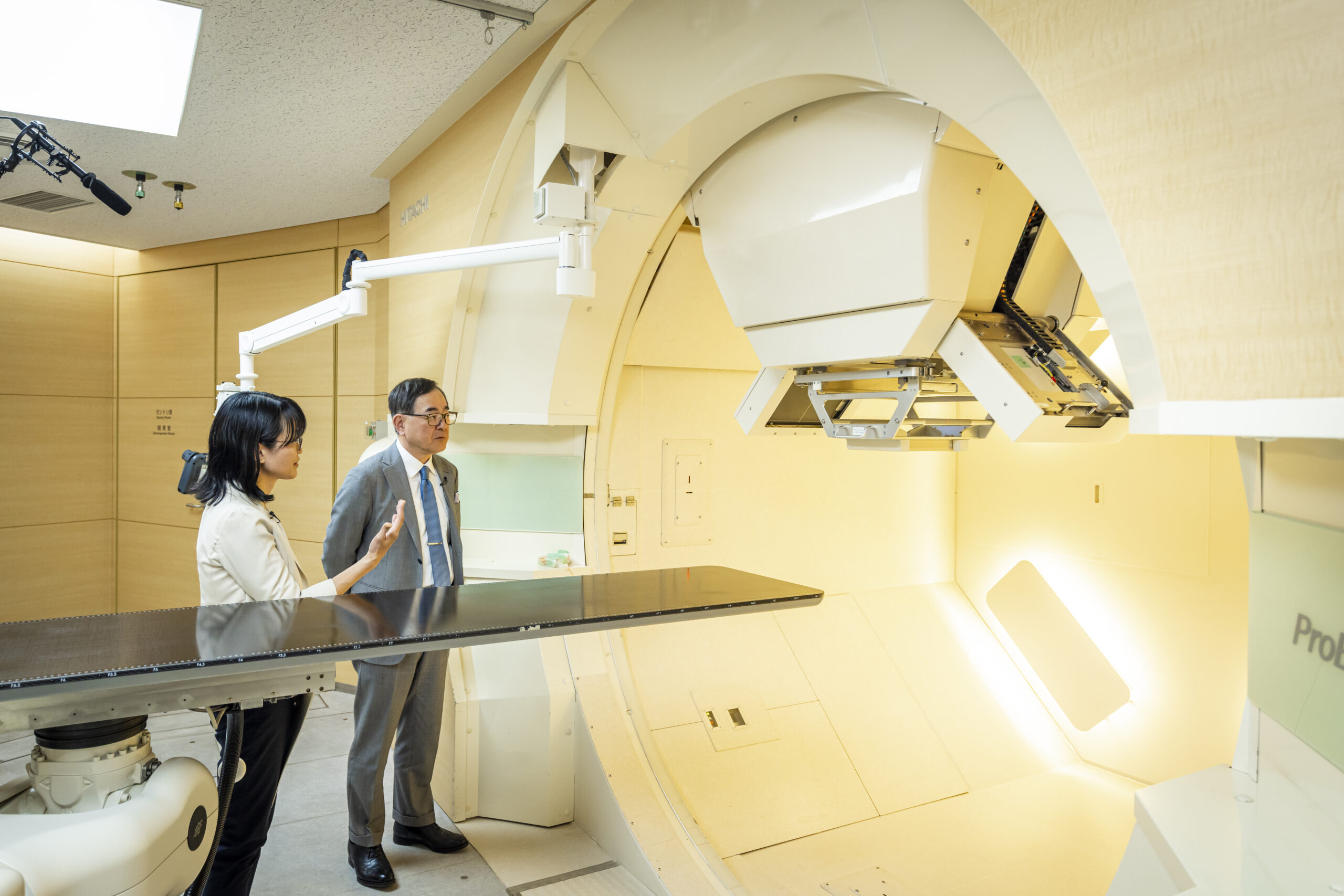
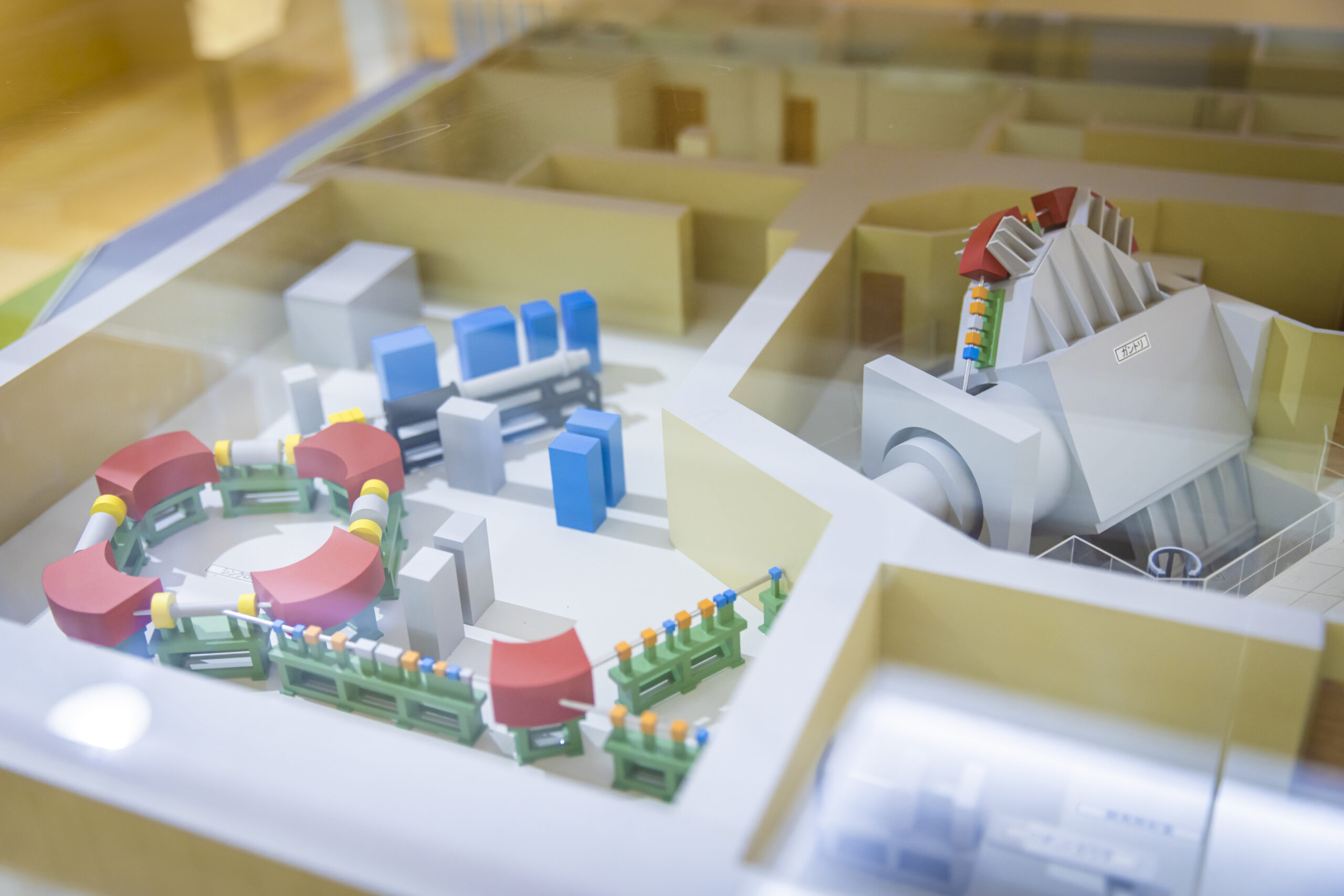
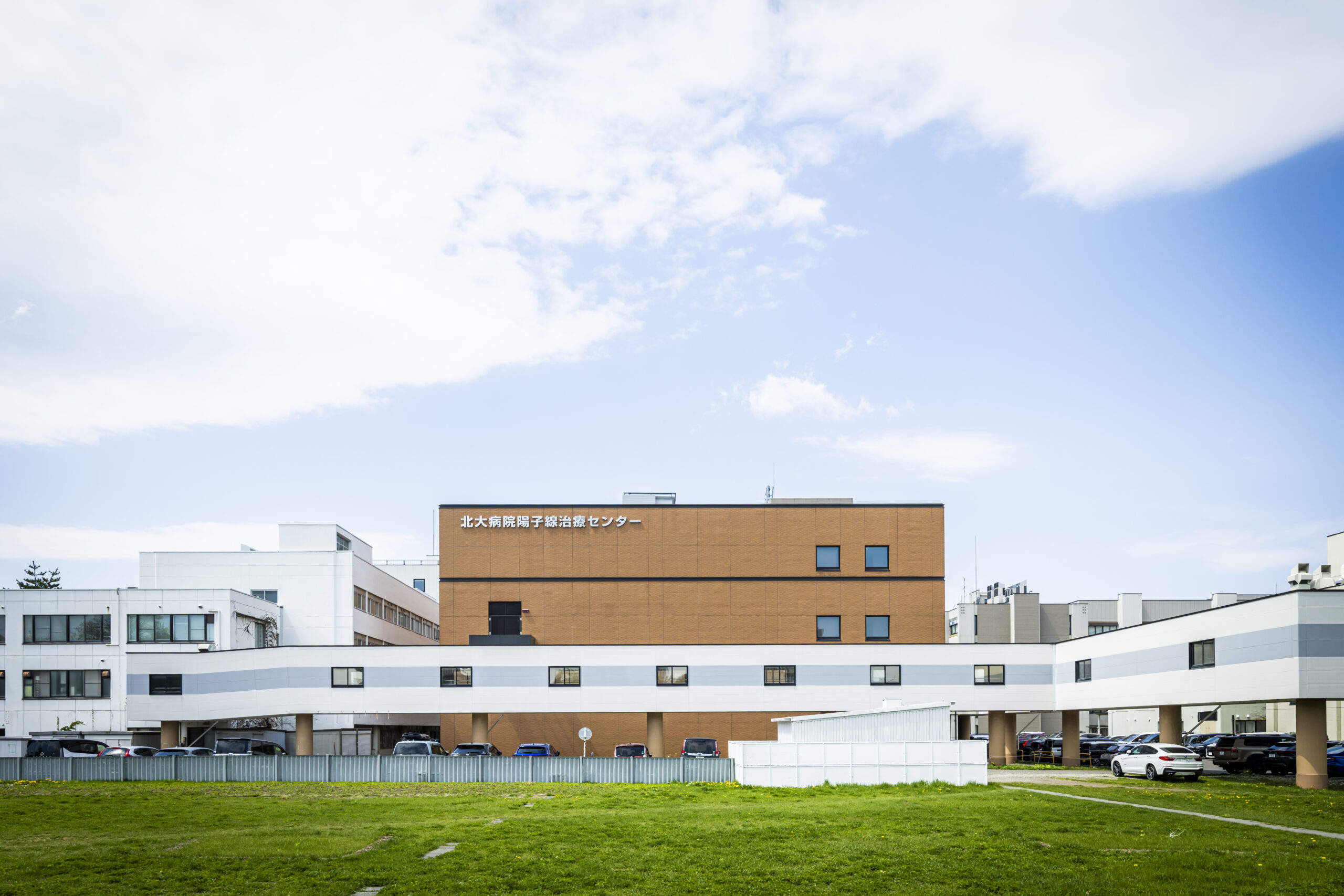
Houkin: The proton therapy center we visited is less than a 10-minute walk from the Faculty of Engineering. It’s wonderful that Hokkaido University’s medical and engineering faculties are so close.
Matsuura: Yes, the location is excellent. I can work at the hospital or therapy center in the morning, then walk to the engineering faculty to teach classes. I teach mathematics and quantum mechanics to undergraduates, and physics and engineering of proton therapy to graduate students.
Houkin: Your research is a model case of medical–engineering collaboration. We hope to expand such initiatives further.
Applications to Space Research
Houkin: I heard proton therapy equipment can also be used for space research. How so?
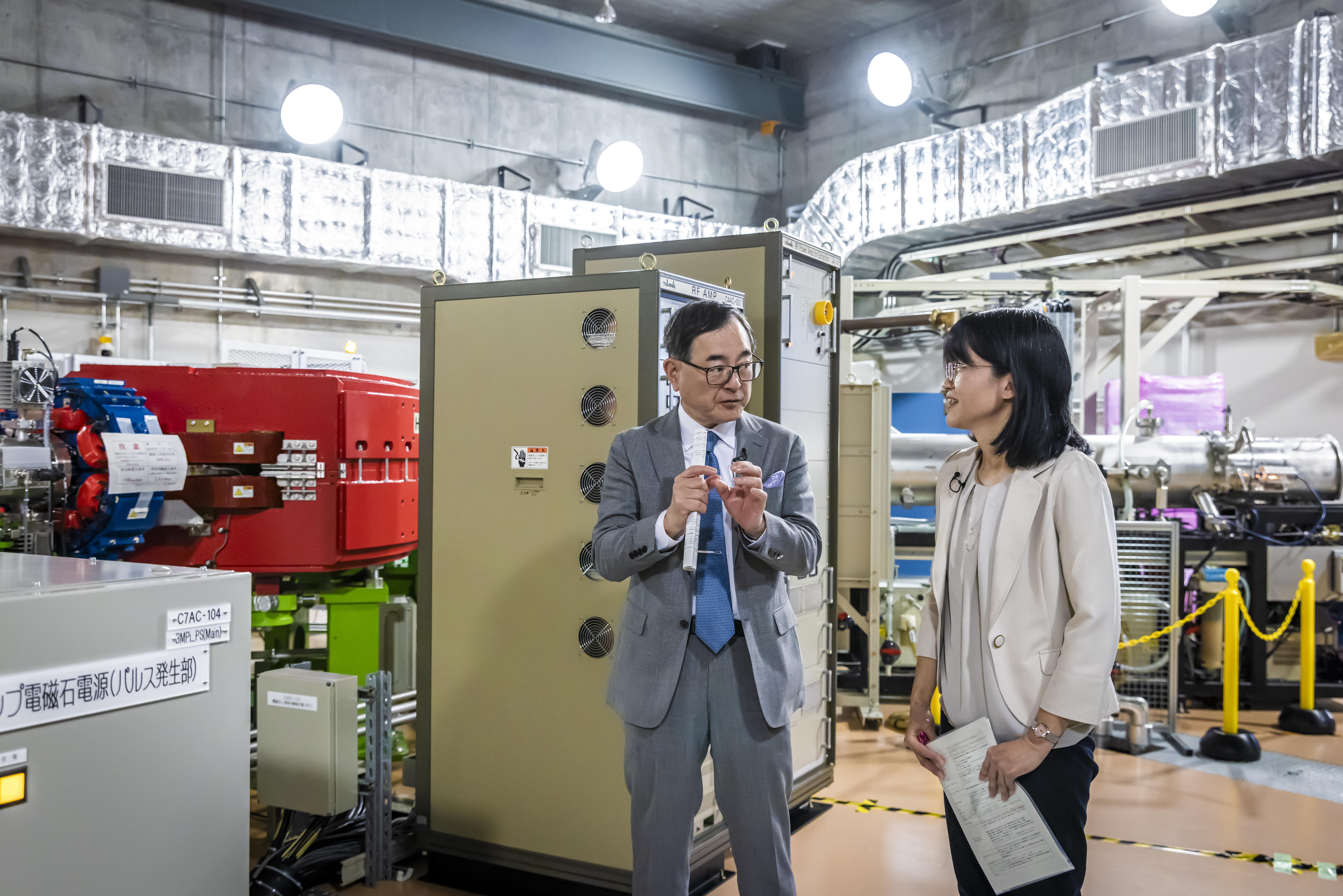
Matsuura: Cosmic rays are high-energy radiation in space, about 90% of which are protons. Coincidentally, the energy range of protons used in therapy matches that of cosmic rays. Thus, we can simulate space environments on Earth. For example, semiconductors and sensors on satellites are exposed to strong radiation in space. At the proton therapy center, we can test their durability under similar conditions.
Houkin: So you can simulate the effects of cosmic protons here on Earth. Fascinating.
Engineering Opens the Future of Medicine
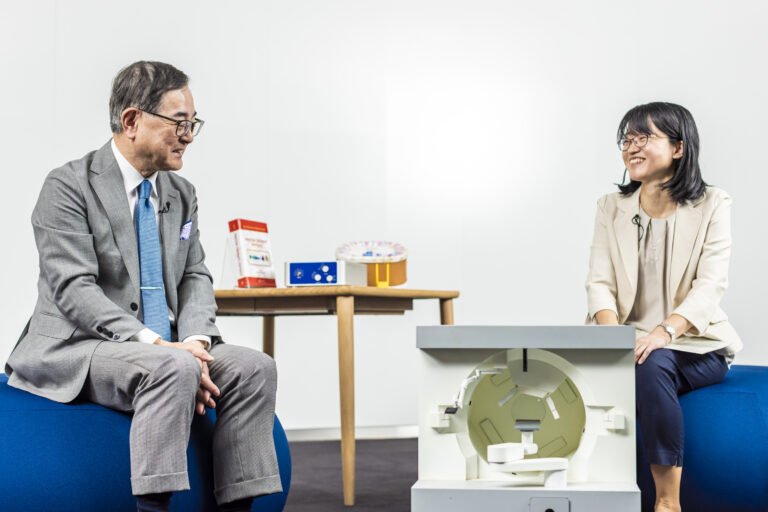
Houkin: Besides proximity, what other advantages does Hokkaido University offer for your research?
Matsuura: Having a proton therapy center is crucial. Also, our strong ties with radiation oncologists—we hold study sessions and joint projects together.
Houkin: Finally, could you share a message for high school or younger students who aspire to medical–engineering collaboration?
Matsuura: In outreach lectures, students often say, “I never thought engineering could contribute to medicine.” Proton therapy may look complete, but technology is still advancing, and many challenges remain. I would be delighted if future students join us to develop even better treatments.
Houkin: At Hokkaido University, such collaboration is a great strength. As a leader in medical–engineering integration, we look forward to your continued contributions. Thank you very much.