
Hokkaido University and the University of Massachusetts Amherst held webinars on Integrated Pest Management
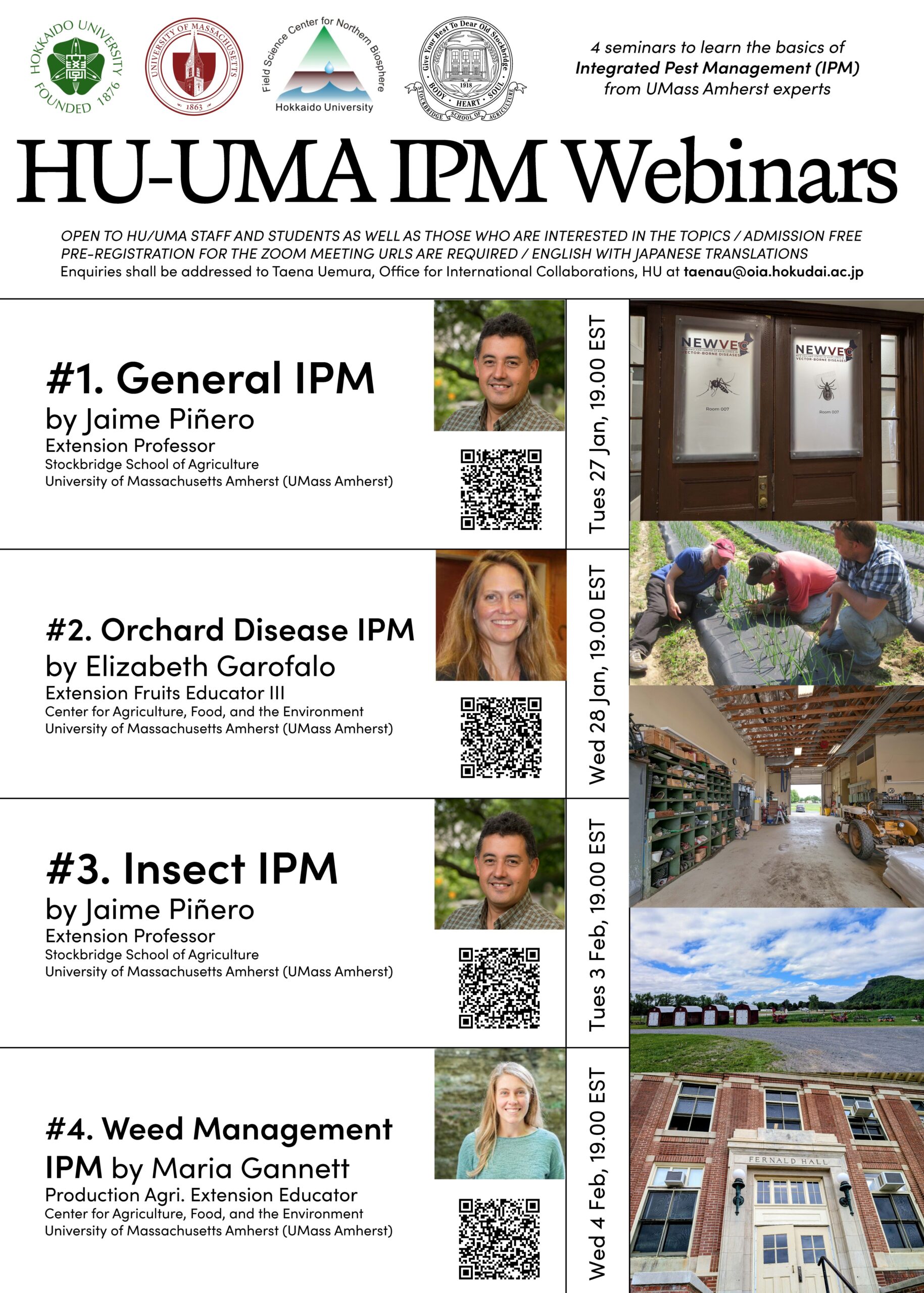
Hokkaido University (HU) delivered a four-day webinar series on Integrated Pest Management (IPM) together with its international strategic partner, the University of Massachusetts Amherst (UMA). The webinars were held on January 28-29, and February 4-5, 2026, and they have attracted 141 participants from academia and industry.
The series was originally proposed by UMA as an opportunity for HU Orchard and Botanical Garden staff to strengthen their understanding of IPM fundamentals. Two sessions were designed as part of the technical training program of the HU Field Science Center for Northern Biosphere, and with UMA’s consent, the full program was made open to the public.
Three UMA experts, Professor Jaime Piñero from the Stockbridge School of Agriculture, Extension Educators Elizabeth Garofalo and Maria Gannett from the Center for Agriculture, Food, and the Environment, delivered one-hour lectures covering an overview of IPM, insect pest management, orchard disease management, and integrated weed management.
Professor Piñero emphasized that IPM is ‘a comprehensive agricultural system that integrates ecology, farm management, food safety, and climate change adaptation – not just a pesticide‑reduction technique.’ He noted that advancements in biological control and behavioral approaches are expected to make IPM a central pillar of sustainable agriculture that balances environmental stewardship with farm profitability.
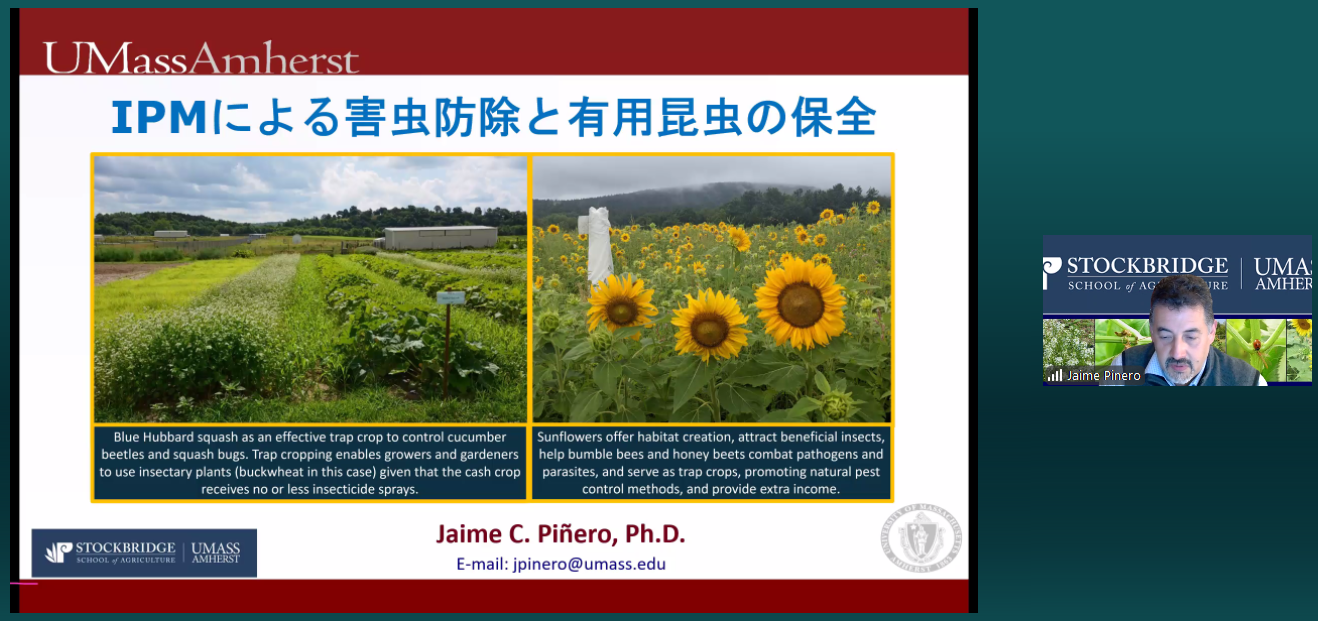
Garofalo highlighted the importance of predicting disease occurrence and understanding interactions among environment, pathogen, and host to minimize chemical use. Meanwhile, Gannett underscored that effective weed management requires precise identification and the integration of multiple control methods to avoid creating herbicide-resistant weeds.
Participants remarked that the four sessions offered valuable insights into resistance management in large-scale crop systems and prompted reflection on crop rotation, pest pressure management, and the prevention of pesticide resistance. Questions raised during the series covered a wide range of topics, including the role of genetically modified crops in supporting no‑till practices, methods for controlling deep-rooted weeds, and adoption rates of leaf‑shredding and urea‑application techniques in the United States.
This was the first webinar series jointly organised by HU and UMA, with a plan to be shared. Interpretation was provided by Taena Uemura, Senior Academic Specialist, HU. The event drew participants from both universities’ alumni networks, universities across and beyond Hokkaido and Massachusetts, producers, botanical gardens, and national park managers. Post-event questions and feedback continued to come in, demonstrating strong interest in the topic.
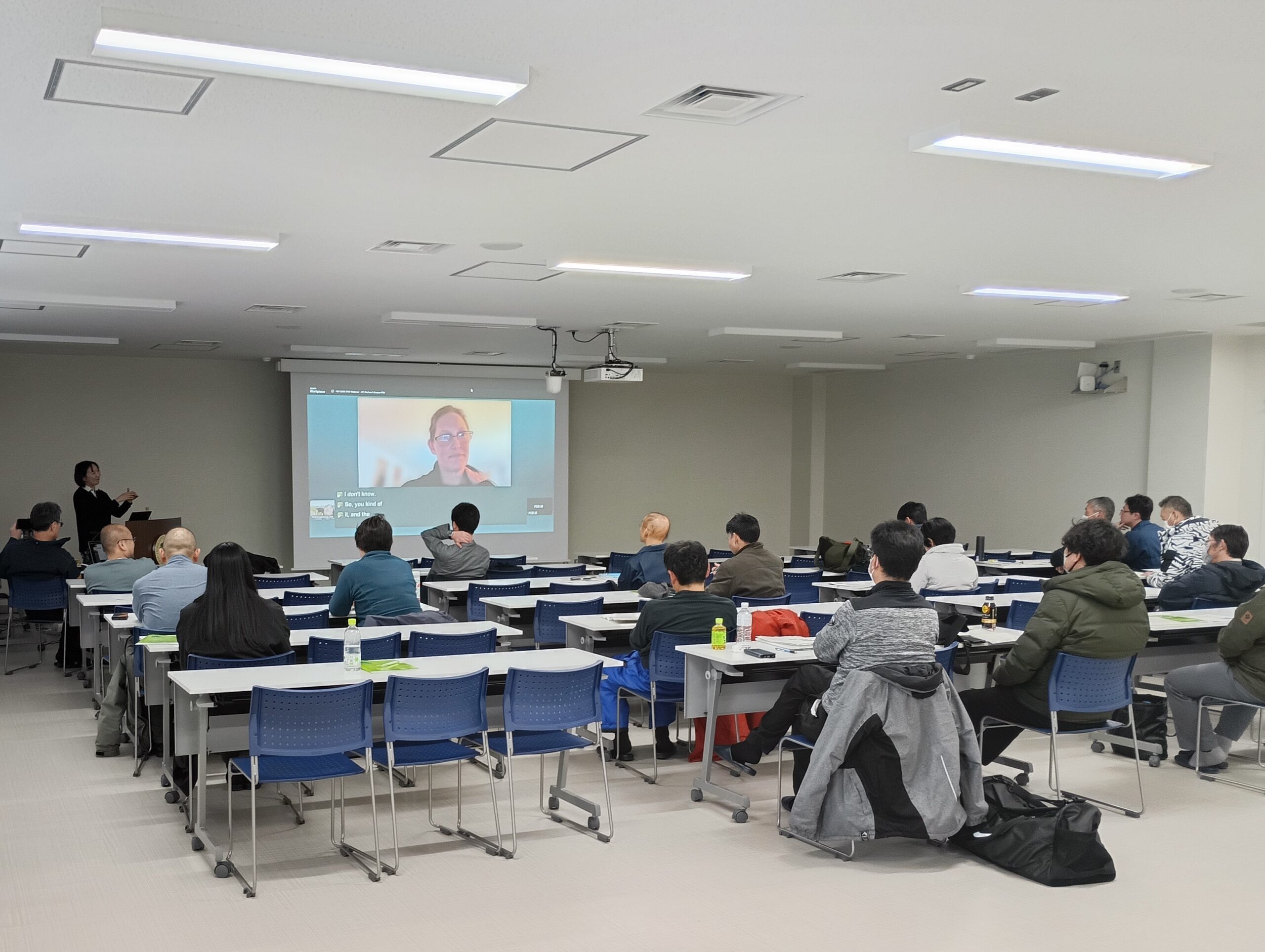
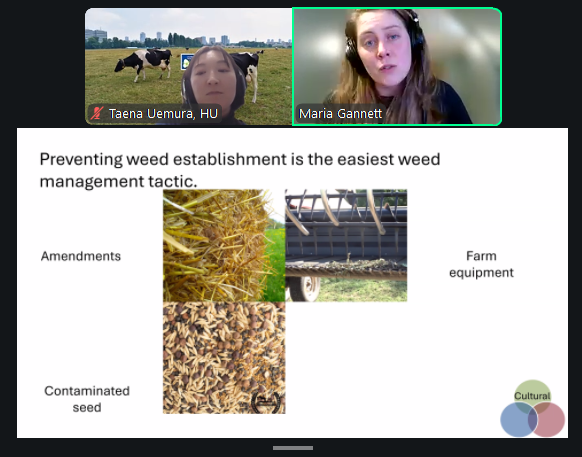
From the lectures on Day 2 by Garofalo and Day 4 by Gannett
(Text and photos provided by Office for International Collaboration and Field Science Center for Northern Biosphere)