
Embryos can tolerate disruption of cell division at certain stages of development
Researchers use a light-activated protein to illuminate when embryos can cope with disruptions to cell division.
Cell division during the early stage of embryo development is a trade-off between speed and accuracy; the cells need to divide quickly to enable rapid growth, but it’s important not to introduce errors that could be fatal to the developing embryo. But some stages of embryo development might be more tolerant of errors, coping with them without leading to complete failure.
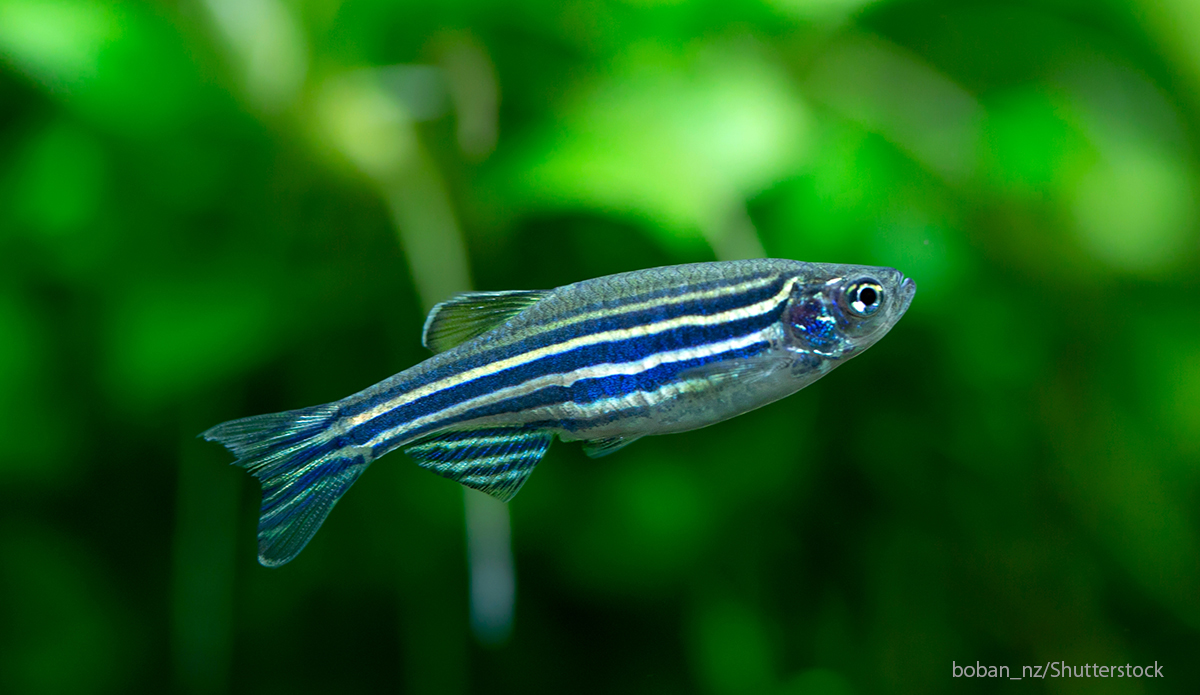
To explore this, a team of researchers, led by Professor Ryota Uehara from Hokkaido University, used a light-activated chemical tool to deliberately interfere with the process of cell division at different stages of embryo development in zebrafish.
This revealed that disruption was more deadly during the stage just before the embryo grows from being a single layer of cells into a more complex multi-layered structure called the gastrula. Once the embryo had formed the gastrula, it was better able to tolerate disruption.
A critical moment in cell division, or mitosis, is when pairs of chromosomes line up and are pulled apart by structures called spindles. This process ensures that when the cell finally divides, each daughter cell contain an accurate number of individual chromosome copies.
Professor Uehara and colleagues used a light-activated molecule to interfere with the activity of a protein called centromere-associated protein E (CENP-E), which plays an important role in lining up the paired chromosomes. That inhibition meant that the chromosomes wouldn’t be properly lined up, which could disrupt the process of mitosis.
“Photo-control technology is a powerful approach for understanding and regulating dynamic and complex biological processes,” explains Professor Uehara.
When the disruption was done during the pre-gastrula period, when the embryo consists of one layer of cells, some embryos were able to survive disruption of a single cycle of mitosis. However, if the inhibition of CENP-E continued for longer, more deadly defects emerged.
In contrast, embryos in the gastrula stage were able to survive even several hours of CENP-E inhibition and survive.
The study showed that embryos in the gastrula phase used a mechanism called the spindle assembly checkpoint to withstand the disruption. This checkpoint, albeit being not as stringent as in the cells from adult fish, allowed the cells to deal with misaligned chromosomes by delaying mitosis until the chromosomes were at least partially aligned. When the researchers also inhibited the spindle assembly checkpoint, chromosome misalignment was extremely lethal even during the gastrula phase.
Given the role of cell division in cancer, CENP-E could be a target for anti-cancer drugs, says Professor Uehara. “Our success in optochemically controlling CENP-E in vivo may provide a basis for further development of precise cancer cell growth suppression using light irradiation techniques.”
Original article:
Akira Matsura et al., Optochemical elucidation of a critical role of the incomplete spindle assembly checkpoint in zebrafish development. Communications Biology. March 23, 2026.
DOI: 10.1038/s42003-026-09871-w
Funding:
This study was supported by JSPS KAKENHI (JP19KK0181, JP19H05413, JP19H03219, JP21K19244, JP22H04926, JP24K21956, JP24KK0139, and JP24K02017); the Princess Takamatsu Cancer Research Fund; the Orange Foundation; the Smoking Research Foundation; Daiichi Sankyo Foundation of Life Science; the Akiyama Life Science Foundation; the Hoansha Foundation; and the Terumo Life Science Foundation.
Contacts:
Associate Professor Ryota Uehara
Faculty of Advanced Life Science
Hokkaido University
Email: ruehara[at]sci.hokudai.ac.jp
Tel: +81-11-706-9238
Megha Kalra
Public Relations & Communications Division
Office of Public Relations and Social Collaboration
Hokkaido University
Email: en-press[at]general.hokudai.ac.jp