
Rethinking the mechanism behind metastatic colorectal cancer
Understanding where molecular malfunctions happen in colorectal cancer offers new avenues for treatment.
Researchers at Hokkaido University, in collaboration with an international team of scientists led by the University of South Florida Health and Tampa General Hospital, have uncovered an important mechanism behind immune evasion in metastatic colorectal cancer (mCRC). Their findings challenge a 30-year-old theory in cancer.
Thirty years ago, the “rheostat” model proposed that elevated sphingosine-1-phosphate (S1P) promotes tumor cell growth, whereas higher ceramide levels trigger cell death. Under this traditional model, scientists thought that cancer cells used this internal mechanism to control their own fate, turning up S1P to grow uncontrollably or turning down ceramide to avoid dying, just like a physical rheostat, or dimmer switch, controls electrical current by increasing or decreasing resistance.
The new, multi-institute study showed that the rheostat does not primarily function within the cancer cells themselves. Instead, the imbalance of increasing S1P and decreasing long-chain ceramide occurs within the tumor microenvironment, where S1P creates a localized biochemical barrier that prevents the immune system from attacking the tumor.
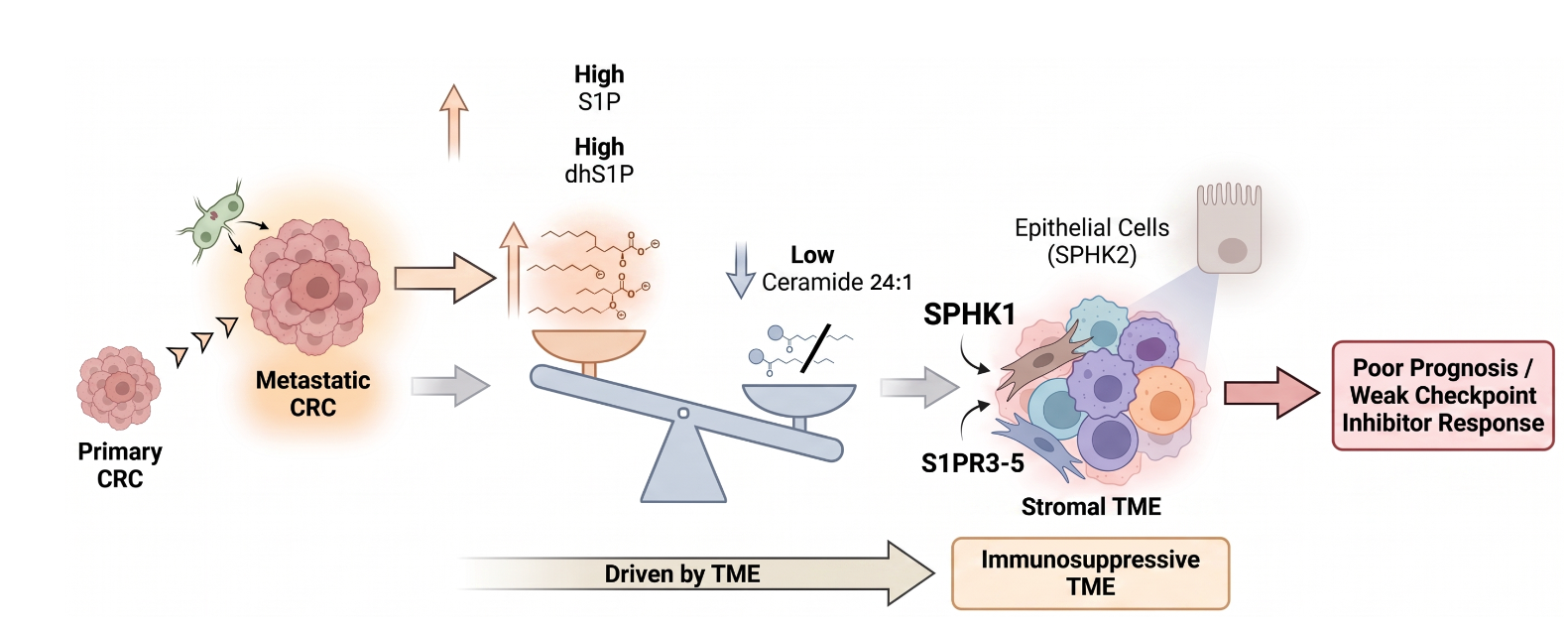
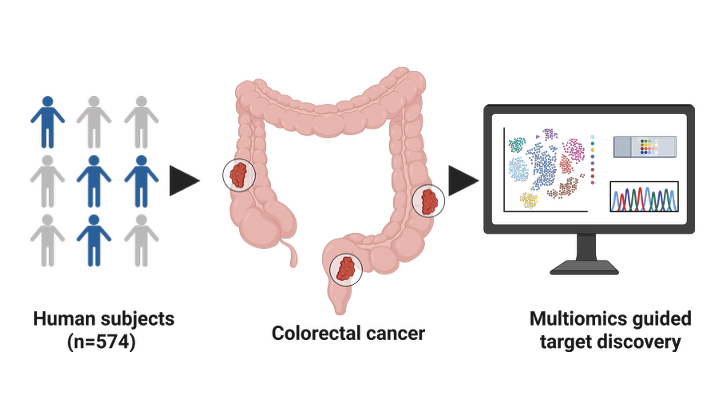
By examining 574 human colon cancer tissue samples with advanced mapping technology, the team found that as colorectal cancer spreads, levels of pro-cancer growth lipids increased, whereas levels of the cancer cell-killing lipid dropped significantly.
The old theory assumed this chemical balancing act was happening inside the tumor cells. But advanced spatial mapping showed that the molecules that make and receive these “stay alive” signals are concentrated in the surrounding healthy-looking support tissue and specialized immune cells. This creates a state of ongoing, unhealthy inflammation that blocks killer immune cells, preventing them from getting close enough to fight and destroy the tumor.
The researchers identified a specific three-gene signature that acts as a warning of aggressive cancer. High activity of this gene signature is strongly linked to late-stage cancer, tumors spreading into lymph nodes, lower patient survival rates, and poor responses to standard immunotherapy drugs. In lab experiments, blocking two key players (S1P/S1PR3) in this signature allowed healthy killer T-cells to return and successfully attack the cancer cells again.
“Metastatic colorectal cancer remains notoriously resistant to checkpoint inhibitors. Our findings show that elevated S1P and its receptor S1PR3 act as a localized biochemical shield, driving out cytotoxic T cells and creating an immunosuppressive microenvironment,” the authors wrote in the study.
“Targeting this pathway offers a therapeutic strategy to break these barriers, restore immune cell infiltration, and potentially make immunotherapies effective for patients with advanced disease.”
Colorectal cancer is the second leading cause of cancer-related mortality worldwide, with 5-year survival rates dropping to just 14% once it spreads to other parts of the body. While immune therapies have revolutionized treatment for several cancers, most colorectal tumors at this stage are resistant to these treatments. Understanding why is a major clinical challenge.
These findings highlight S1P/S1PR3 pathway inhibition as a promising combination strategy to boost immunotherapy efficacy in colorectal cancer.
Original article:
Michelle M Maurin, Siddabasave Gowda B. Gowda et al., Re-defining the sphingosine rheostat as a stromal-immune program associated with immune suppression in metastatic colorectal cancer. Journal of Experimental and Clinical Cancer Research. September 30, 2026.
DOI: 10.1186/s13046-026-03832-1
Funding:
This study was supported by Tampa General Hospital Foundation, NCI (U01CA293474, R35CA197570, P50CA236733), and the Japan Society for the Promotion of Science (JSPS) KAKENHI (25K00258).
Contacts:
Associate Professor Siddabasave Gowda B. Gowda
Graduate School of Global Food Resources and Faculty of Health Sciences
Hokkaido University
Email: gowda[at]gfr.hokudai.ac.jp
Megha Kalra
Public Relations & Communications Division
Office of Public Relations and Social Collaboration
Hokkaido University
Email: en-press[at]general.hokudai.ac.jp