Skip to content
  • catcHUp
  • Give
  • JA
    • President’s Message
    • HU Vision 2030
    • HU Global Vision 2040
    • 150th Anniversary
    • Hokkaido Universal Campus Initiative
    • Sustainability Declaration
    • Diversity, Equity, and Inclusion (DEI)
    • aynu sisam urespa ukopirkare us i/Ainu and Indigenous Peoples
    • Philosophies
    • History
    • In Numbers
    • Awards
    • Honorary Degree Recipients
    • University Symbol
  • Sustainability
  • Campus
    • General Organization
    • Governing Organization
    • Administrative Organization
  • Institutes/Offices
    • University Library
    • University Museum
    • University Hospital
    • Veterinary Teaching Hospital
    • Health Care Center
    • Training Vessels
    • Experimental Forests and Farms
    • Aquatic Research Stations
    • Archaeological Research Center
    • University Archives
    • Event and Seminar Spaces
    • Gardens and Parks
    • Shops
    • Restaurants/Dining
  • Brochures
    • Public Relations Contact
    • Press Room
    • Social Media
    • E-Newsletter
    • Law
    • Fisheries Sciences
    • Environmental Earth Science
    • Science
    • Pharmaceutical Sciences
    • Agriculture
    • Life Science
    • Advanced Life Science
    • Education
    • Media, Communication, and Tourism
    • Health Sciences
    • Engineering
    • Chemical Sciences and Engineering
    • Economics and Business
    • Medicine
    • Dental Medicine
    • Veterinary Medicine
    • Biomedical Science and Engineering
    • Infectious Diseases
    • Global Food Resources
    • Humanities and Human Sciences
    • Information Science and Technology
    • Public Policy
    • Low Temperature Science
    • Electronic Science
    • Genetic Medicine
    • Catalysis
    • Zoonosis Control
    • Slavic-Eurasian Research
    • Information Initiative
    • Chemical Reaction
    • Vaccine
    • Food and Medical
    • Joint Facilities/Research Centers
    • Advancement of Higher Education
    • Advancement of Graduate Education
    • Center for Open Education
    • Student Advice and Counseling
    • Career Center
    • Human Resource Education
    • Joint Facilities/Educational Centers
    • Nitobe College
    • One Program for Global Goals
    • Cooperative Research Guidance and Double Degree Program
    • Outbound Programs
    • Open Courseware
    • Climate Change
    • SDGs Interviews
    • Spotlight on Research
    • Tackling Global Issues
    • Find an Academic Paper
    • Find a Researcher
    • Find Grant
    • Global Research and Education
    • Integrated Innovations
    • Business-Regional Collaboration
    • Program for Forming Japan’s Peak Research Universities (J-PEAKS)
    • Cross-ministerial Strategic Innovation Promotion Program (SIP)
    • COI-NEXT
    • Undergraduate Admissions Overview
    • Modern Japanese Studies Program
    • Integrated Science Program
    • Graduate Admissions Overview
    • Application Steps
    • Study in English
    • Study in Japanese
    • Hokkaido Summer Institute (HSI)
    • Short-Term Exchange in English (HUSTEP)
    • Japanese Language and Culture (JLCSP)
    • Special Auditor & Special Research Student
    • Scholarships for Prospective Students
    • Student Fees
    • Financial Support
  • Campus Life Overview
  • Japanese Language Courses
  • Health Care
  • Student Dormitories
  • Researcher’s Accommodation
  • Sport and Recreation
  • Clubs and Societies
  • Career Support
  • Students and Staff Communities
  • University Festivals
  • Discover Hokkaido
    • Inter-University Exchange Agreements
    • Departmental Exchange Agreements
    • International Consortia
  • International Visits
    • Seoul National University
    • The University of Melbourne
    • The University of Massachusetts Amherst
  • Global PR Ambassador
    • International Student Growth
    • Number of International Students
  • Strategy and Organization
  • Sapporo Campus
  • Hakodate Campus
  • Information Center (Sapporo)
  • Shuttle Bus
  • Sapporo Campus Map
  • Hakodate Campus Map
    • Academic Information (ELMS)
    • Wi-Fi and the Campus Computer Network
    • How to Use Libraries
    • Syllabus Search
    • Logo Guidelines (internal-only)
    • About Press Releases (internal-only)
    • Starting a Social Media Account (internal-only)
    • Find Translated Database (internal-only)
    • Campus AEDs
    • Safety Confirmation System
    • Preventing Harassment
  • Information for International Colleagues
  • Information for International Students
  • HANDBOOK for International Students
  • Alumni
Hokkaido University
magazin-article

Furukawa Memorial Hall Reborn as a Giant Snow Sculpture

  • Campus
  • Festival/Event
  • Hokkaido
  • Off-Campus
  • Sapporo
  • Ice
Feb 03, 2026
Miriam Arfani, Public Relations & Communications Division (PRC)

A giant snow sculpture inspired by Furukawa Memorial Hall, located on Hokkaido University’s Sapporo Campus, will appear at the 2026 Sapporo Snow Festival. Sapporo Snow Festival is one of the city’s most iconic winter events and will be held for eight days, from February 4 to February 11. Snow sculpture construction is currently underway throughout Odori Park.

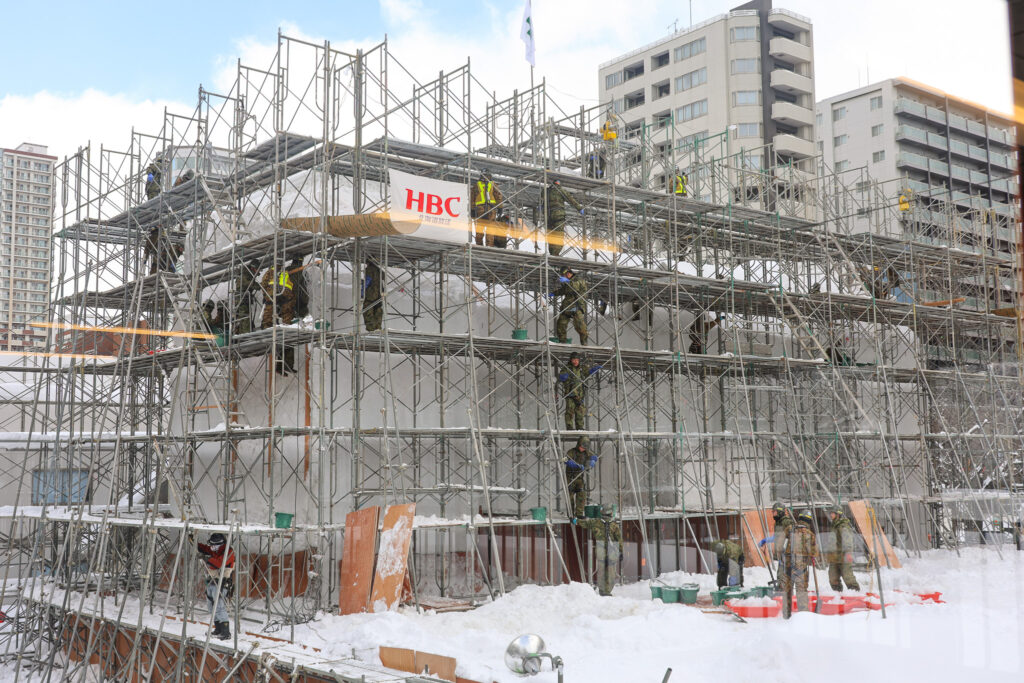
Among the many snow sculptures displayed at the Odori Park, there are five large-scale sculptures in total, two of which are being created by the Japan Ground Self-Defense Force (JGSDF). The giant snow sculpture of Furukawa Memorial Hall, which will appear at Odori Park 7-chome (HBC square), is also being produced by JGSDF members. The massive sculpture will measure 22 meters wide and 12 meters high, and is built by a total of 130 personnel over a period of 28 days.

Behind the Snow Sculpture
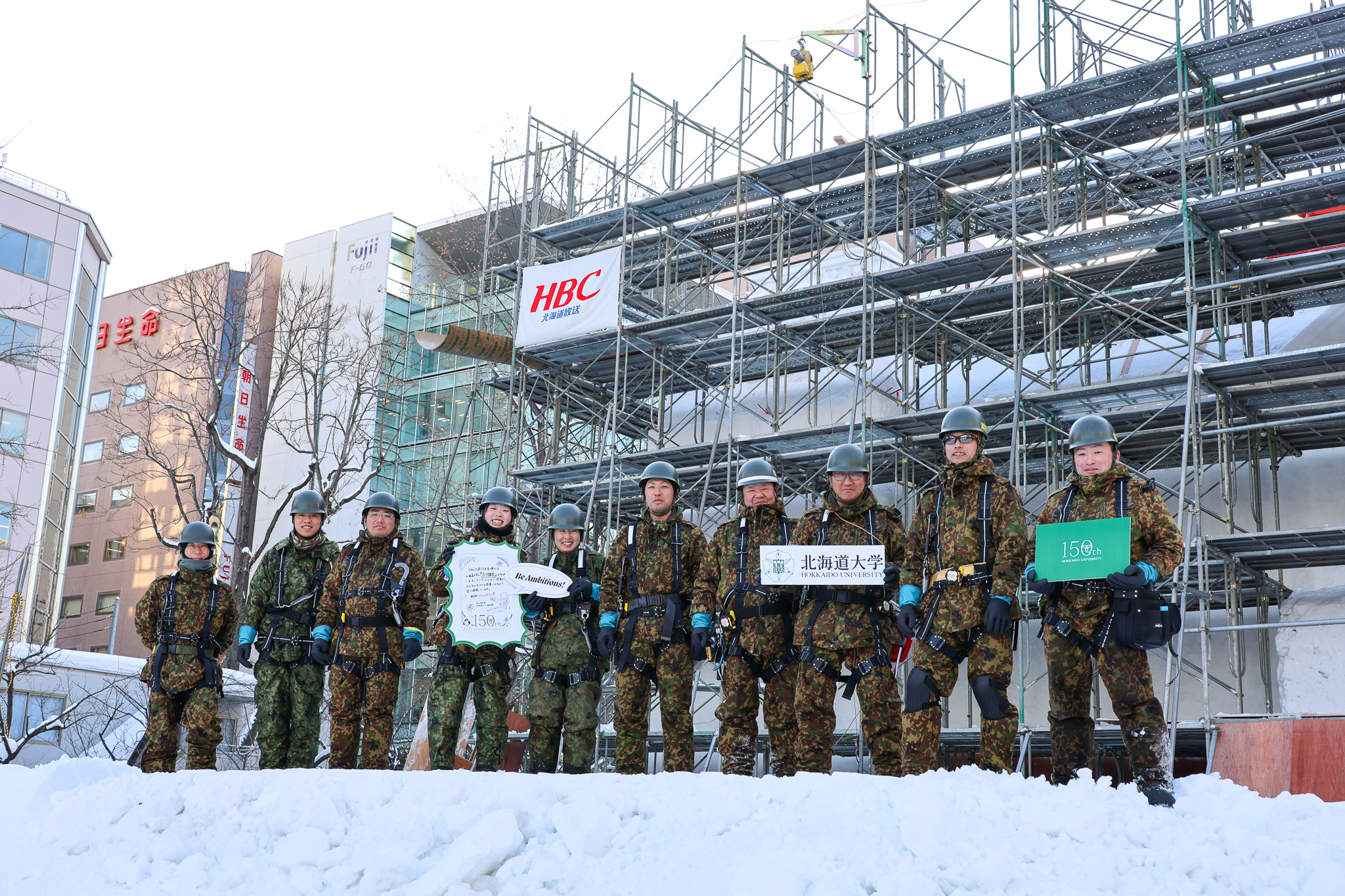
JGSDF members standing in front of the snow sculpture

The snow sculpture production is carried out as part of the JGSDF’s “field fortification training,” a long-standing training program focused on constructing defensive structures and protecting personnel in snowy environments. As part of this training, JGSDF units have been involved in snow sculpture construction in Sapporo for more than 70 years.

According to Kishinami of the JGSDF Northern Army System Signal Group, snow sculpture construction begins by piling up snow. “First, we create a snow mound roughly the same size as the final sculpture. Then we carve it down like a piece of sculpture,” he explains. “We also use what we call neriyuki (kneaded snow), which is clean snow brought from Nakayama Pass mixed with water. We then spread it over the surface to smooth out the walls before the carving begins.” 
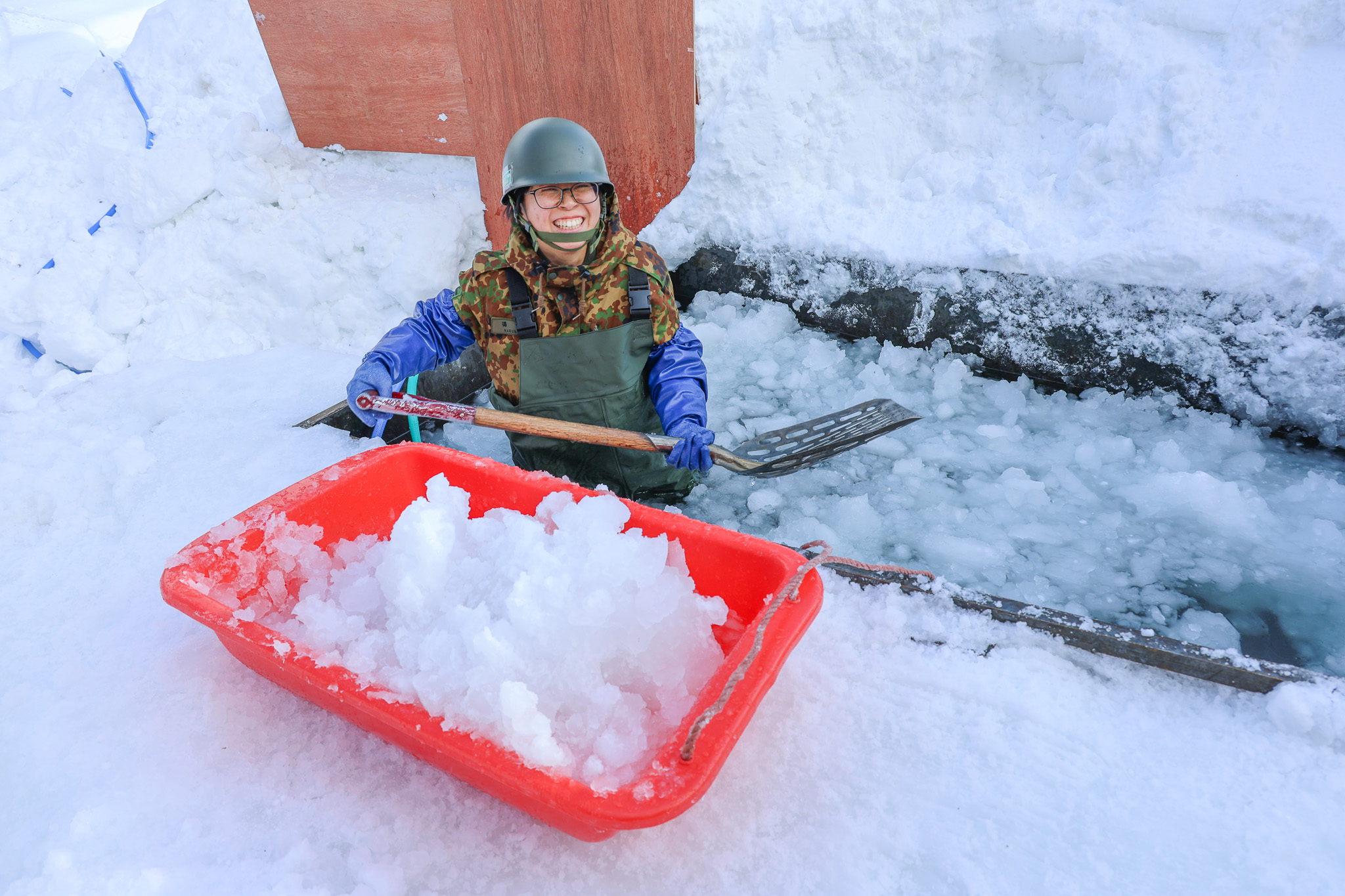
Neriyuki used for the snow sculpture
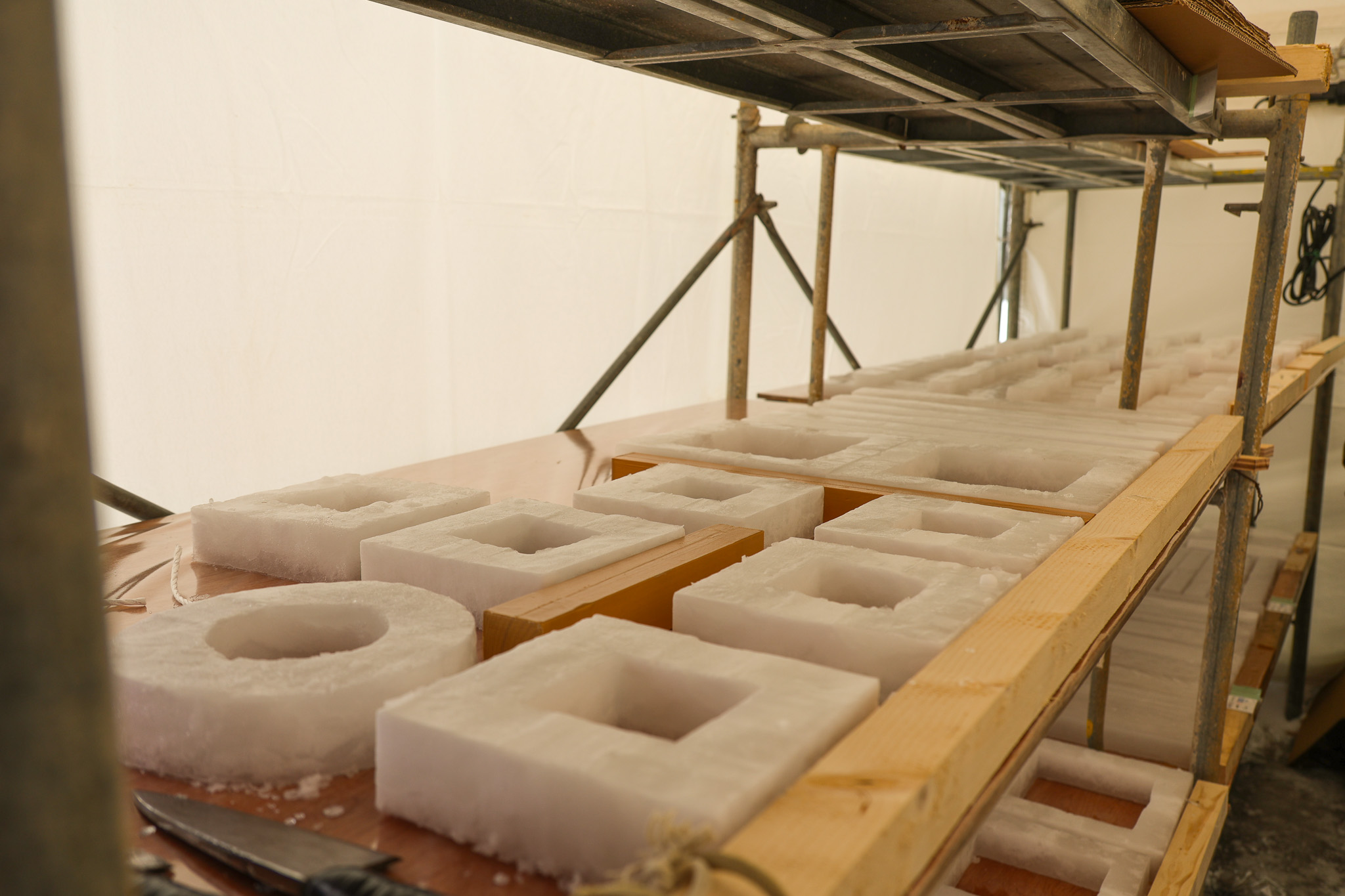
Small snow components used to to make the sculpture’s details

The intricate details seen in the windows and entrance of Furukawa Memorial Hall are recreated by making small components separately and attaching them to the main structure. These components are produced using wooden molds, and the number of such parts exceeds 1,000. These detailed components are also made entirely by JGSDF members, and among those involved in the project, 10 personnel are responsible for drawing the plans and producing scale models.

Attention to Detail
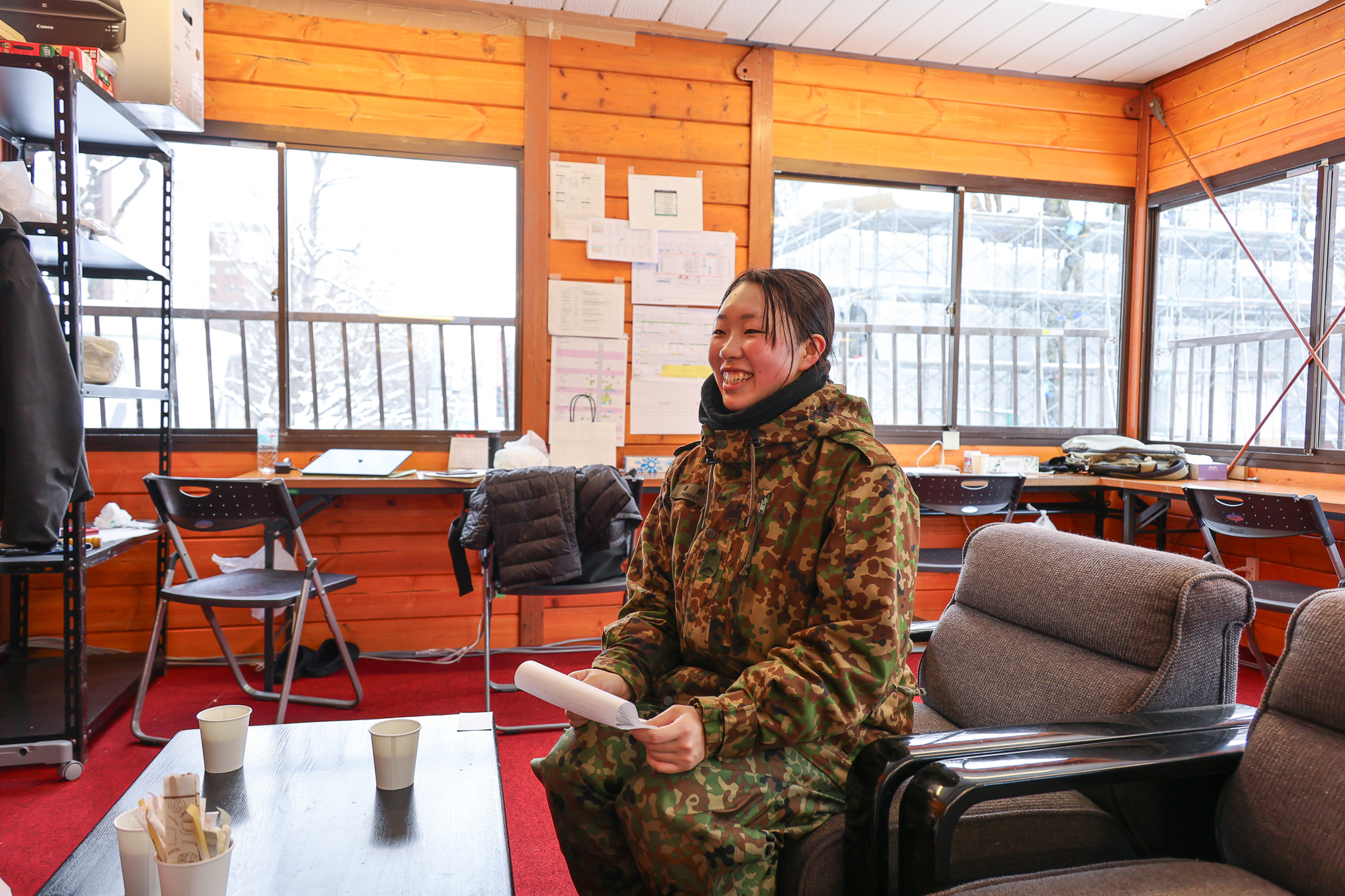
Yuka Hatano, a member of JGSDF

One of the JGSDF personnel is Yuka Hatano, who is participating in snow sculpture production for the second year and has been involved in the project since the model-making stage. Her work highlights the level of precision required in snow sculpture production.

In addition to the Hall sculpture, the team is also creating a small snow sculpture of Dr. William S. Clark. The model is extremely small, with the face measuring only 2-3 millimeters. To recreate Dr. Clark’s deeply carved facial features, Hatano used a magnifying glass while working. 
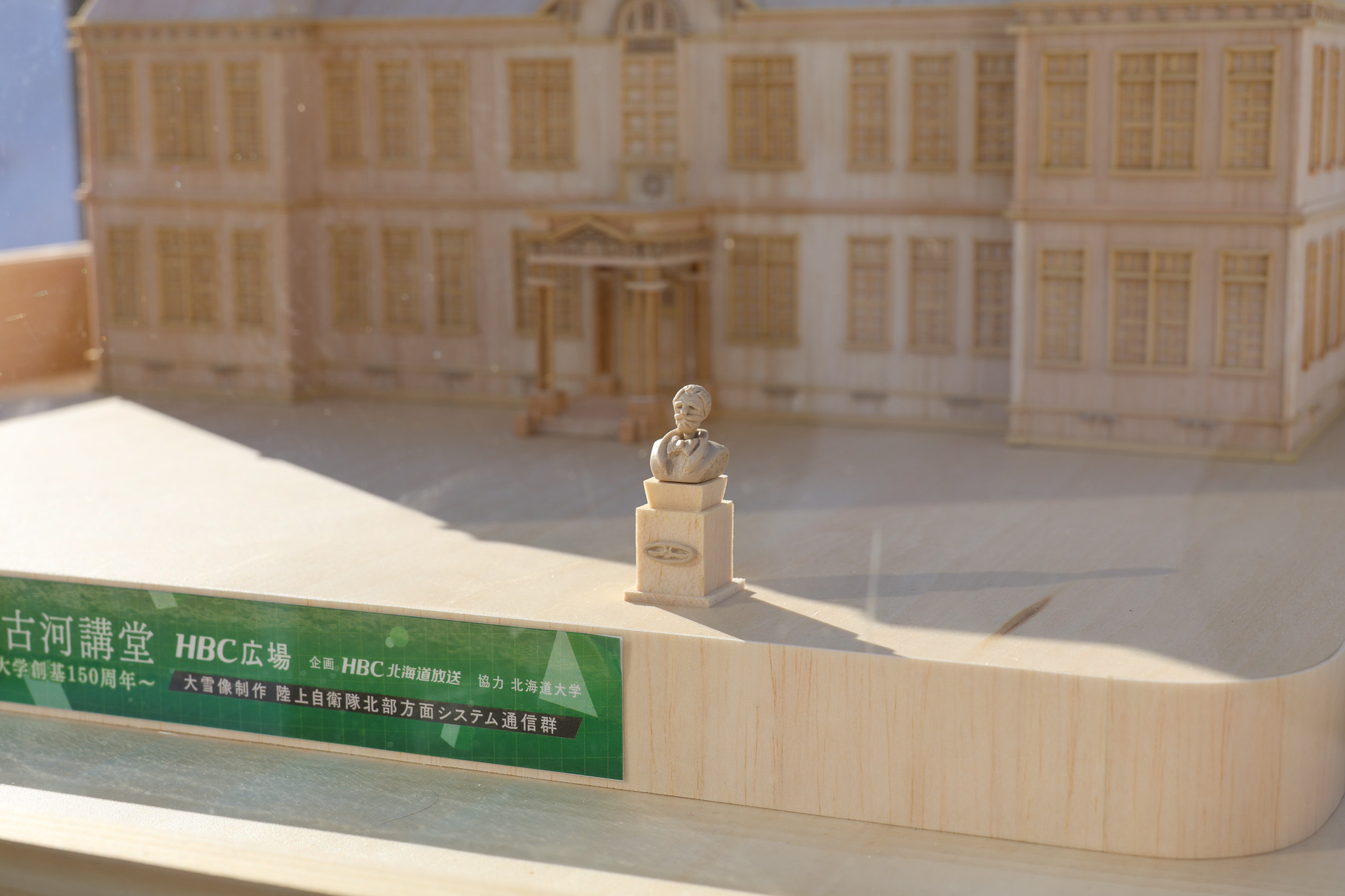
A model of Furukawa Memorial Hall and Dr. Clark’s snow sculpture

This attention to detail is also reflected in the large sculpture. Since Furukawa Memorial Hall is symmetrical, precise measurements are essential throughout the process. Even minor inconsistencies can affect the structure’s overall balance, making careful measurement and verification a constant part of the work.

Originally from Sapporo, Hatano recalls being impressed by how the Hall preserves its historical design when she first saw it. “I’m very happy to be involved in creating a snow sculpture based on a historic local building,” she says with a smile. “We will do our best to recreate its fine details so visitors will be moved by it. Please look forward to it.”

Photos by Miho Nagao, PRC

Based on the original Japanese article by Ayumi Hasegawa, PRC
https://www.instagram.com/p/DUAVIWOEsSf/?img_index=1

Share
  • Facebook
  • X
  • Linkedin
  • Bluesky
  • Threads
View all articles

Related

    • Campus
    Furukawa Memorial Hall Reborn as a Giant Snow Sculpture
    Feb 03, 2026
    • Campus
    Creating the “18th SDG”: JR Hokkaido and Hokkaido University pioneer new value for the future
    Jan 21, 2026
    • Campus
    From Market to Social Movement: Hokudai Marché Award
    Nov 12, 2025
Hokkaido University
Kita 8, Nishi 5, Kita-ku,
Sapporo, Hokkaido,
060-0808 Japan
+81-11-716-2111
  • Contact Us
  • Sapporo Campus Map
  • Hakodate Campus Map
  • Jobs
  • Give
  • Site Policy
  • Privacy Policy
  • Codes of Conduct
  • The Japan Association of National Universities

Hokkaido University