

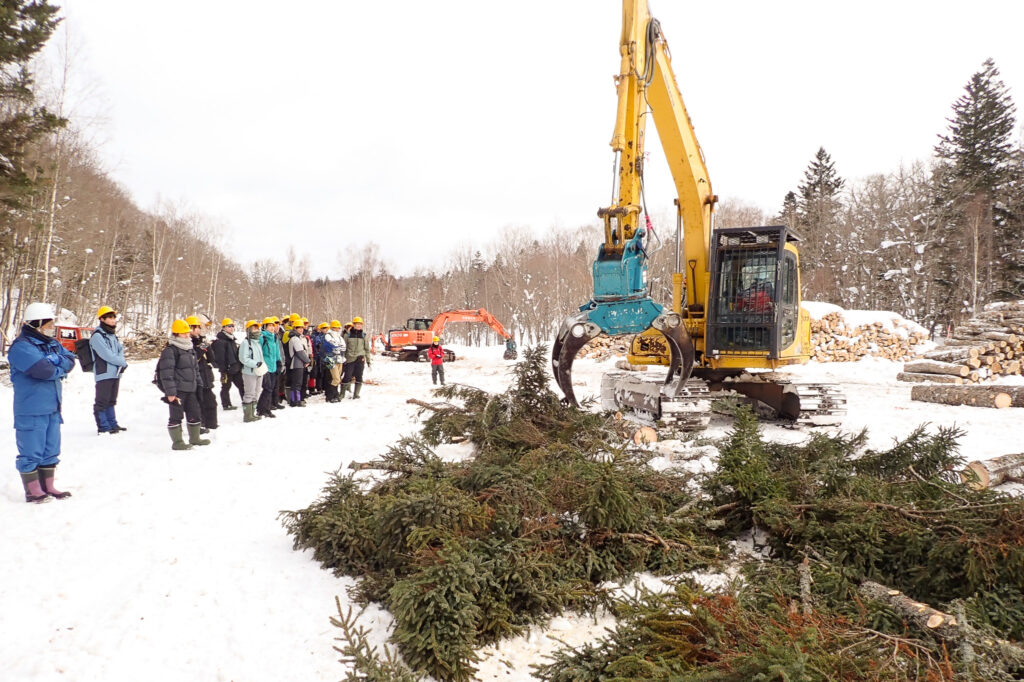
Second-year students from the Department of Forest Science at Hokkaido University recently took part in “Integrated Forest Science Practicum II (in Japanese: 森林科学総合実習II),” a required field training course held at the University’s Uryu Experimental Forest in Horokanai Town, about two and a half hours northeast of Sapporo.
Surrounded by the deep snow of Hokkaido’s winter forests, the students spent five days living and studying together while gaining hands-on experience in forestry practices and field-based research.
Learning in one of Hokkaido University’s oldest research forests
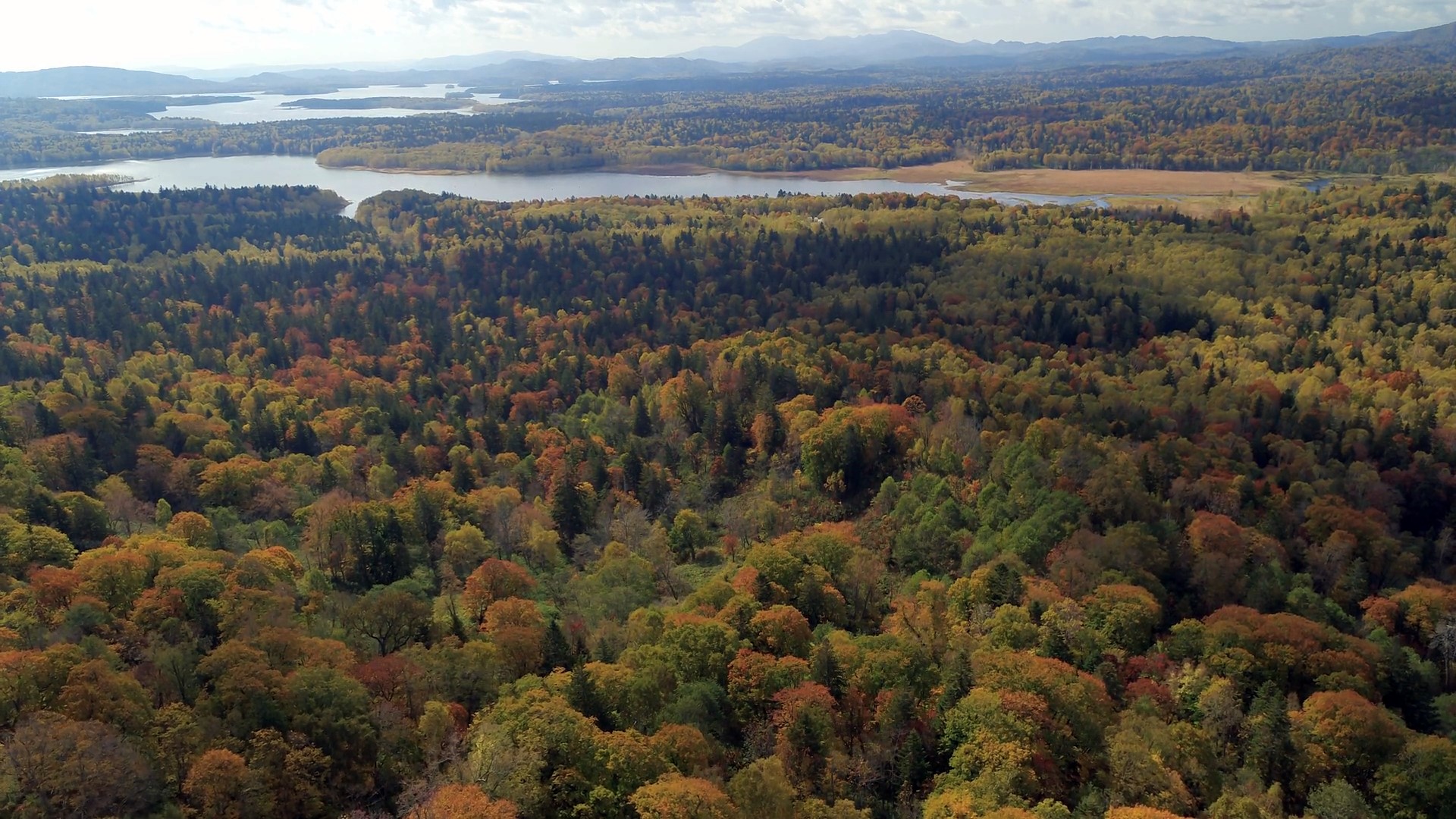
Established in 1909, the Uryu Experimental Forest is the oldest of the seven experimental forests managed by HU across Japan. The site spans approximately 24,000 hectares and includes diverse forest ecosystems such as mixed conifer-broadleaf forests and pure stands of Akaezomatsu (a large evergreen conifer native to Hokkaido) spruce.
Decades of research and forest management have helped preserve near-natural ecosystems and habitats for rare plants and wildlife within the forest. As a result, much of the forest—excluding designated wildlife protection areas—has been certified by the Japanese government as a Nature Coexistence Site, a designation for areas where biodiversity is actively protected.
The forest also experiences extreme seasonal conditions, with summer temperatures exceeding 30°C and winter temperatures dropping below -30°C, while snowfall can reach more than two meters. These conditions make the site an important location for research and field training in forest science, ecology, and environmental studies.
A Tradition of Field-Based Learning
Integrated Forest Science Practicum II has been conducted for more than 80 years as a core field training program for students in the Forest Science Department. Covering topics ranging from forest management and policy to wood utilization, the program introduces students to the practical knowledge required to conduct research and forestry work in harsh winter conditions.
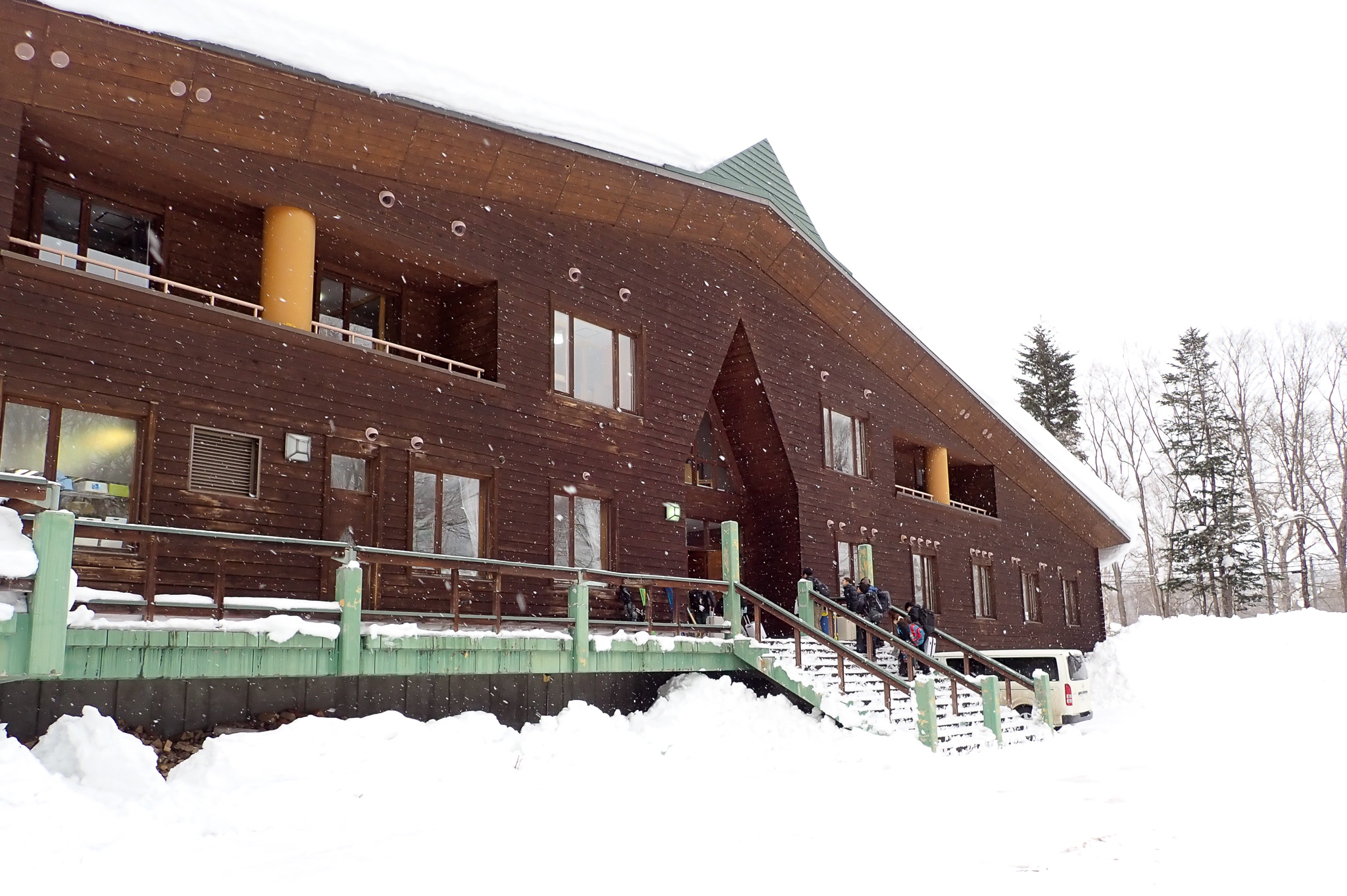
This year’s training took place from February 16 to 20, with thirty-four students staying in shared dormitory rooms at the research forest facility. The course was led by Assistant Professor Ryuya Takanashi from the Laboratory of Timber Engineering, along with 10 other instructors from the Faculty of Agriculture and the Uryu Experimental Forest.
Fieldwork in the Winter Forest
After an orientation on the first day, students began their fieldwork with a winter forest survey. Travelling through deep snow on skis, they collected samples of winter buds—an important clue for identifying tree species when leaves are absent.
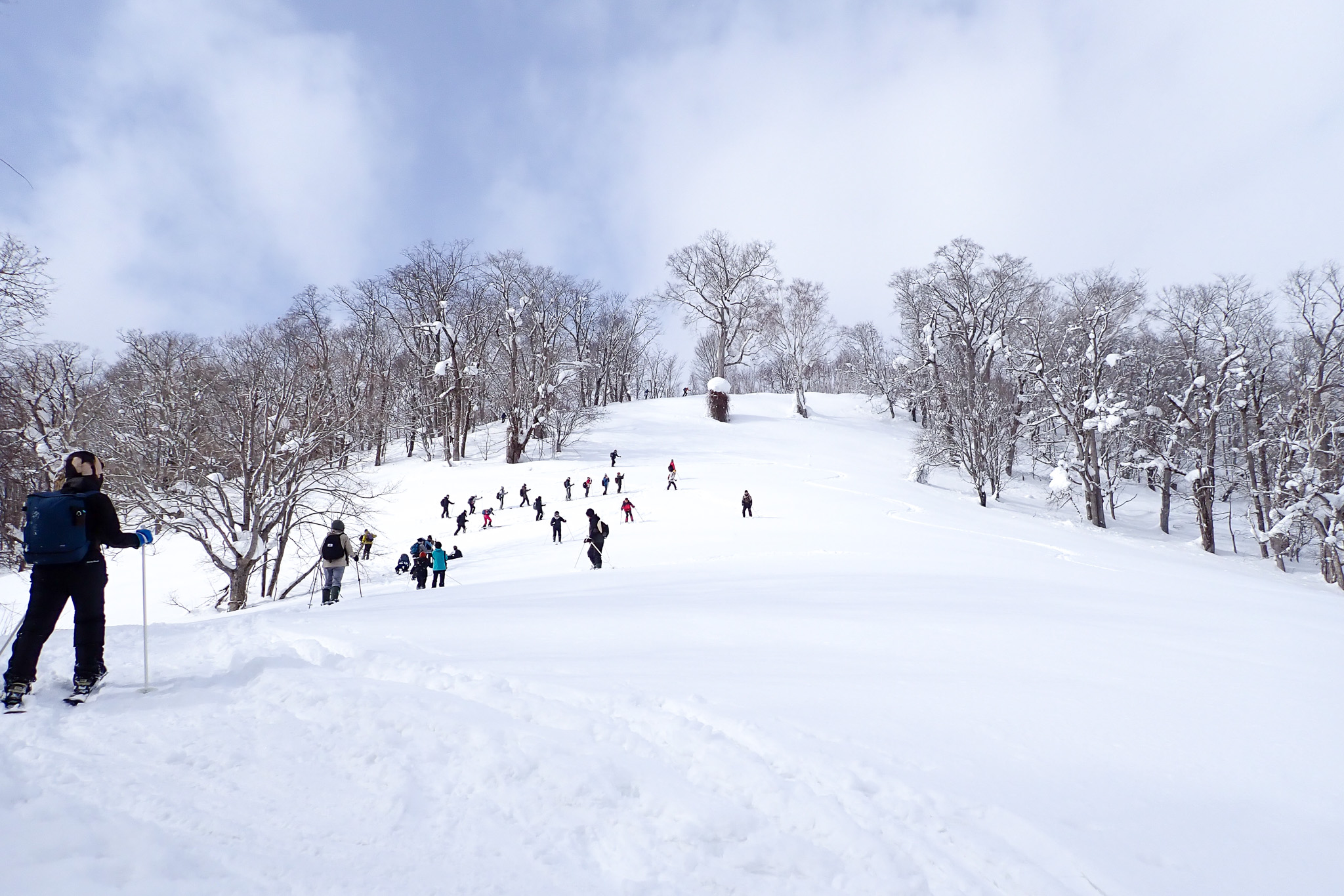
“For many students, skiing through deep snow in a natural forest is completely different from skiing at a resort. Once you fall, it’s hard to get back up—but that’s how they learn,” said Assistant Professor Takanashi with a smile.
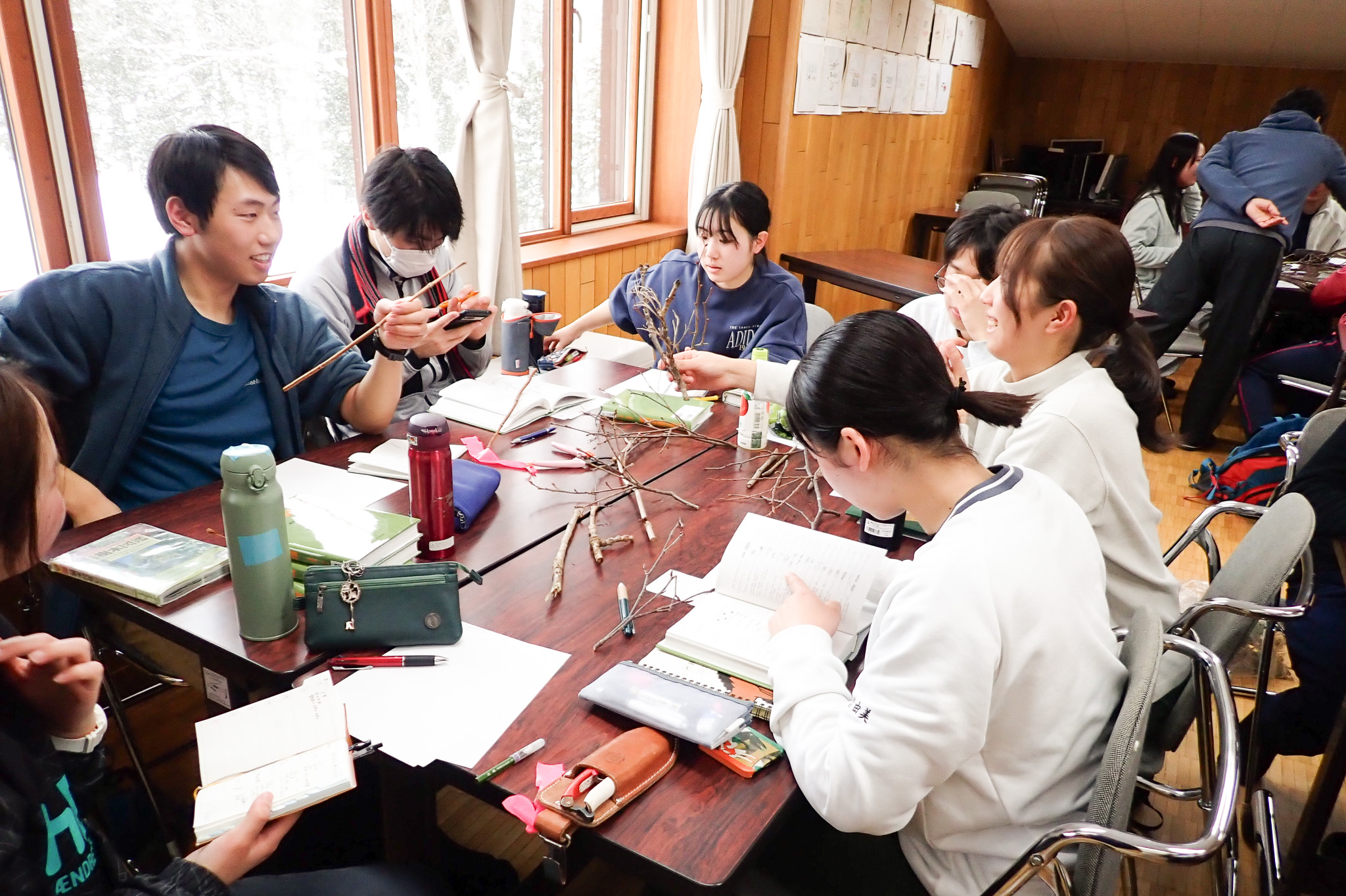
Back at the research station, students closely observed and sketched the buds before comparing them with reference materials to identify different tree species, which is an essential skill for forestry work during logging operations.
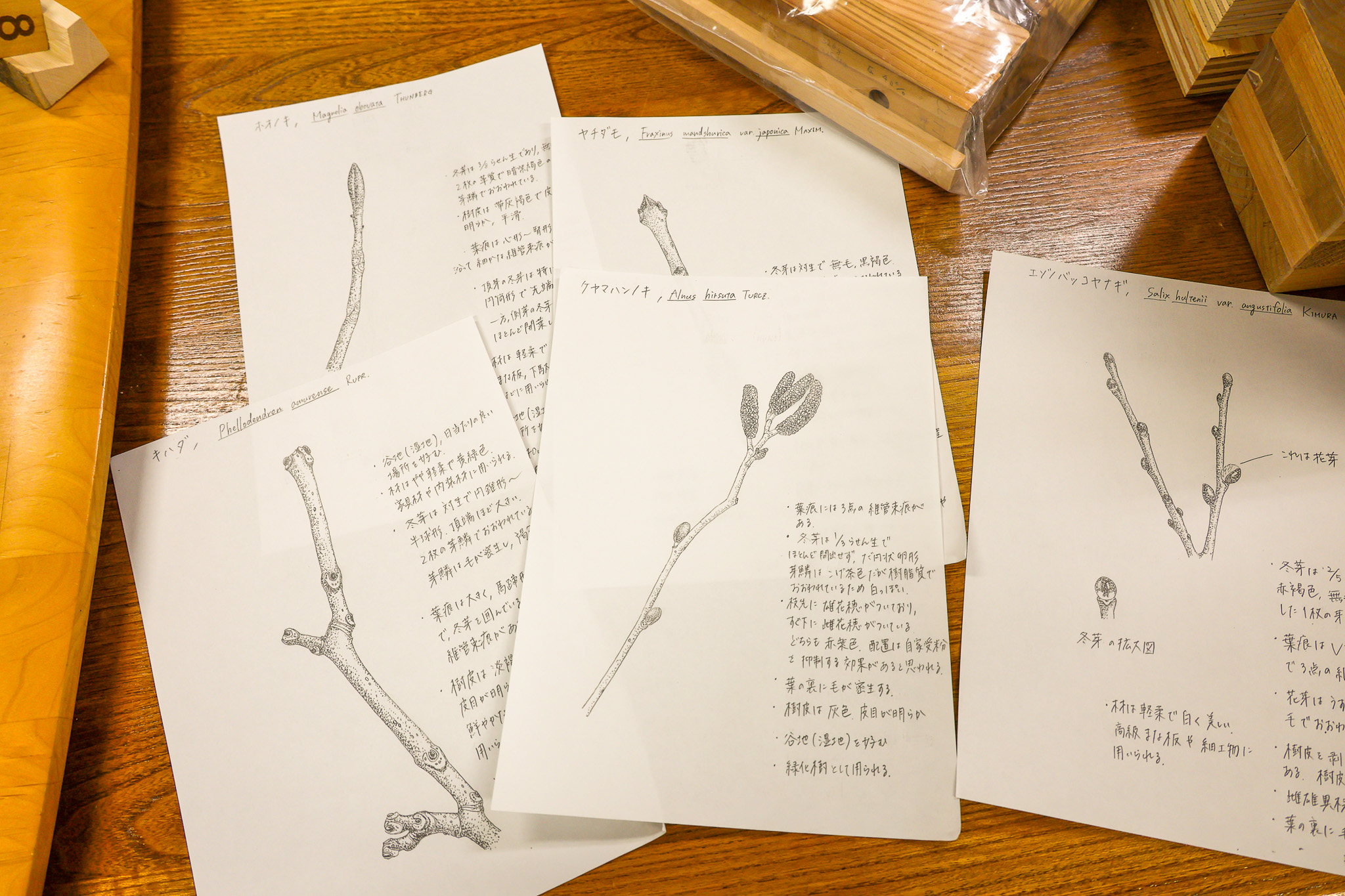
Winter bud sketches created by students. Outstanding sketches were recognized by the field staff.
Students also conducted a range of field surveys, including snowpack measurements, vegetation surveys, forest floor observations, and frost crack investigations. A new activity introduced this year focused on unused forest resources, encouraging students to consider how underutilized materials could gain economic value.
One traditional exercise in the practicum is snowpack cross-section observation. Working together, students dug a large vertical pit down to the ground surface and measured the temperature and density of each snow layer.
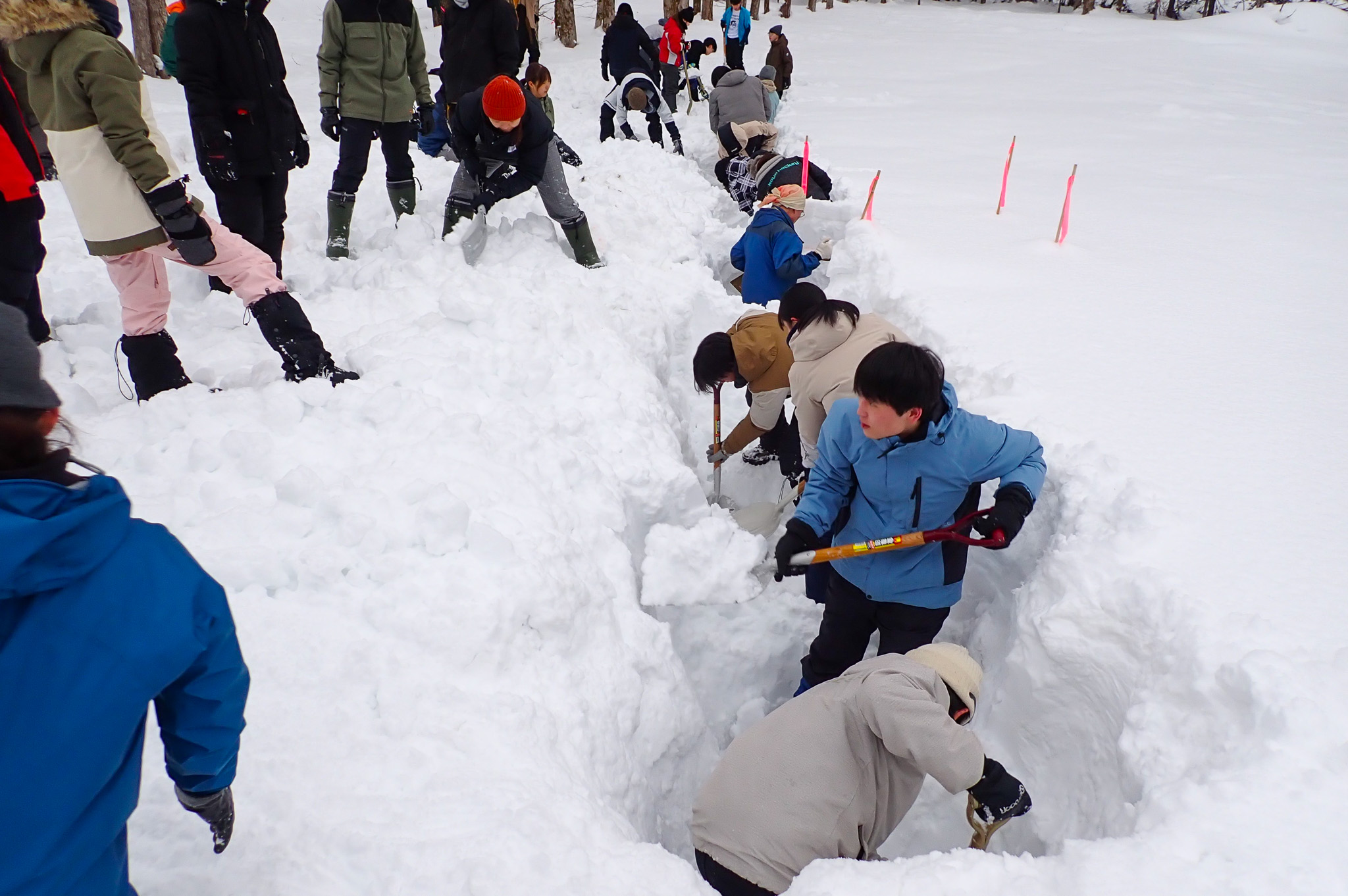
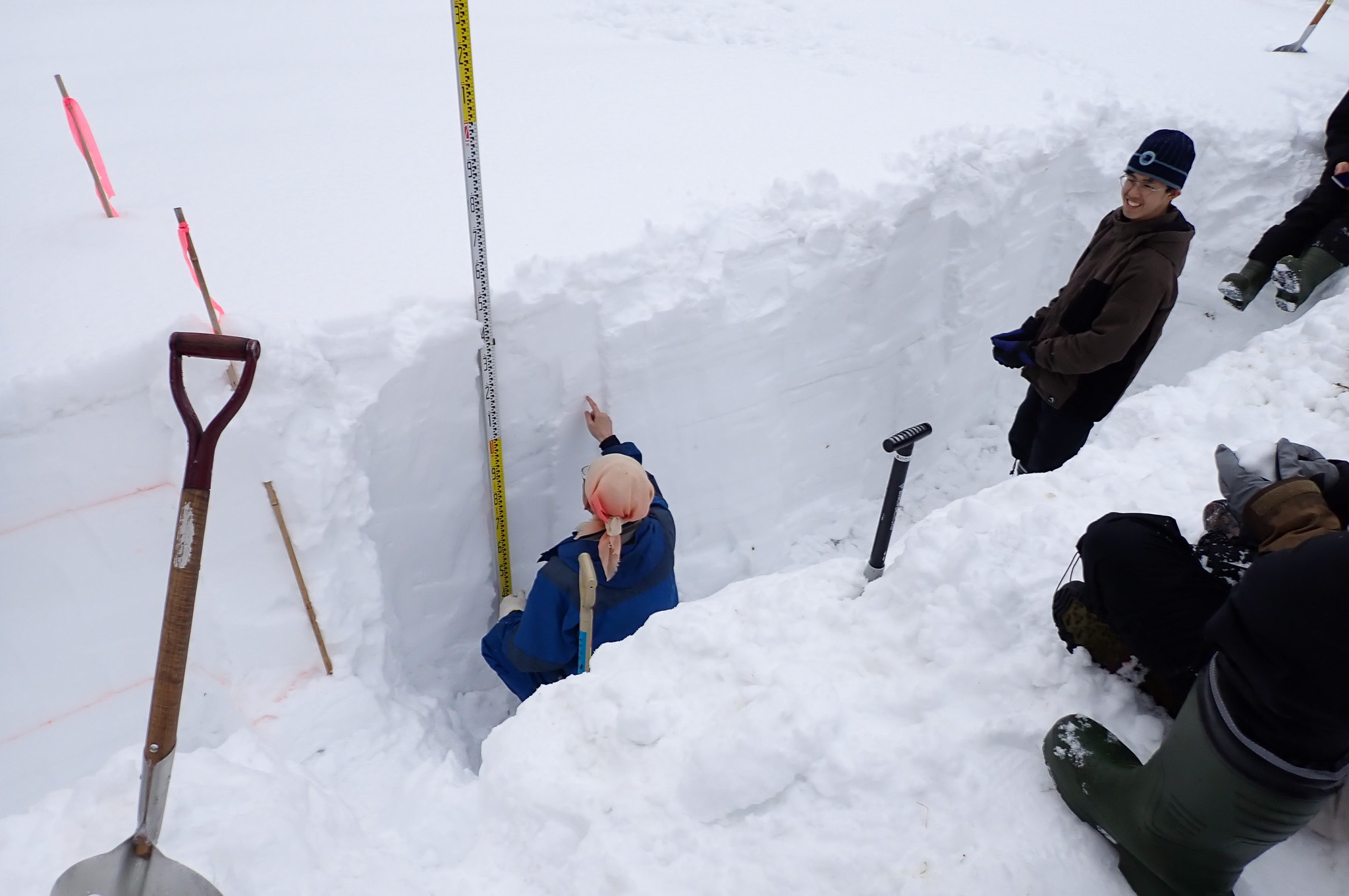
Students digging a snow pit and measuring the temperature and density of each snow layer.
Understanding how meltwater moves through snowpacks is important for predicting water flow during the spring thaw and for disaster prevention in heavy-snow regions.
Later in the program, students observed logging and timber transportation operations, gaining firsthand insight into forestry practices in the field. The training concluded with a visit to the Forest Products Research Institute in Asahikawa, where students learned about wood processing technologies and research on forest products.
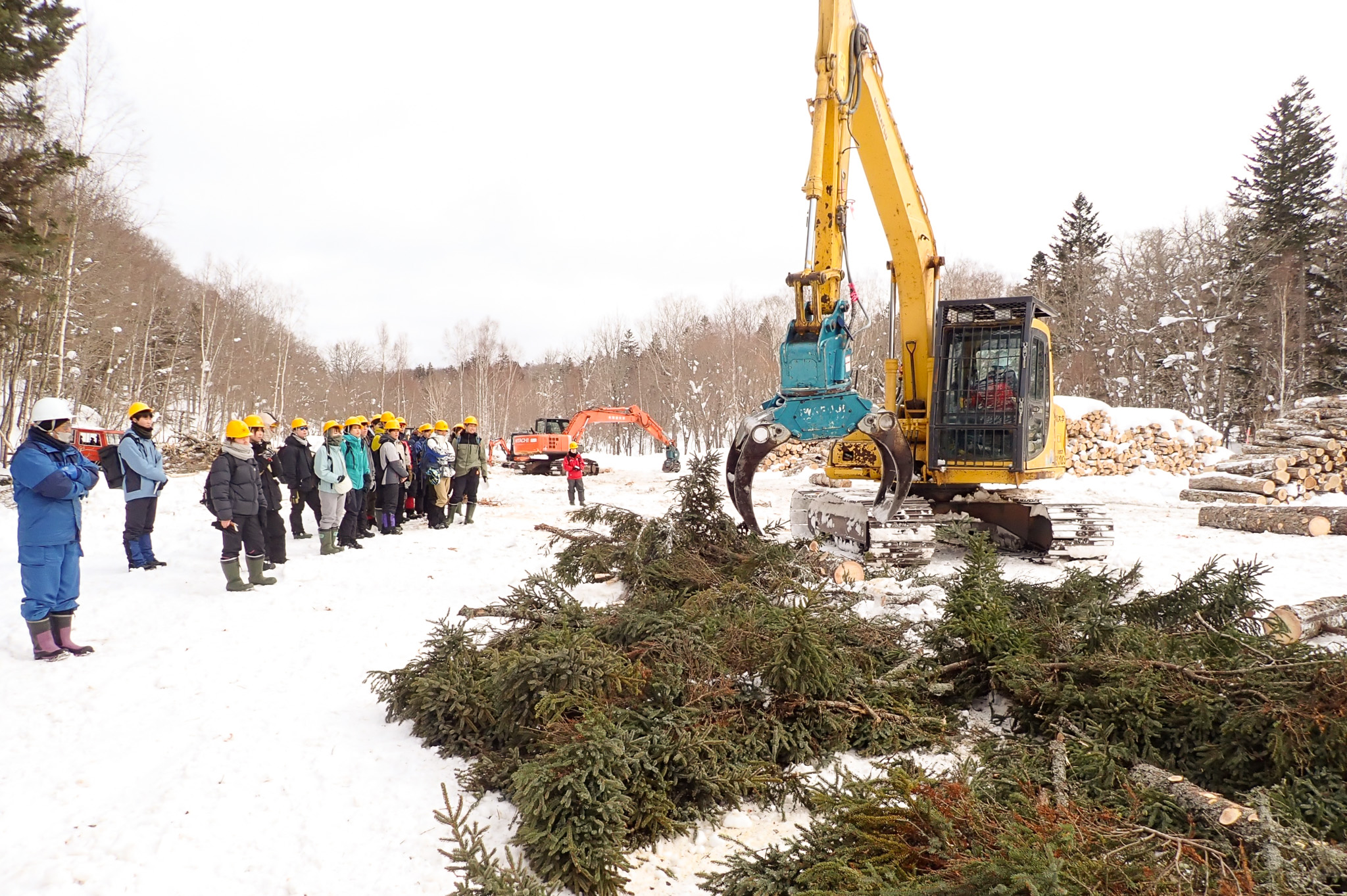
Learning together in the field
For many participants, the practicum provided a new understanding of how forestry research connects with real-world industries and environmental challenges.
Students reflected that seeing forestry technologies and research in action helped them better understand how their academic studies relate to society. Others noted the importance of developing new ways to utilize underused forest resources and expand markets for wood products.
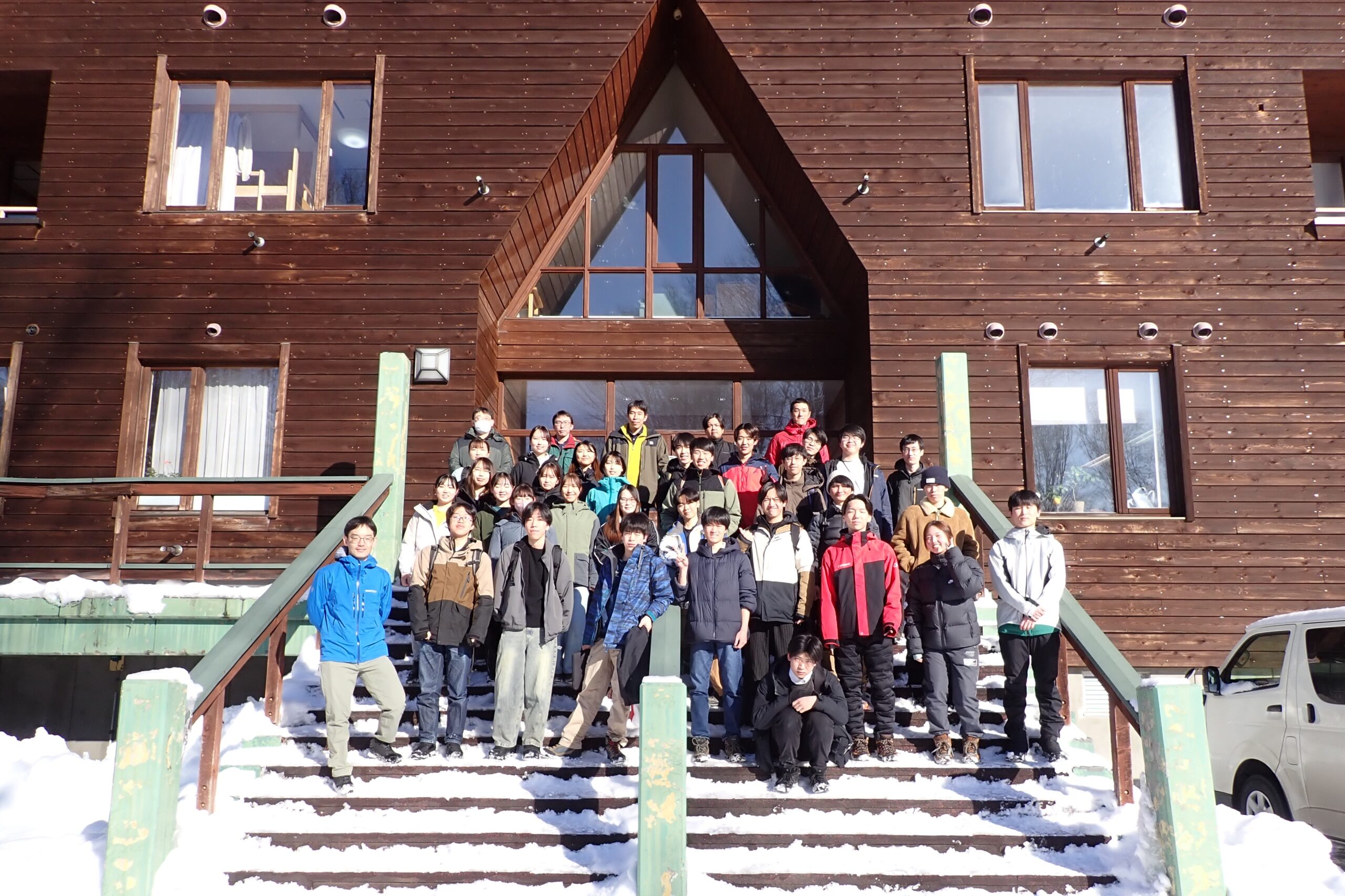
For Takanashi, who also participated in the practicum as a student during his own studies, the experience offers lessons that extend beyond technical training.
“The greatest value of this practicum is living and learning together. Working as a team in a challenging environment helps students grow as individuals and creates lasting memories. Even now, when I meet my former classmates, we still talk about our winter field training,” he said.
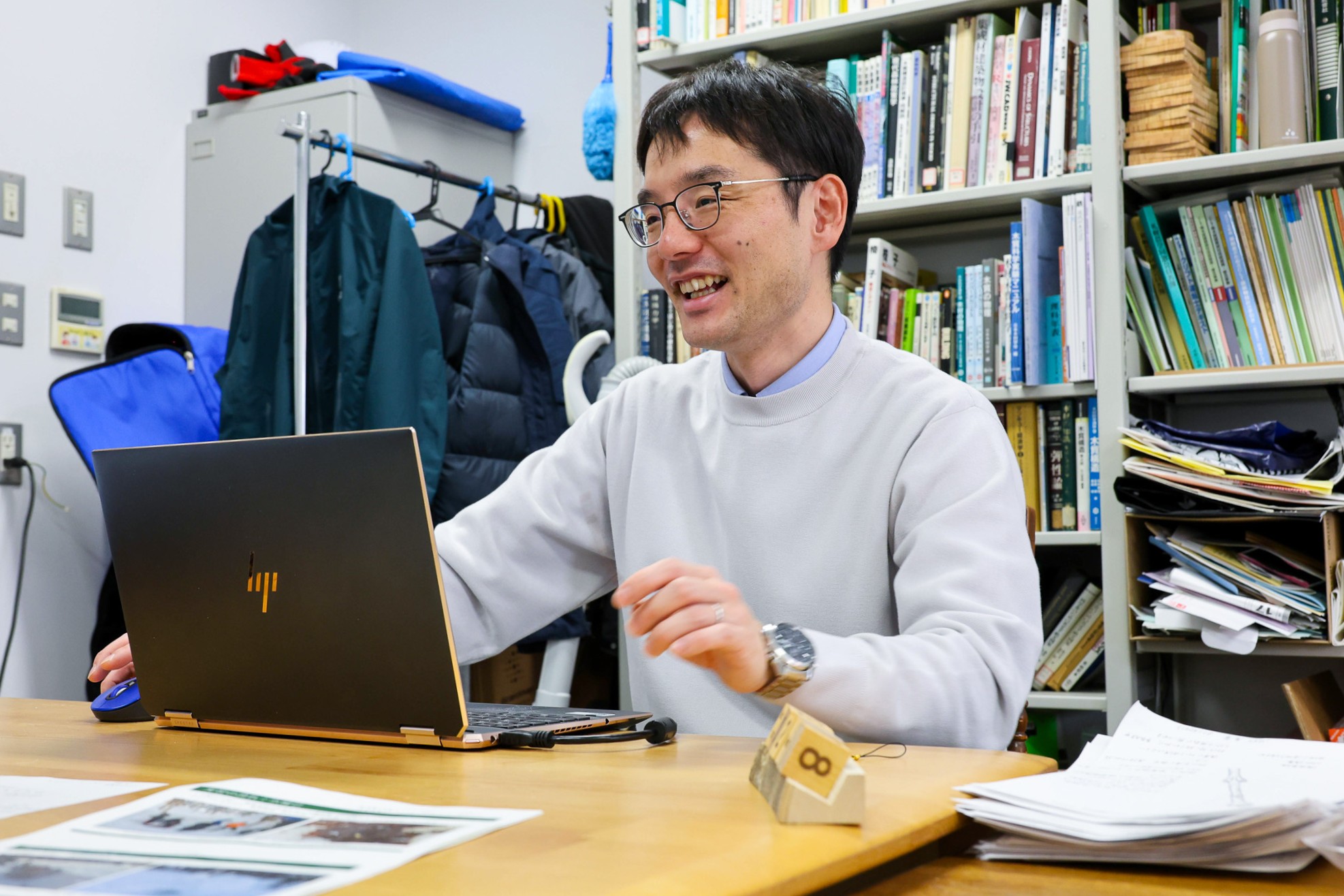
Through experiences that combine field research, teamwork, and practical forestry knowledge, this practicum continues to carry forward HU’s tradition of hands-on education rooted in the natural environment.

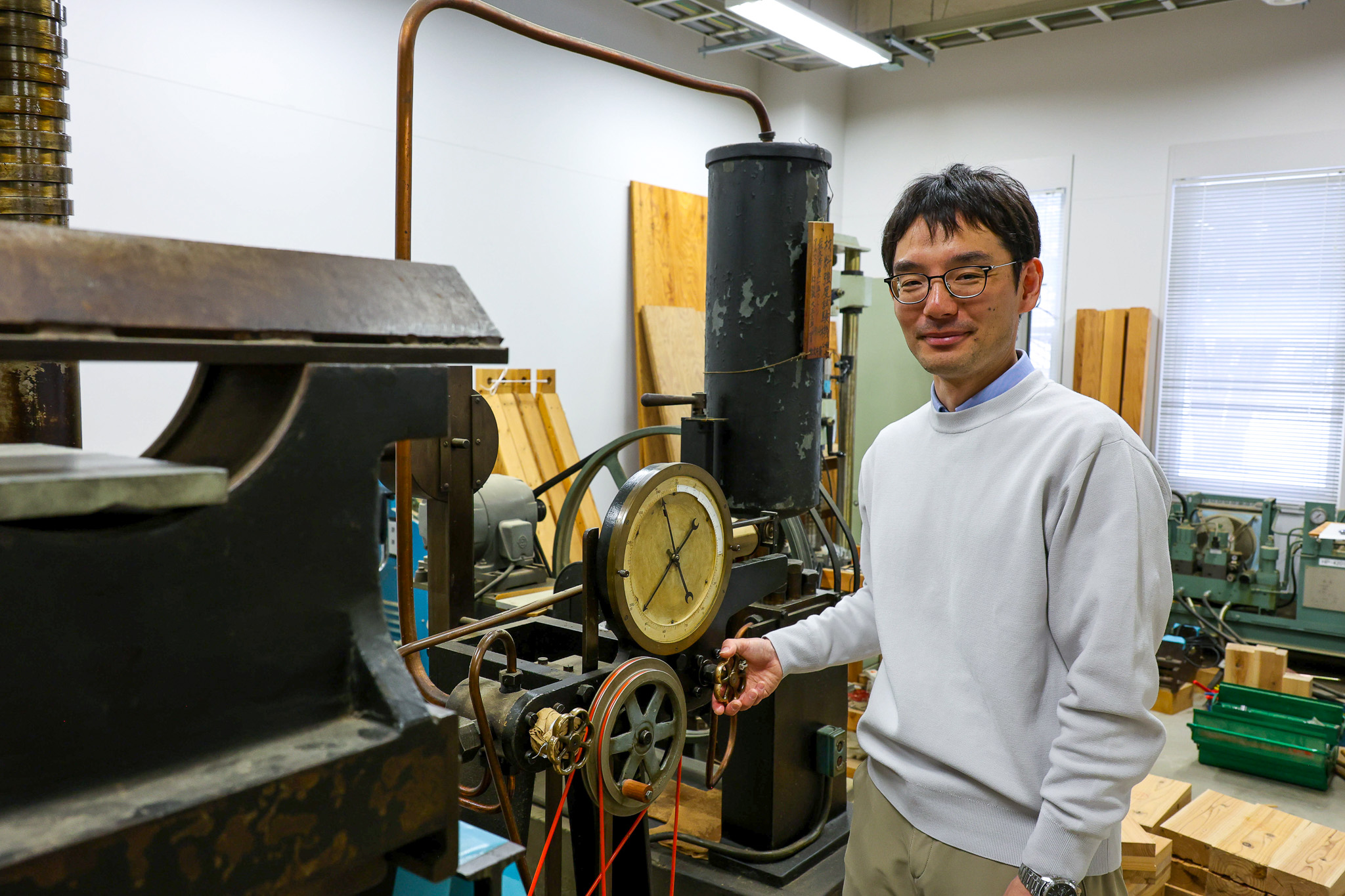
Left: Craft products made by students using timber from the Uryu Experimental Forest
Right: Assistant Professor Takanashi with a materials strength testing machine manufactured in the Taisho era (Photo by Miho Nagao)
Based on the original Japanese article by Ayumi Hasegawa, PRC
https://www.hokudai.ac.jp/researchtimes/2026/03/post-175.html
Photos by Ryuya Takanashi, Assistant Professor, Research Faculty of Agriculture