


This article was published in Japanese in Litterae Populi magazine (Spring 2026, Vol. 76)
As the damage caused by climate change becomes more serious, Green Transformation (GX)—a fundamental change in energy use and the industrial structure—has become a global issue. GX is an initiative to shift from a society dependent on fossil fuels such as oil and coal to a sustainable society based on renewable energy and low-carbon technologies. We introduce research at Hokkaido University that looks more deeply at nature and applies its wisdom to GX.
A world-class geosite is attracting attention in the field of GX
About 155 kilometers southeast of the Sapporo Campus, at the southern end of the Hidaka Mountains, which are often called the “backbone” of Hokkaido, lies Mount Apoi (elevation 810 meters) in Samani Town. Mount Apoi is a UNESCO-recognized Global Geopark. It formed approximately 13 million years ago when the collision of two continental plates caused the land to rise, pushing up a portion of the mantle from tens of kilometers below to the surface. Consequently, the Mount Apoi area is a globally rare location that’s widely distributed with “peridotite,” which is essentially the mantle itself exposed at the surface. This geologically valuable mountain is now gaining attention as a new site for research on hydrogen energy sources.

“White Hydrogen” Sought from Underground Worldwide
As peridotite rises toward the surface, it reacts with water in the ground and air, transforming into serpentinite rock with its characteristic snake-like pattern. This phenomenon is called serpentinization, and hydrogen gas is produced during the reaction. When used as fuel, hydrogen produces only water, without emitting carbon dioxide, making it a promising next-generation energy source. Against this backdrop, natural hydrogen generated by serpentinization is termed “white hydrogen,” and underground exploration for it is advancing globally.
Hokkaido University is also participating in a national research project on natural hydrogen, initiating studies leveraging Hokkaido’s geology. Since the amount of hydrogen generated varies depending on the types and quantities of minerals contained in peridotite, understanding the mechanism behind the chemical reaction of peridotite could provide clues for locating sites where natural hydrogen is generated. Associate Professor Yoko Ohtomo of the Faculty of Engineering, who studies serpentinization reactions, states, “The peridotite at Mount Apoi is globally renowned as ‘Horoman Peridotite.’ Its excellent state of preservation makes it an ideal research location for understanding chemical reactions in the Earth’s deep interior.”

Natural Hydrogen in Hot Springs?
Generally, serpentinization reactions were thought to proceed under high-temperature conditions of 200–300°C. However, there are examples where hydrogen is generated in natural environments below 100°C, and the reason for this has not been clear.
Associate Professor Ohtomo, together with Professor Tsubasa Otake, also from the Faculty of Engineering, and other researchers, conducted detailed investigations on peridotites from Mount Apoi and other locations worldwide. Their findings revealed that at 90°C, a mineral called magnesium silicate hydrate forms. This mineral remains in a reactive solution state that’s conducive to hydrogen generation, allowing the reaction to proceed even at relatively low temperatures.
This mechanism, published in a paper in 2025, significantly advanced the understanding of natural hydrogen production environments. Associate Professor Ohtomo explains, “If we were to artificially induce serpentinization reactions to produce hydrogen, high-temperature reactions would require substantial energy. So, the fact that the reaction proceeds even at temperatures close to room temperature, like those found in hot springs, is advantageous in terms of energy efficiency.” She adds with a smile, “Actually, near Mount Apoi, there’s an open-air bath made of peridotite. You might wonder if hydrogen is being produced there. It’s quite charming to think about while having a soak.”
Not only does peridotite react with water to produce hydrogen, but it also strongly alkalinizes the water it comes in contact with and dissolves carbon dioxide. The carbon dioxide reduction method that utilizes this effect is called “rock weathering enhancement” and is attracting global attention. Associate Professor Ohtomo is also advancing research on rock weathering enhancement using basalt, which contains peridotite.
“I want to keep observing nature for the rest of my life.”
As a student, Associate Professor Ohtomo began her research driven by a desire to understand the origins of life. While investigating rocks from around 3.8 billion years ago in places like Greenland, searching for traces of life, she discovered that the hydrogen produced by serpentinization reactions serves as an energy source for microorganisms.
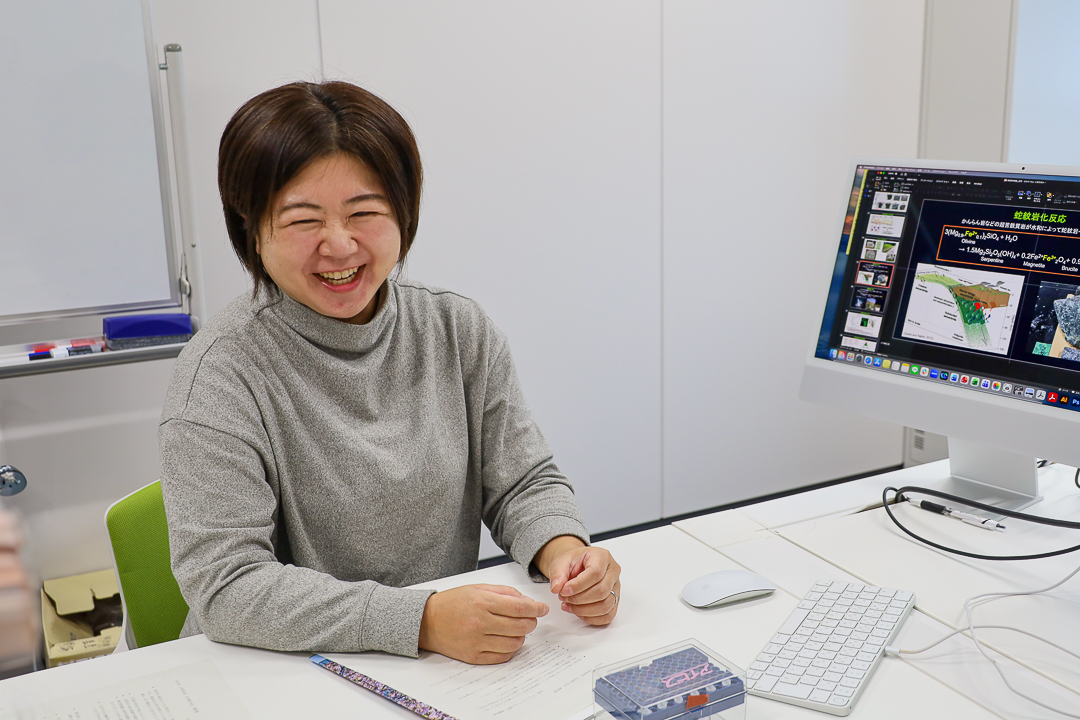
Natural chemical reactions that quietly proceed inside the Earth, such as serpentinization, have a wide-ranging impact, from the origin of life to GX. She says, “A deep understanding of nature will also lead to measures against climate change. I want to keep observing nature for the rest of my life.”
Tackling the Challenges of Renewable Energy
Natural hydrogen isn’t the only field expected to be a game-changer in energy transition. Another such area is thermal energy storage, whereby heat is stored in various materials.
While the adoption of renewable energy sources like solar and wind power has advanced as a measure against global warming, numerous challenges remain. These include output instability due to weather fluctuations and the need for output curtailment to prevent excess electricity when generation exceeds demand during daytime hours. Thermal energy storage technology is gaining attention as a solution to mitigate such fluctuations.
Professor Takahiro Nomura of the Faculty of Engineering states, “It converts surplus electricity into heat for storage, then retrieves it when needed. Thermal storage holds significant potential for absorbing the fluctuations of renewable energy.” Professor Nomura developed h-MEPCM, a high-temperature thermal storage material that safely and efficiently stores heat at around 600°C. This material encloses metallic substances in capsules approximately 30 micrometers in diameter (one micrometer is one-thousandth of a millimeter).
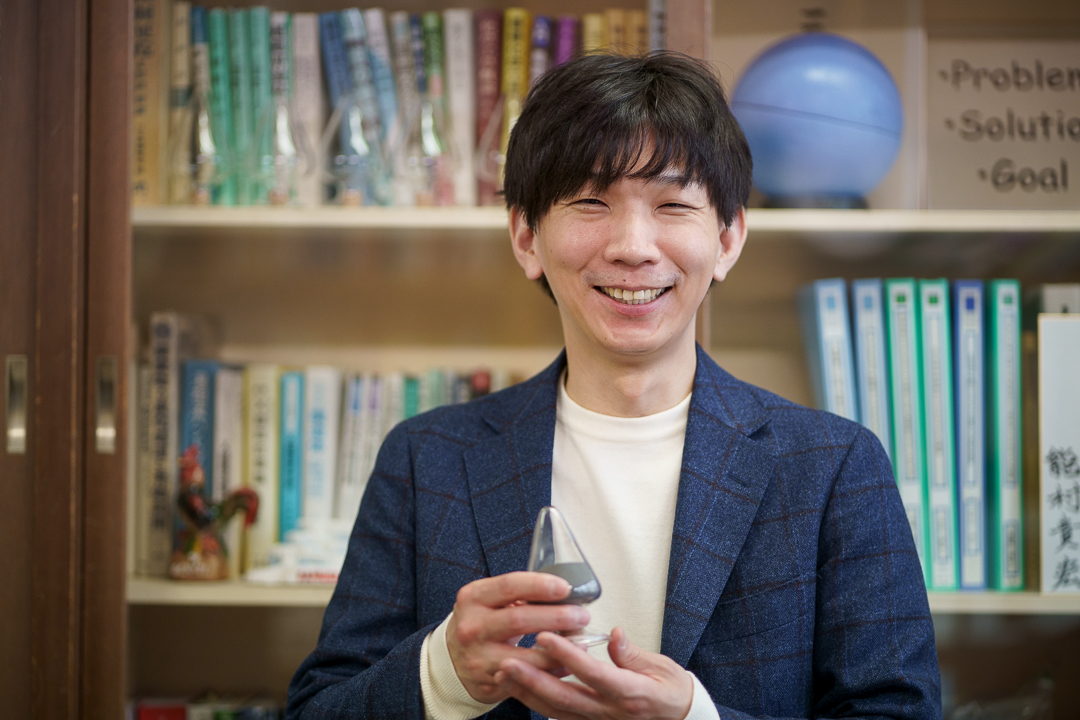
In his hand is a small vial containing powdered h-MEPCM. (Photo: Takumi S.)
Innovative Capsule for Storing High-Temperature Heat
The initial “h” in the name h-MEPCM stands for Hokkaido University, the “ME” for microencapsulation (enclosing contents in a shell), and the “PCM” for phase change material. “We put an ‘h’ in the name to signify that this innovative technology originates from Hokkaido University,” explains Professor Nomura.
Inside the ceramic outer shell is an aluminum-based metal. This metal melts and resolidifies in response to changes in temperature, utilizing the latent heat released during these phase changes. This allows it to store over five times more heat than conventional thermal energy storage materials. “One liter of these capsules stores as much energy as is released by burning 150 liters of hydrogen,” Professor Nomura explains.
The raw materials for h-MEPCM—i.e., aluminum and oxygen—are abundant on Earth and can be utilized as resources for the long term. Furthermore, the heat required to reach aluminum’s melting point of approximately 600°C covers about half of the temperature ranges used in industry, such as drying and heat treatment.
Professor Nomura elaborates, “For example, by utilizing existing coal-fired power plant equipment and using heat from the thermal energy storage material to drive a turbine for power generation instead of burning coal, we can advance decarbonization while leveraging existing infrastructure.” Collaborations with companies are already underway, and research is expanding to include cross-disciplinary applications such as thermal management and temperature control for electric vehicles and fuel cells, as well as catalysts with heat storage capabilities.
Behind the seemingly simple act of storing heat lies the intersection of diverse knowledge fields: materials science, thermal engineering, and energy policy. Professor Nomura’s research continues to make solid strides toward the utilization of renewable energy, the promotion of industrial energy conservation, and the realization of a decarbonized society.
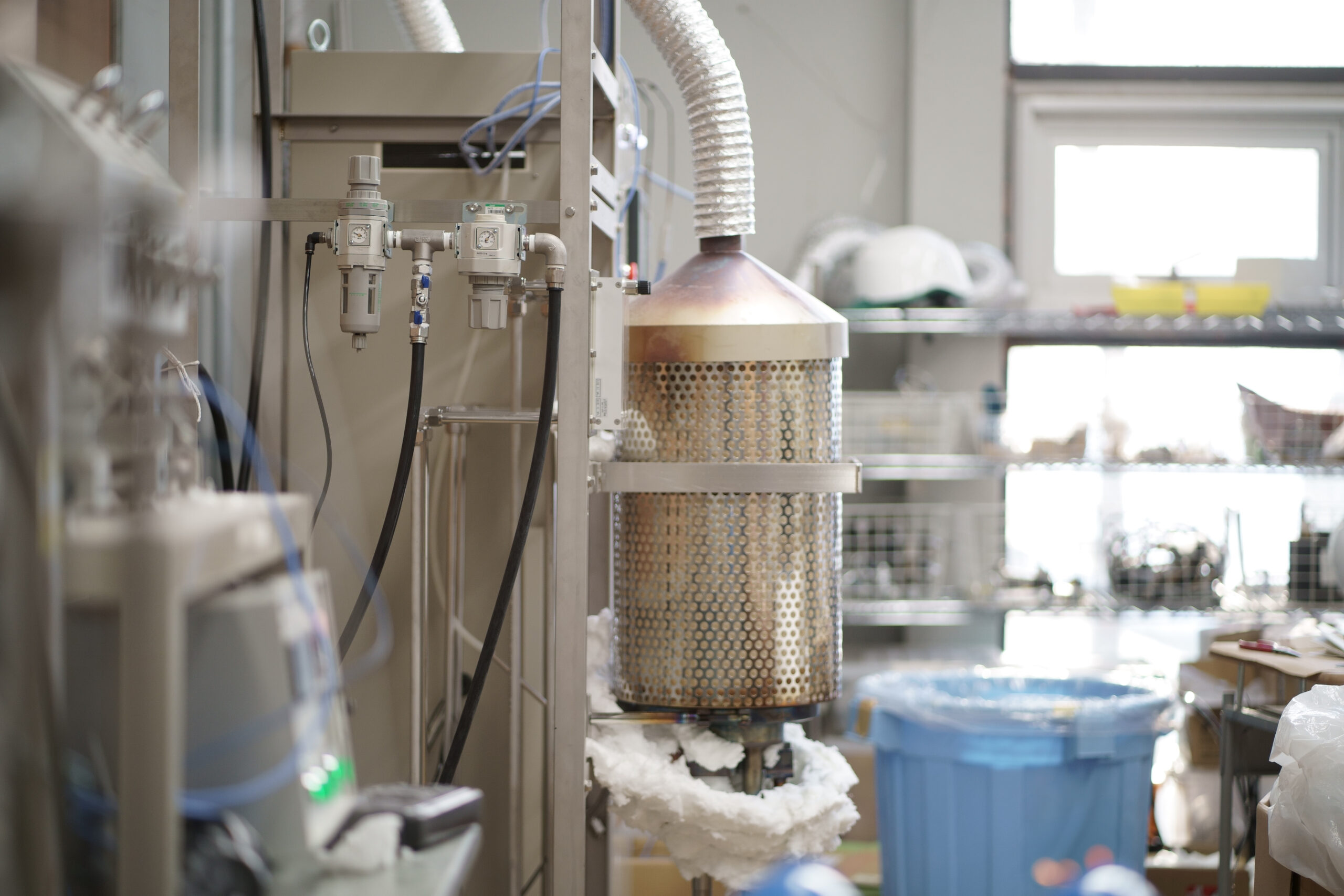
Left: Performance evaluation device for heat storage modules (Photo: Takumi S.)
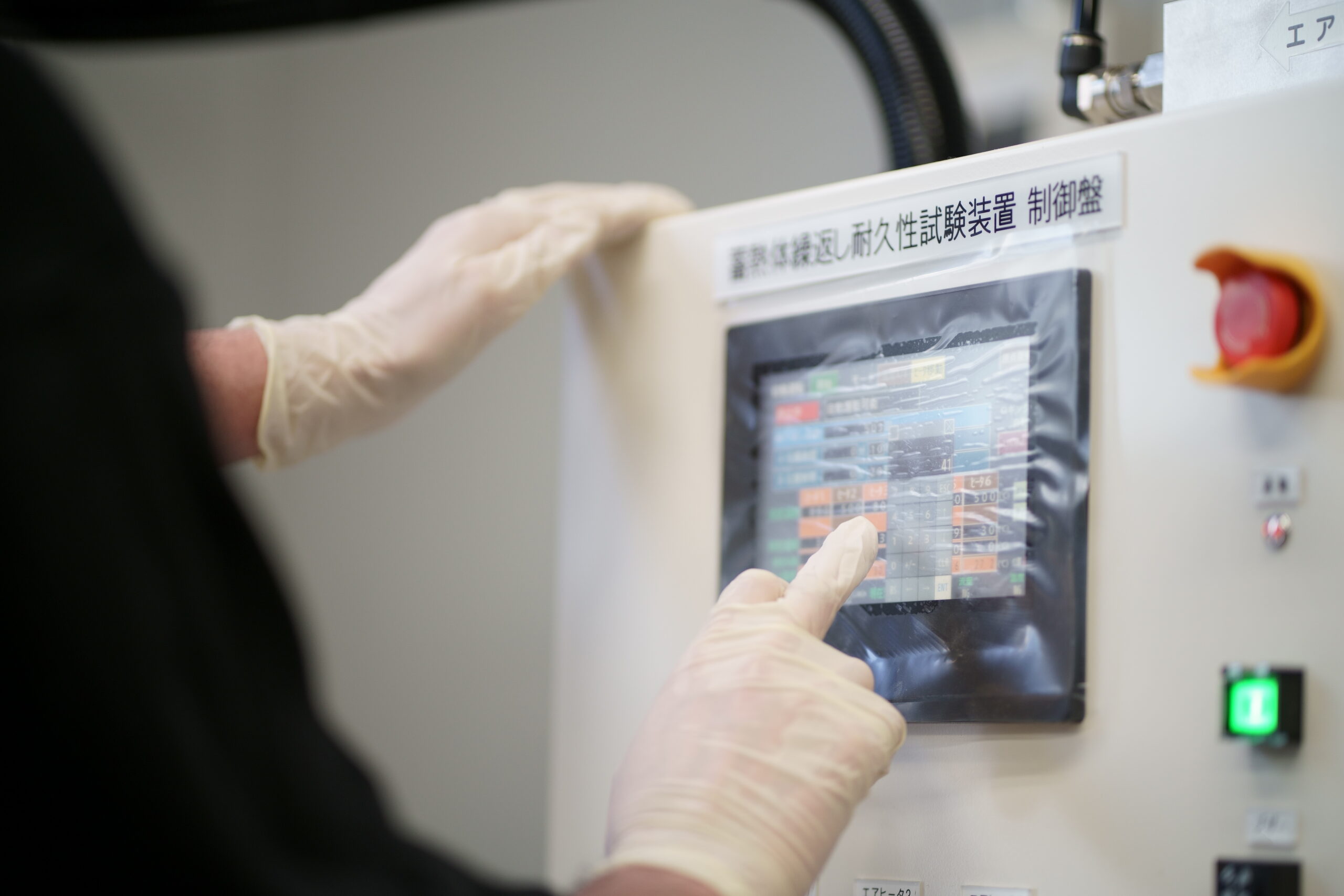
Right: Hokkaido University’s h-MEPCM heat storage material was developed after thousands of high-temperature tests. (Photo: Takumi S.)
From Hokkaido to the World: Establishing a Knowledge Hub for Green Transformation
Hokkaido is actively utilizing renewable energy sources like solar, wind, and biomass, with momentum building for GX advancement. Against this backdrop, Hokkaido University established the Green Transformation Innovation Center in fiscal 2025 to consolidate campus energy research and move it toward implementation in society.
The center brings together approximately 80 researchers from 10 departments, including Associate Professor Ohtomo and Professor Nomura. These researchers are specialists in areas that are Hokkaido University’s strengths, such as renewable energy, thermal storage, batteries, and catalysis. They’re advancing pioneering, interdisciplinary research. Furthermore, the center collaborates with national and local governments, as well as with financial institutions, playing a role in connecting research outcomes to society. It actively creates opportunities to discuss GX challenges and potential, both on and off campus, by regularly holding salons and roundtable discussions with companies, local governments, and financial institutions.
Hiroki Habazaki, Dean of the Faculty of Engineering and Director of the Green Transformation Innovation Center, states, “Co-creation with society is essential for GX. We aim to connect Hokkaido University’s diverse research with industry while fostering policy-level collaboration to promote technology adoption.”
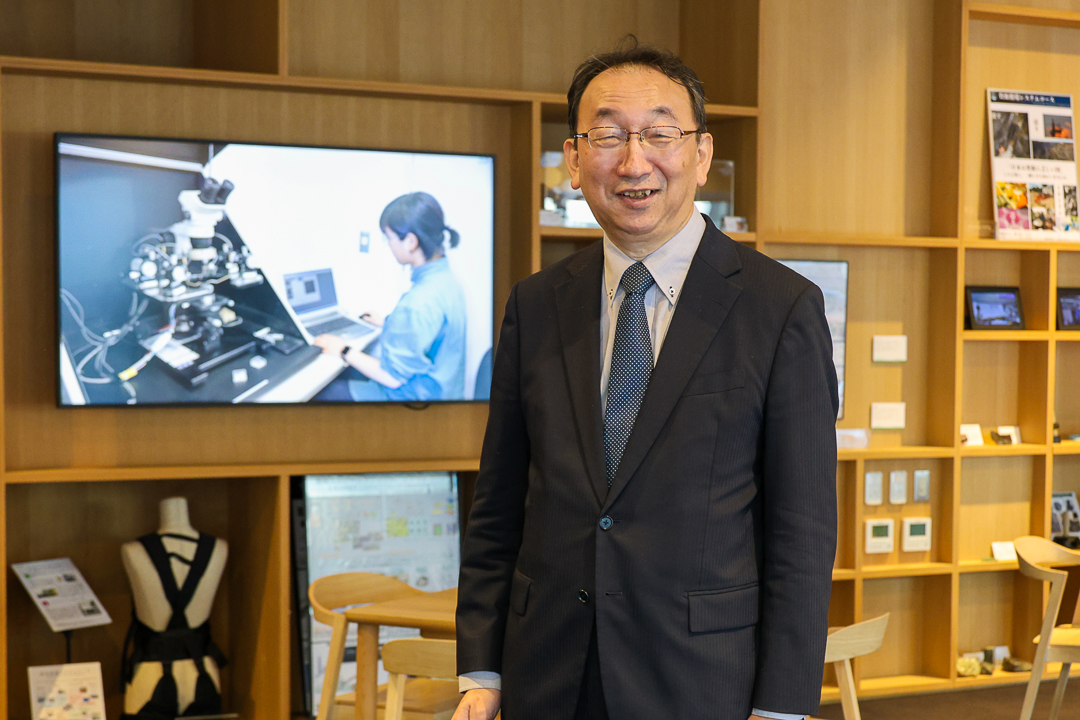
Hokkaido University’s mid-term vision, HUVISION 2030, aims to realize “sustainable well-being in society.” Dean Habazaki of the Faculty of Engineering envisions the following: “GX aligns with the principles of HUVISION 2030. The Center will serve as a hub of knowledge, spreading Hokkaido University’s GX initiatives—efforts to curb climate change while fostering economic development—from Hokkaido to the world.”
Hokkaido University researchers are advancing studies that deeply explicate natural mechanisms—from chemical reactions in the Earth’s depths to industrial thermal utilization—and maximize their potential.
Hokkaido University’s endeavors to advance GX by harnessing nature’s power will continue.