

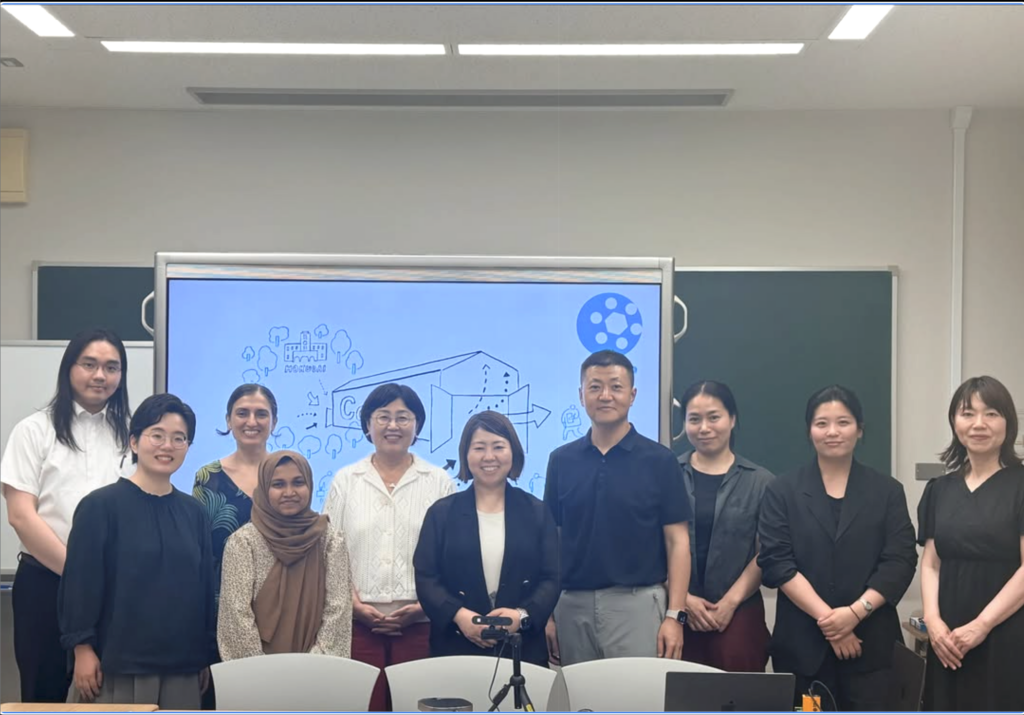
Hokkaido Summer Institute’s latest course explores science communication across countries and cultures.
When dengue outbreaks threatened communities in Singapore year after year, the government and health authorities decided to launch a novel public health campaign. Backed by rigorous research, they released modified male mosquitoes of the same species known to spread the dengue virus into affected communities. When these mosquitoes mated with female mosquitoes, the resulting eggs would not hatch, thus preventing the dengue-carrying mosquitoes from reproducing.
This was Singapore’s Project Wolbachia, first launched in 2016 as a small neighborhood trial that later became a nationwide health campaign. But how do you explain to people living in these communities that the health authorities are releasing more mosquitoes in order to stop the spread of dengue?
This case study was one of several presented at the recent Hokkaido Summer Institute course, “Science Communication in Our Time: Perspectives from Around the World.”
Singapore’s answer and communications approach involved a multilingual, multi-channel outreach campaign to explain to people what was being done and the science behind the campaign to fight dengue. Communication became an integral part of the overall health campaign, helping shape its success by building public understanding and support for a scientifically backed approach to dengue control.
The summer course, held at Hokkaido University’s Sapporo campus from July 24 to 25, brought together students and experts from Japan, Singapore, South Korea and China, who explored how science communication has evolved across countries shaped by cultural and social contexts.
Moving beyond the “deficit model” of science communication in Japan with CoSTEP
In 2005, when science communication was still relatively new in Japan, Hokkaido University pioneered a new education and training program that would nurture the future science communicators of the country. Today, the Communication in Science & Technology Education & Research Program (CoSTEP) is one of Japan’s longest-running programs of the kind, with more than 1,400 graduates.
Motoko Okumoto, Director of CoSTEP, introduced participants to the program and its approach, which cultivates a holistic mindset and promotes values across communications, interest in science, networking, and reflection.
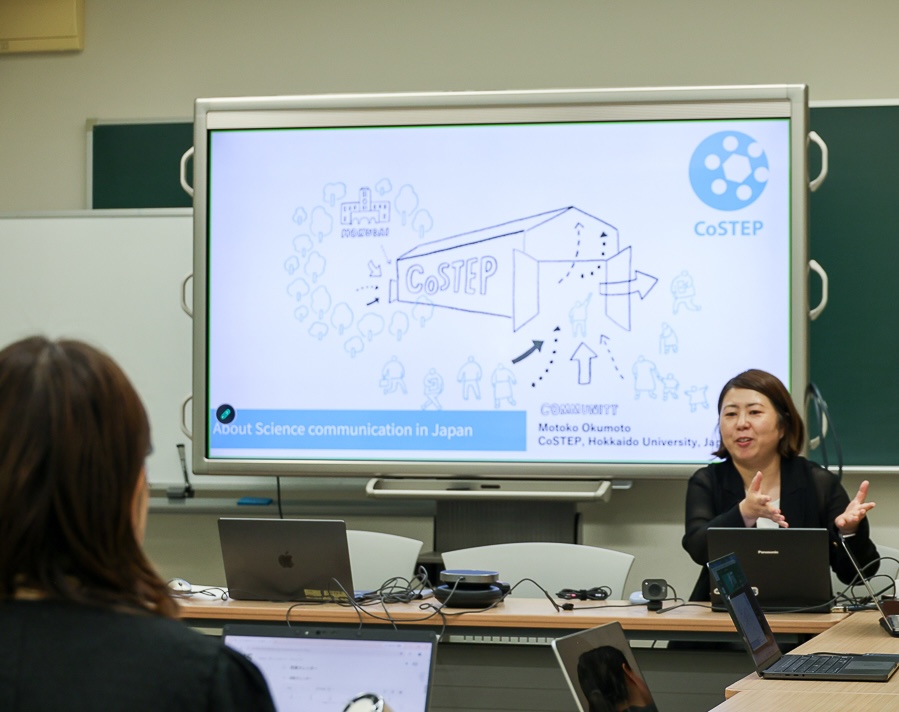
Participants learned about different models of science communication, including some that can unintentionally create divisions between experts and the public. Okumoto encouraged them to keep in mind, for example, the “deficit model” of science communication, which assumes that the public lacks scientific knowledge and therefore experts need to provide them with facts through a one-way, top-down approach. This can lead to an artificial hierarchy between those seen as possessing knowledge and those seen as lacking it, in turn creating barriers to communication.
Japan also presents a unique cultural context. According to OECD data, Japanese students, on average, perform well in science subjects when they are in school, but they lack the motivation to pursue science-related careers later on. This makes science communication important not only for cultivating curiosity but also for helping, especially young people, see how science connects to their everyday lives and society.
Talking about reflection and recording, which are important aspects of the program at CoSTEP, Okumoto described it as follows: “Science communication is not always mutually agreeable but is a continuing process that moves between hope and despair. Recording and sharing these experiences can help society continue the dialogue and not grow weary of it.” It ultimately promotes the circulation of knowledge between the world of science and the world in which science is applied.
Understanding science through history with South Korea
Tracing how scientific ideas develop, new theories change over time, and scientific methods become established can offer valuable insight into the nature of scientific progress. It can also help us better understand the conditions and environments in which science and research best take place.
Dr. Sook-Kyoung, a professor at the Korea Institute of Energy Technology, approached science communication in her presentation through the lens of the history and philosophy of science.
With a PhD in science popularisation from South Korea and the United Kingdom, Sook-Kyoung introduced participants to the emergence of the history of science as an academic field and its development around the world.
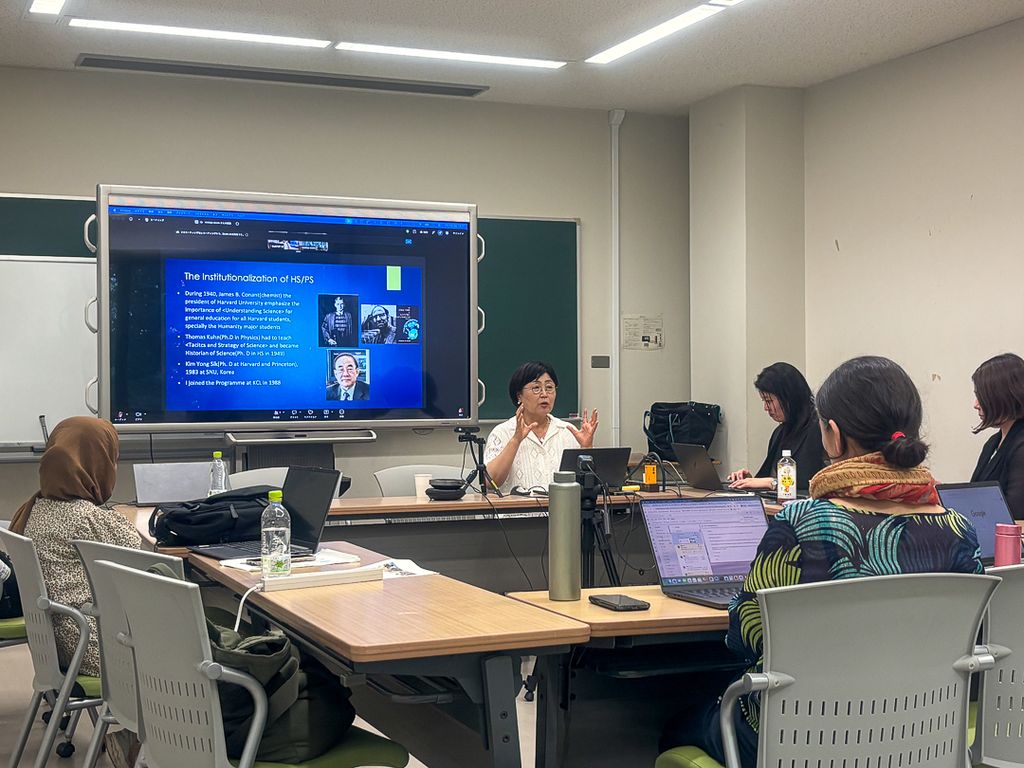
There are many ways to explore the historical evolution of scientific knowledge, and it can be presented in an interesting way to people through biographies of famous scientists, science museum exhibitions, and captivating documentaries such as “The Ascent of Man” and Carl Sagan’s “Cosmos”.
Understanding this history matters because science does not exist in isolation. Scientific ideas develop within particular social, cultural and historical contexts, and the way societies understand and communicate science changes alongside them.
Today, society faces many urgent questions involving science and technology, from climate change and energy demands to artificial intelligence, water shortages and population growth. These involve complex choices, competing interests and public policy initiatives, requiring informed decision-making.
This requires that all stakeholders, including the general public, have access to information they can understand and evaluate.
Science communicators can help bridge that gap by translating complex ideas into accessible language, helping people distinguish reliable information from misinformation, and supporting society in using scientific knowledge wisely.
From environmental action to social change in China
When Xin Hao was a university student in China, he organized a green bicycle tour around Zhejiang Province, a roughly 2,000-km journey that took about 36 days. The idea was to explore the environmental conditions of the region, but when Hao witnessed the serious water pollution, he was shocked. This eventually led him to establish Green Zhejiang, his first environmental non-governmental organization.
From there, his work has focused on connecting environmental science with practical social action for a range of causes, including waste management, water conservation, ecological community development and rural revitalization.
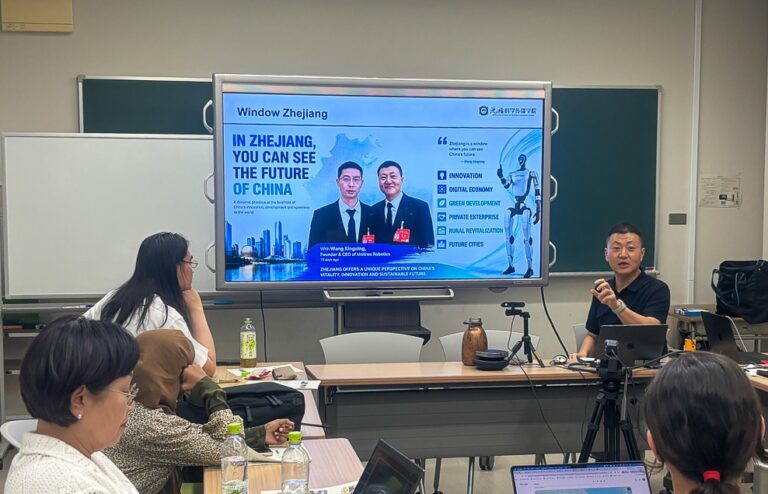
Xin Hao is also the founder of the Zhejiang Provincial Federation for Science Popularization, an organization that sees itself as a bridge between scientists, government, industry, and the public.
In his presentation, Hao described a model of science communication rooted in environmental action and community participation. His team helped create the China Water Pollution Map, a case study for using environmental information to help people understand problems affecting their communities.
Communicating science in a diverse society in Singapore
For the National University of Singapore (NUS)’s Dr. Linda Sellou, Singapore presents a particularly interesting environment for science communication. The country, which has four official languages and a population of several million living in a relatively small area, also boasts a non-resident population that accounts for more than 30 percent of its total population.
Communicating scientific and health information effectively in such a diverse society means carefully considering language, culture, audiences and communication channels.
Sellou presented several examples of how Singapore has approached these challenges.
One case study presented the country’s campaign to tackle diabetes. A health initiative to curb the diabetes crisis in the country became a whole-of-nation approach involving government, healthcare providers, industry, civil society, academia, and citizens. Shaping it as a two-way communication campaign between citizens and the government was a vital part of its success that also led to policy changes.
Another example came from the COVID-19 pandemic, when researchers at the NUS Yong Loo Lin School of Medicine sought to make use of comics for crisis communication. Recognizing the power of visual storytelling, they launched COVID Chronicles, a digital comic to explain COVID-19 science, prevention and vaccination to the general public. Drawing inspiration in part from Japan’s globally popular manga culture, the comics presented complex and often changing scientific information in a visual and accessible format that were widely distributed online.
Science communication as a bridge with society
From dengue control in Singapore to science communication education in Japan, the history of science in South Korea and environmental activism in China, the summer course presented science communication as shaped by the needs of the society in which it takes place. Languages, cultures, histories, institutions and public needs all influence how scientific knowledge is understood and shared.
Science communication, then, is about creating opportunities for dialogue between science and society, building trust, encouraging participation and helping people make sense of a rapidly changing world.
HSI 2026 is currently underway and will continue until October 2026.
To learn more, visit the HSI website: https://hokkaidosummerinstitute.oia.hokudai.ac.jp
Photos by
Public Relations & Communications Division and CoSTEP