

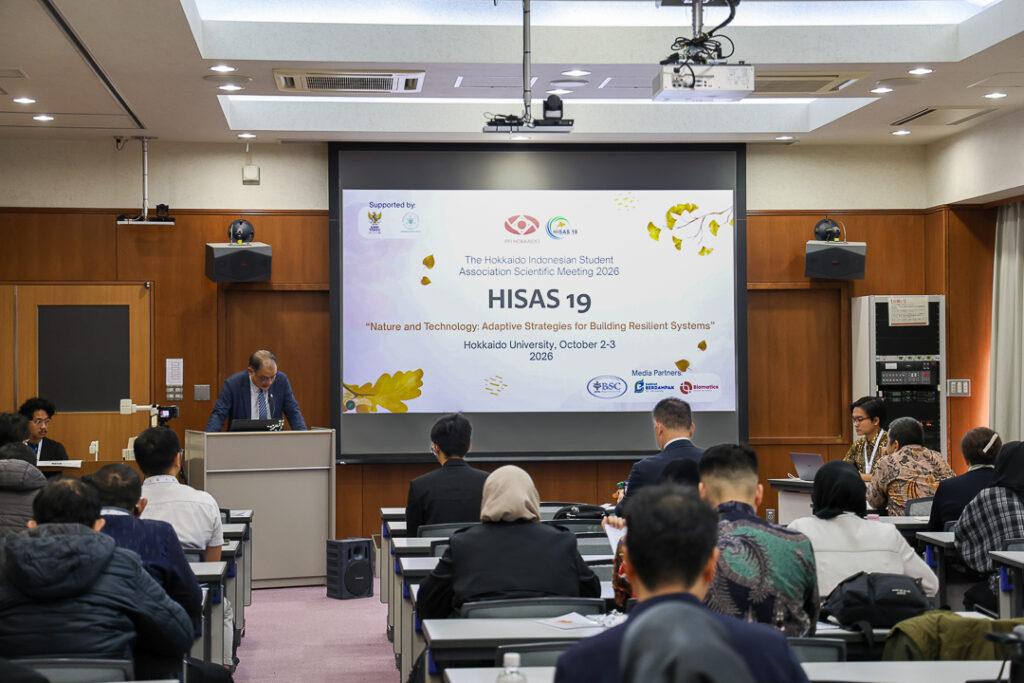
After a three-year break, the Hokkaido Indonesian Student Association Scientific Meeting (HISAS) returned for its 19th edition on October 2–3, 2026, bringing together students, researchers, and academics from Japan and Indonesia on the Sapporo Campus.
Organized by the Indonesian Student Association in Hokkaido (PPI Hokkaido), with support from the Embassy of Indonesia in Tokyo and the Hokkaido University Indonesia Front Office, the two-day meeting was held in a hybrid format, welcoming participants both in person and online.
Under the theme Nature and Technology: Adaptive Strategies for Building Resilient Systems, HISAS 19 provided a platform for participants to share research and exchange ideas across disciplines, including engineering, life and environmental sciences, agriculture, and fundamental science.
Bringing together different research perspectives
The first day opened with welcoming remarks from Professor Kenji Monde of Hokkaido University and Professor Amzul Rifin, Education and Culture Attaché at the Embassy of Indonesia in Tokyo. Professor Hanny Wijaya, a Hokkaido University alumna and head of the University’s Indonesia Front Office, also delivered prerecorded welcoming remarks.
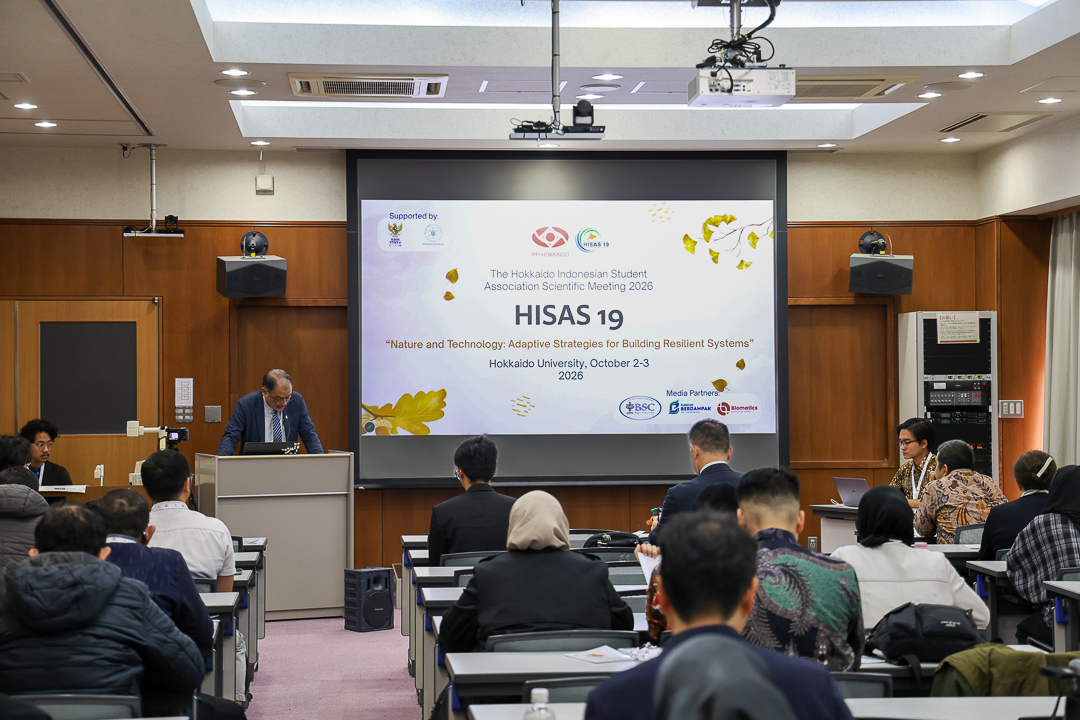
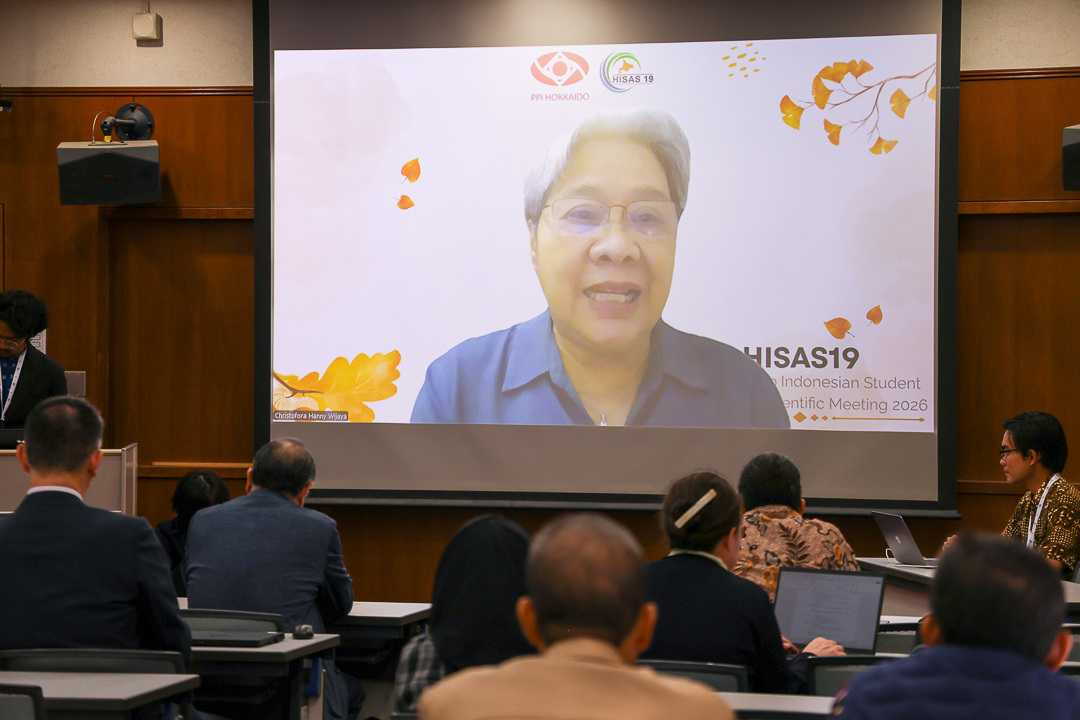
In his remarks, Professor Monde emphasized the importance of international and interdisciplinary collaboration in addressing global challenges. He also highlighted the longstanding academic ties between Hokkaido University and Indonesia, praising HISAS as an example of student leadership in creating opportunities for scientific exchange.
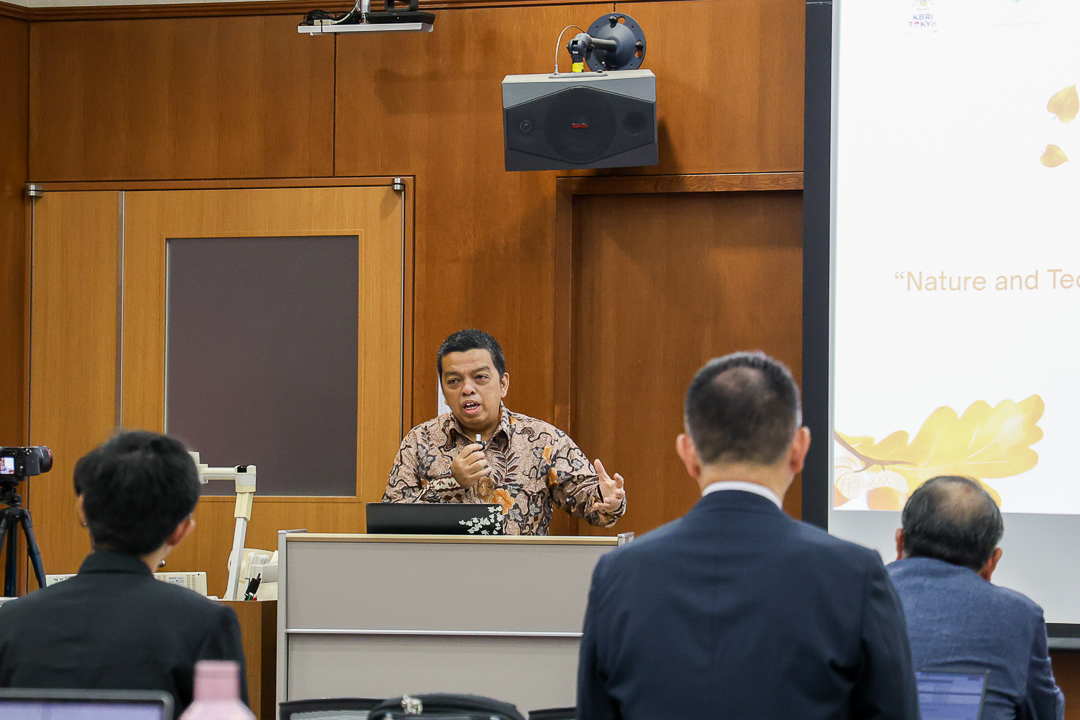
The day’s program featured invited lectures by researchers from Hokkaido University, Muroran Institute of Technology, and Institut Teknologi Bandung (ITB) in Indonesia, covering a range of scientific topics related to the meeting’s theme.
Speakers included Associate Professor Hajime Matsushima, Associate Professor Yoshinori Sasaki, and Professor Yoichiro Hoshino of Hokkaido University; Associate Professor Yuta Izumi of Muroran Institute of Technology; and Dr. Nabila Sofia Eryan Putri of ITB.
Their presentations explored a wide range of topics, including green infrastructure, infrastructure monitoring using multi-modal synthetic aperture radar (SAR), sea level changes associated with global warming, plant breeding in horticultural crops, and atmospheric water vapor monitoring using Global Navigation Satellite System (GNSS) networks.
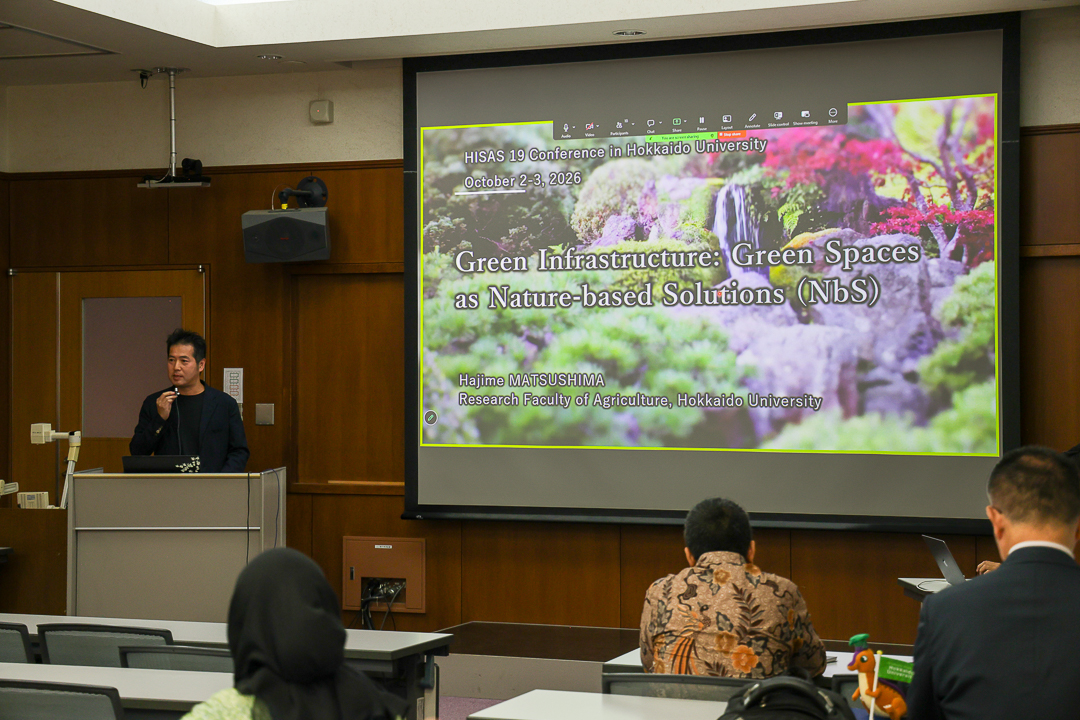
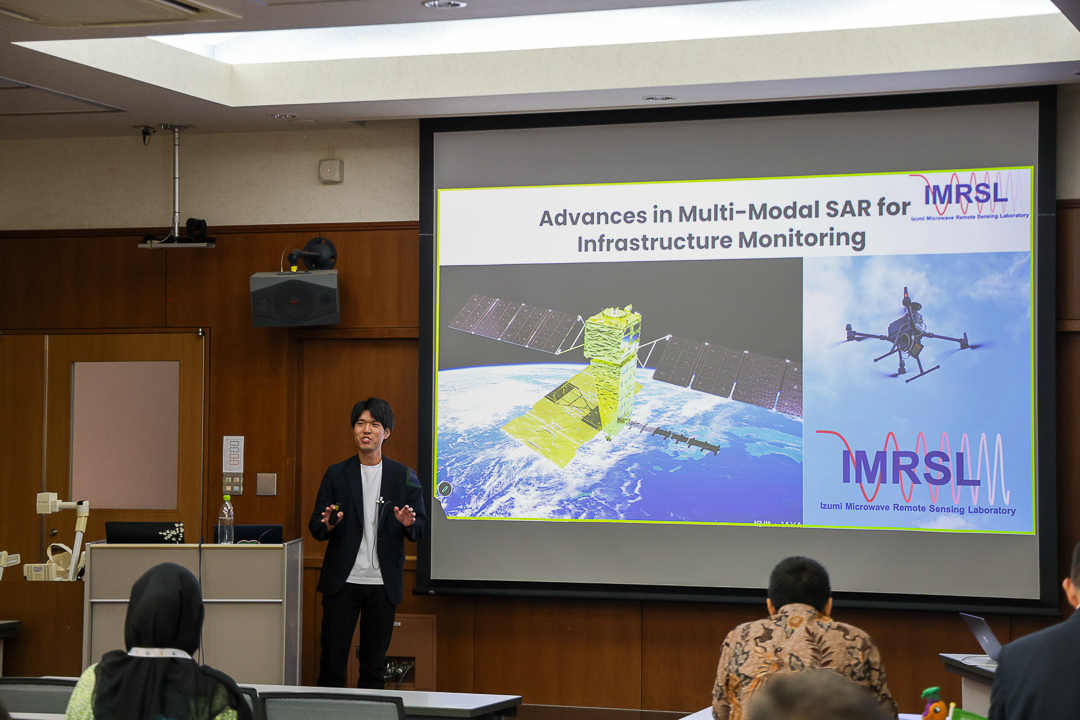
Highlights from the invited lectures, featuring Associate Professor Matsushima of Hokkaido University (left) and Associate Professor Izumi of Muroran Institute of Technology (right).
Together, the presentations reflected the conference’s emphasis on bringing different areas of research into conversation, from nature-based approaches to advances in engineering and technology.
A Platform for Young Researchers
While the first day focused on invited lectures, the second day gave participants an opportunity to present and discuss their own research. A total of 28 abstracts were listed across four categories: life and environmental sciences, science, agriculture, and engineering.
Researchers and students from Hokkaido University and other institutions shared their work through oral presentations, with both in-person and online participants taking part in discussions and question-and-answer sessions.
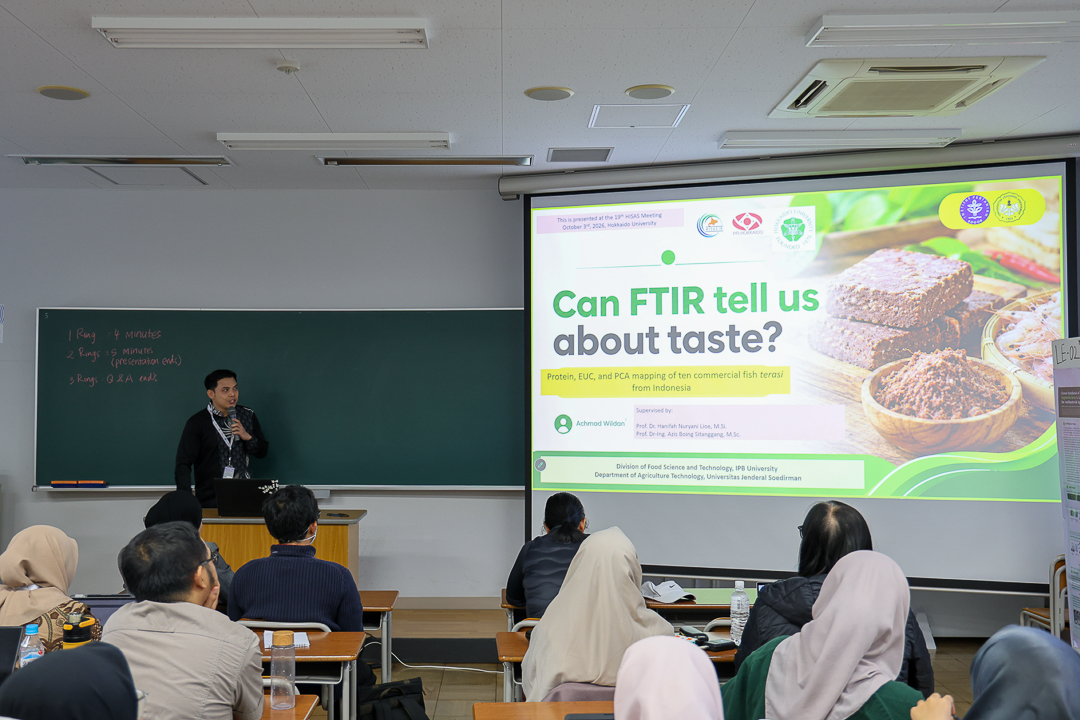
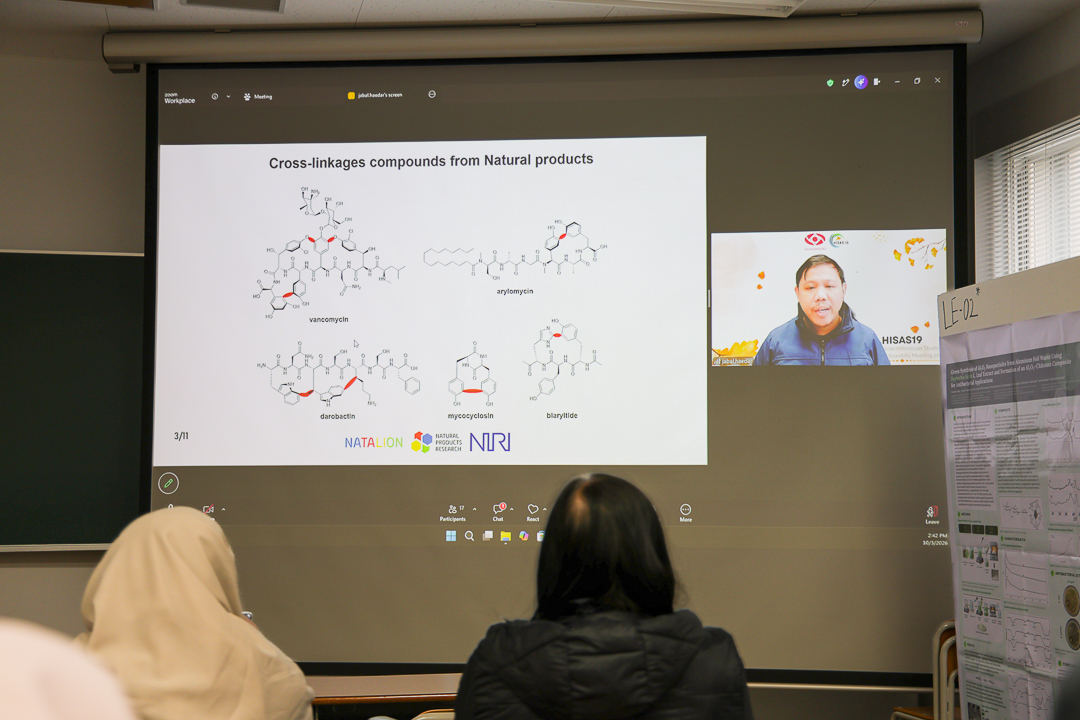
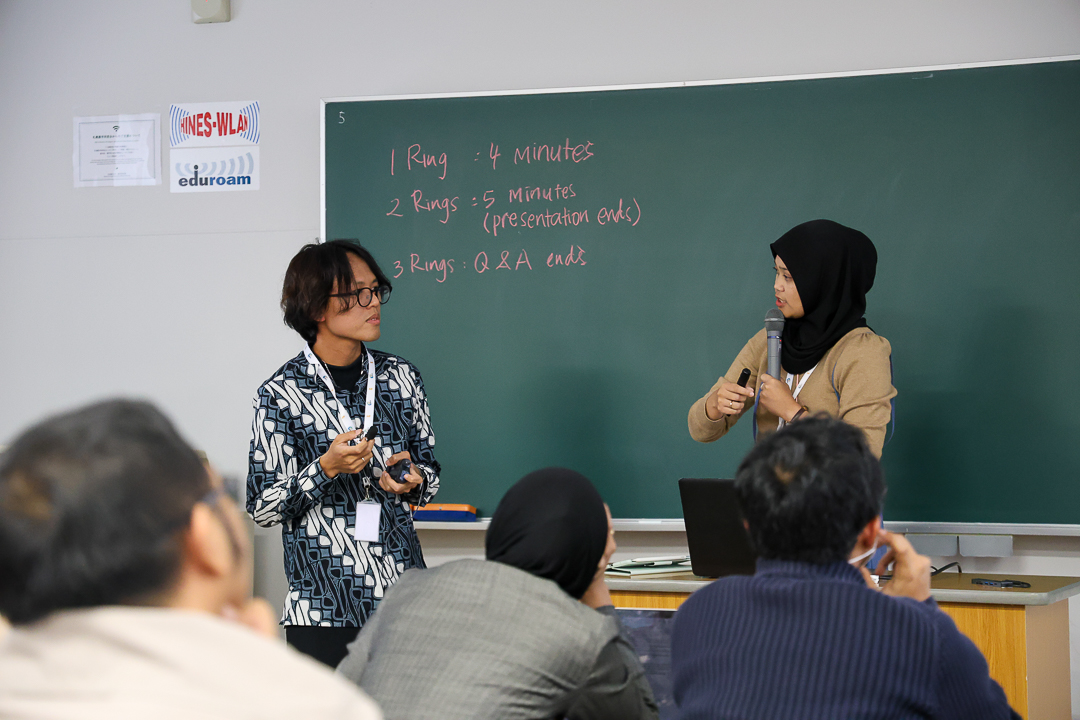
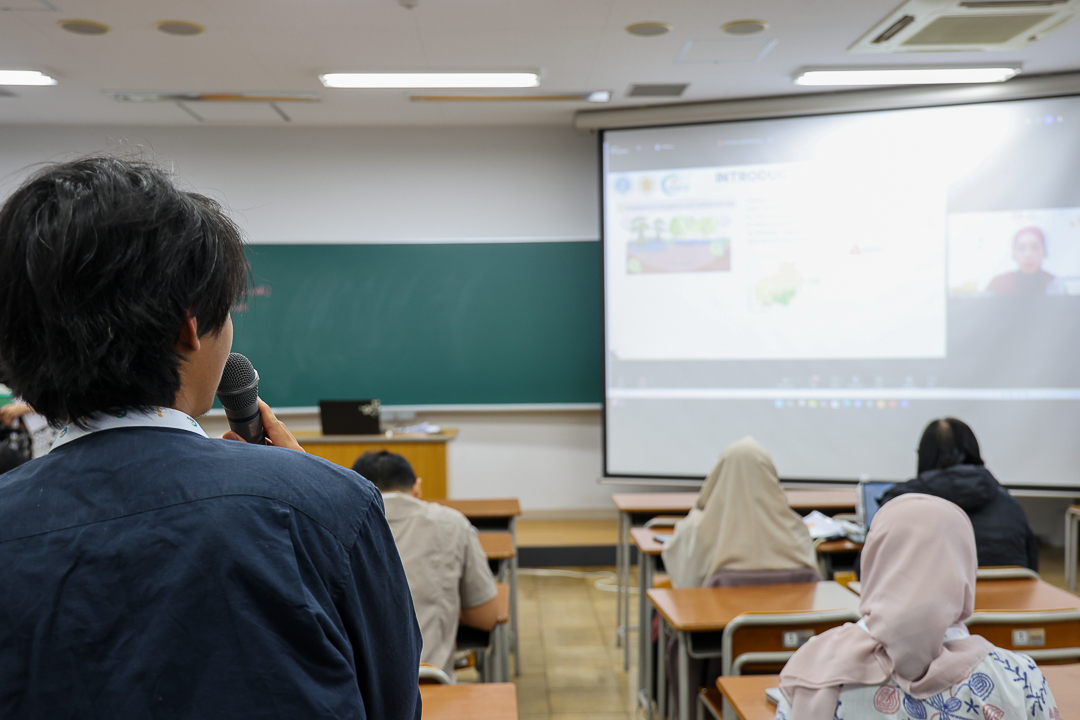
Oral presentations and discussion sessions were held both in-person and online
A poster session was also held afterward, providing participants another setting for exchanging ideas and allowing them to discuss their research directly with fellow students and researchers from different academic backgrounds.
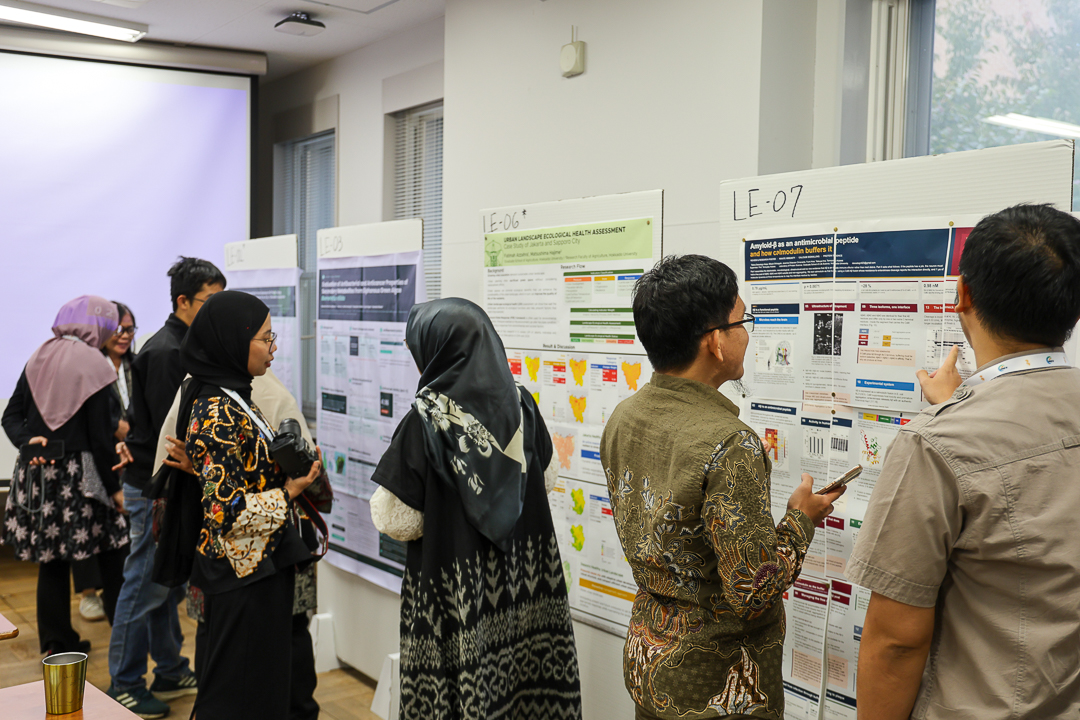
The meeting also recognized outstanding contributions through awards selected by a voting process. The Best Poster Award went to Fatimah Azzahra of Hokkaido University’s Graduate School of Agriculture for her research assessing urban landscape ecological health in Jakarta and Sapporo. Syahdam Karneng of Muhammadiyah University of Bulukumba received the Best Presentation Award for his research on a compound identified in red algae and its potential interaction with an antibiotic-resistance enzyme.
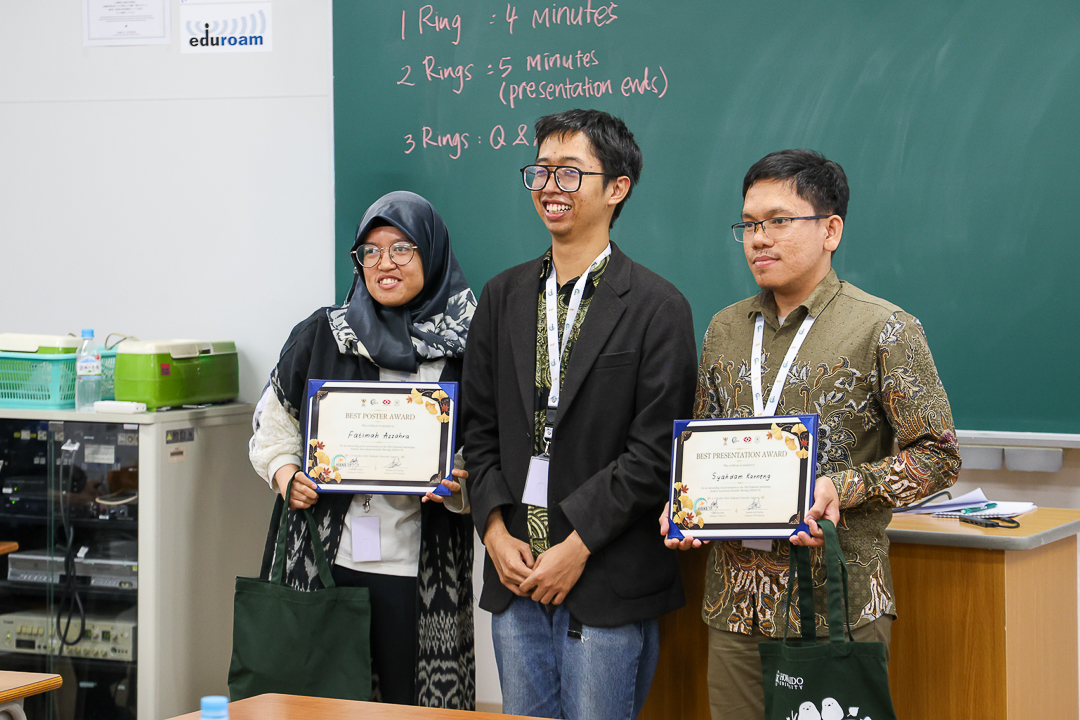
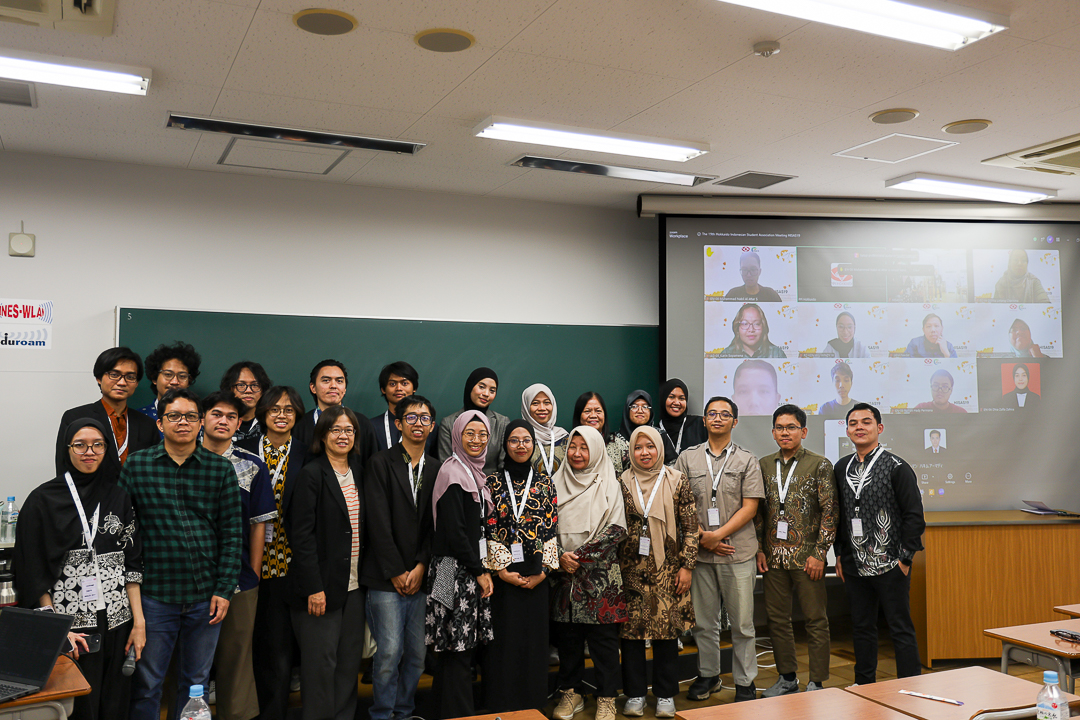
Both oral presentation and poster presentation sessions provided opportunities for participants to strengthen their research communication skills, exchange perspectives, and connect with researchers beyond their institutions.
The Students Behind HISAS 19
Behind the two-day meeting was a student-led organizing committee that had spent months preparing for the event.
Fiqih Ramadhan, a PhD student at Hokkaido University’s Graduate School of Life Science and head of the HISAS 19 organizing committee, explained that preparations began in December 2025, nearly ten months before the meeting took place.
The core committee consisted of eight members, supported by additional volunteers who brought the organizing team to approximately 16 people. As students themselves, committee members had to balance event preparations with their coursework and research responsibilities.
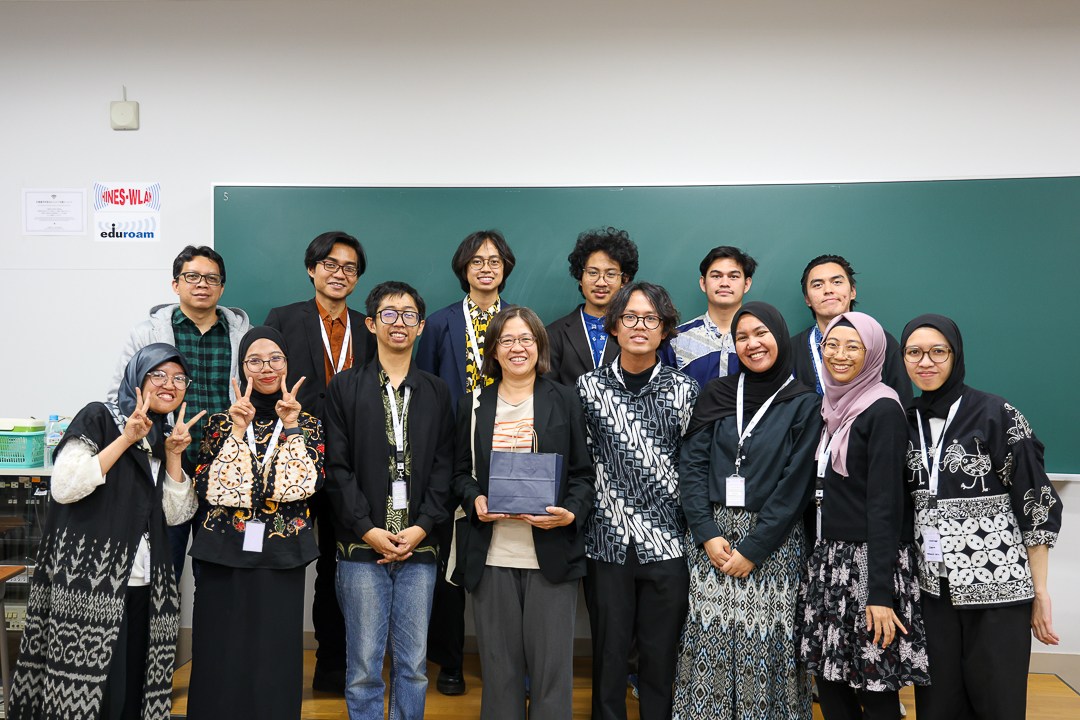
According to Fiqih, reaching participants beyond Hokkaido was another important part of the preparations. The committee worked with Hokkaido University Indonesia Front Office, student organizations, and alumni networks to share information about the meeting. Alumni who had become lecturers and researchers also helped introduce the event to their students.
For him, one of the main goals of HISAS is to provide students, particularly Indonesian students, with greater exposure to the academic community and opportunities to build research networks. He hopes the connections established through the meeting will encourage future collaborations, not only with researchers at Hokkaido University but also at other institutions across Hokkaido and beyond.
Photos by Miriam Ilsa Arfani
Public Relations & Communications Division