

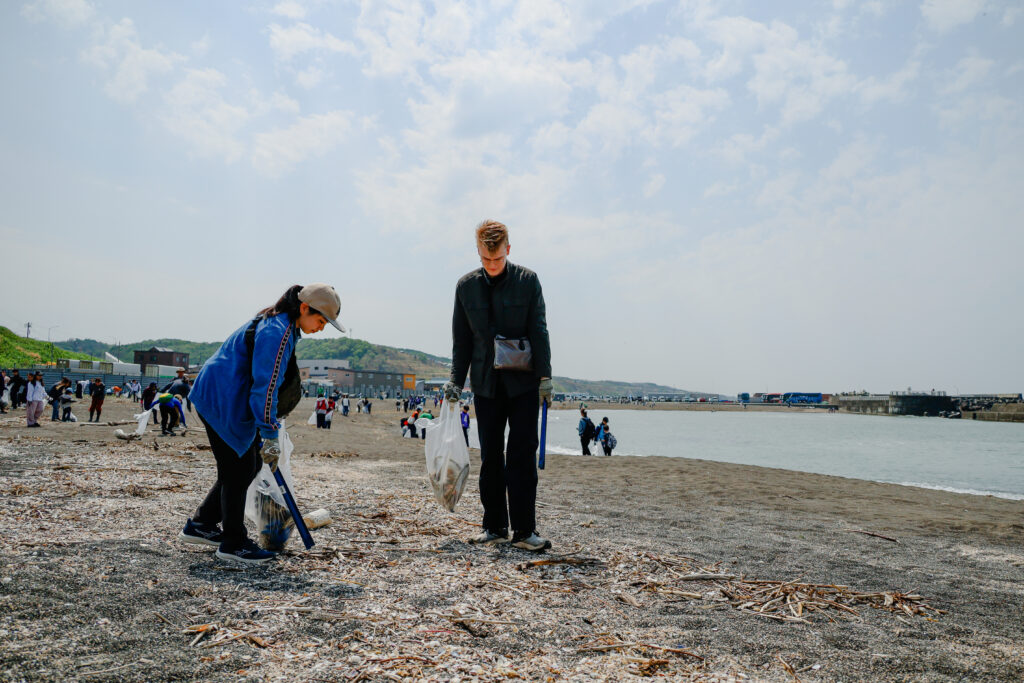
Hokkaido University participants reflect on environmental awareness through the Hokkaido Sea Cleanup Operation
At first glance, Atsuta Beach on Hokkaido’s western coast appeared almost spotless. But once participants began searching through the sand and seaweed, various kinds of waste quickly began to appear.
On May 16, students, faculty, staff, and their family members from Hokkaido University participated in a coastal cleanup activity at Atsuta Beach in Ishikari City as part of “Hokkaido Sea Cleanup Operation! Vol.6” (Hokkaido海のクリーンアップ大作戦!Vol.6), a project organized under the Hokkaido SDGs Promotion Platform, whose secretariat is managed by Coop Sapporo.
Hokkaido University joins the cleanup effort
Held annually across coastal areas throughout Hokkaido, the event brings together people of all generations and backgrounds to participate in simultaneous beach cleanup activities.
The participation of Hokkaido University was coordinated by the university’s Institute for the Advancement of Sustainability, which has supported the initiative for several years and recruited members of the university community to participate again this year.
According to Professor Kato Satoru of the Institute for the Advancement of Sustainability, around 50 participants—both faculty members and students—joined through Hokkaido University this year.
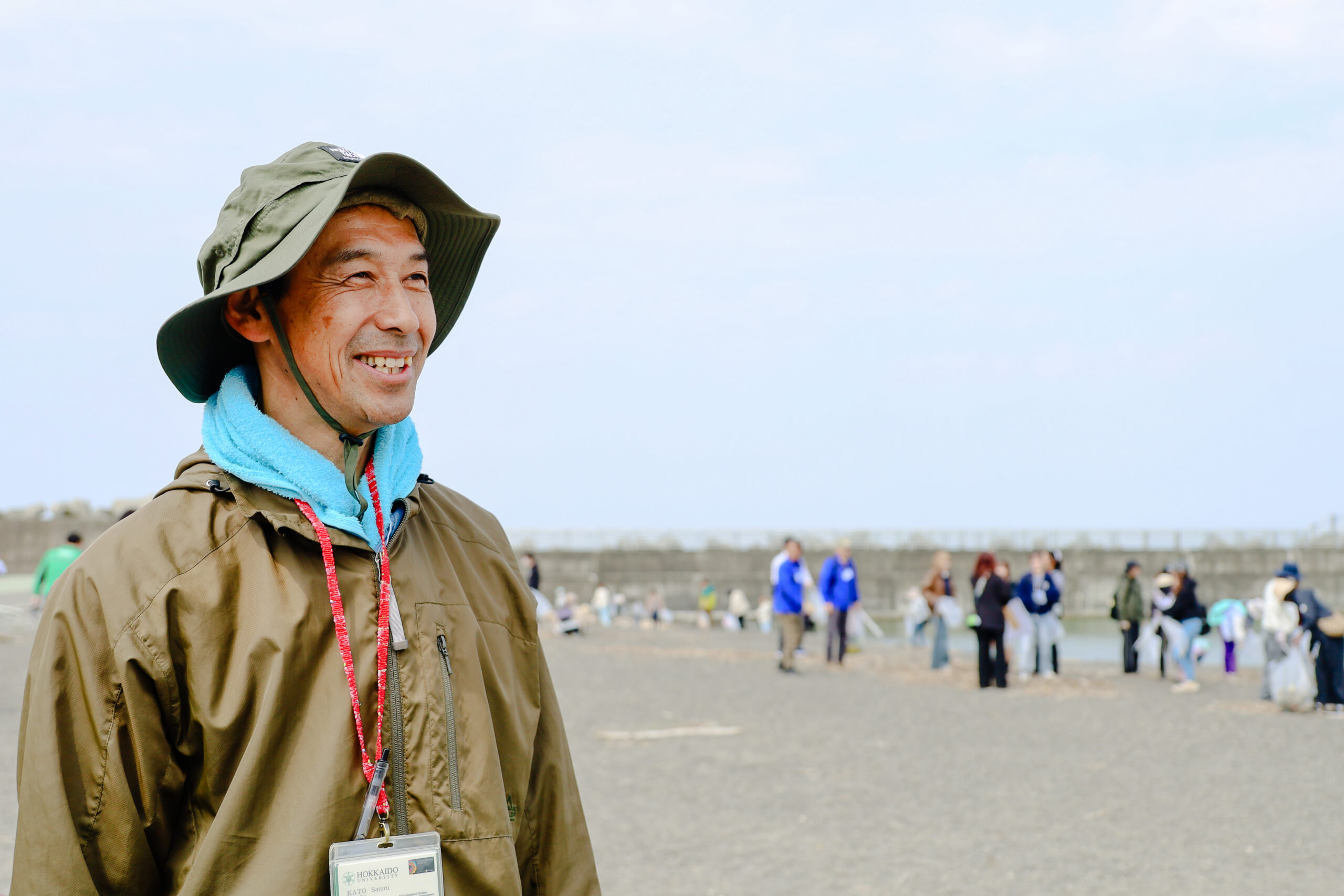
“We want people to actually come to the site and see what the coast looks like now,” he explained. “The goal is to create opportunities where students, faculty, and staff can experience these environmental issues firsthand.”
The Hidden Problem of Microplastics
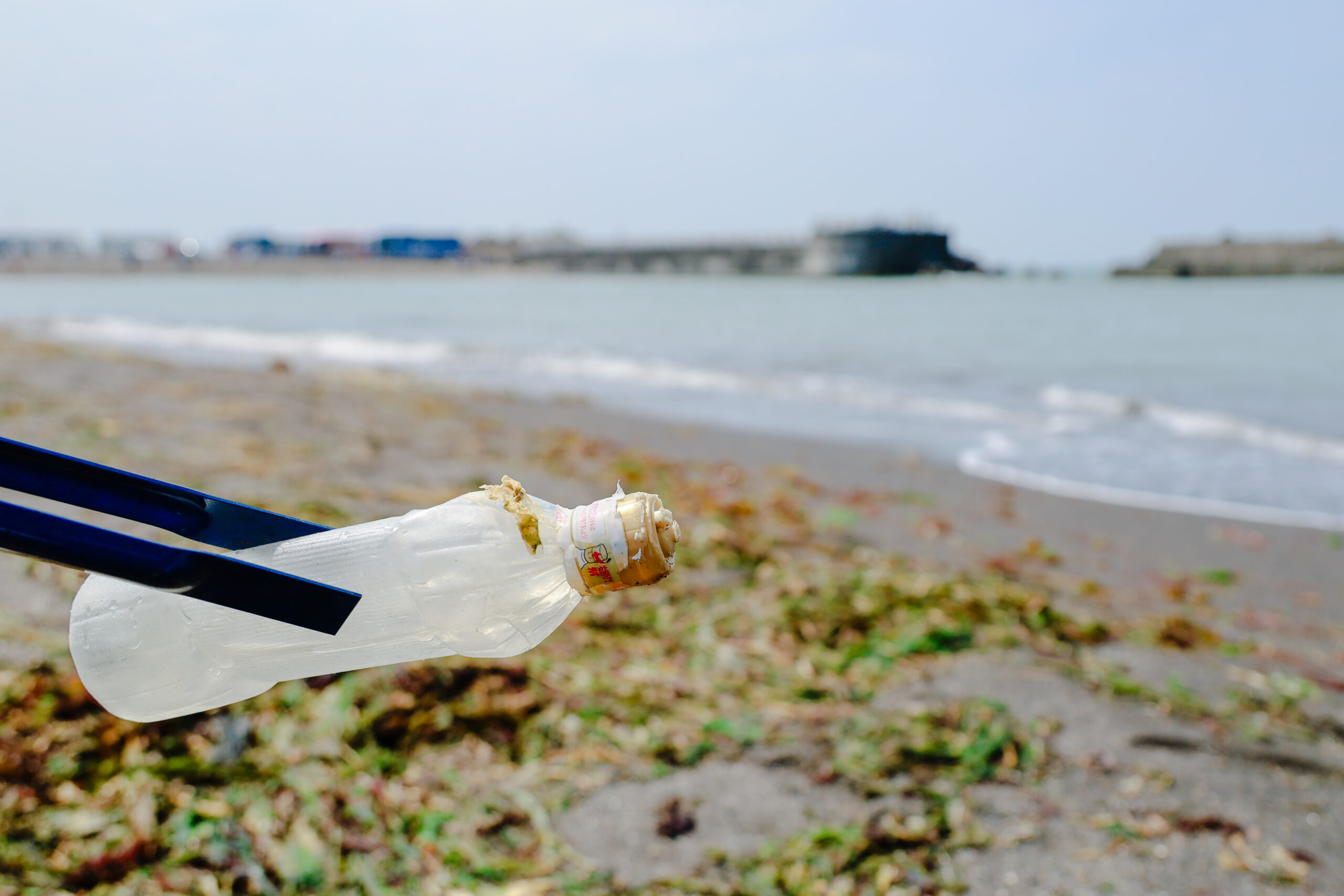
As participants continued collecting waste along the shoreline, many noticed that while larger items such as cans and bottles were less common, more and more small plastic fragments were found widely.
“Plastic is especially problematic,” Prof. Kato said while picking pieces from the sand. “These tiny plastics don’t really decompose. They just become smaller and smaller.”
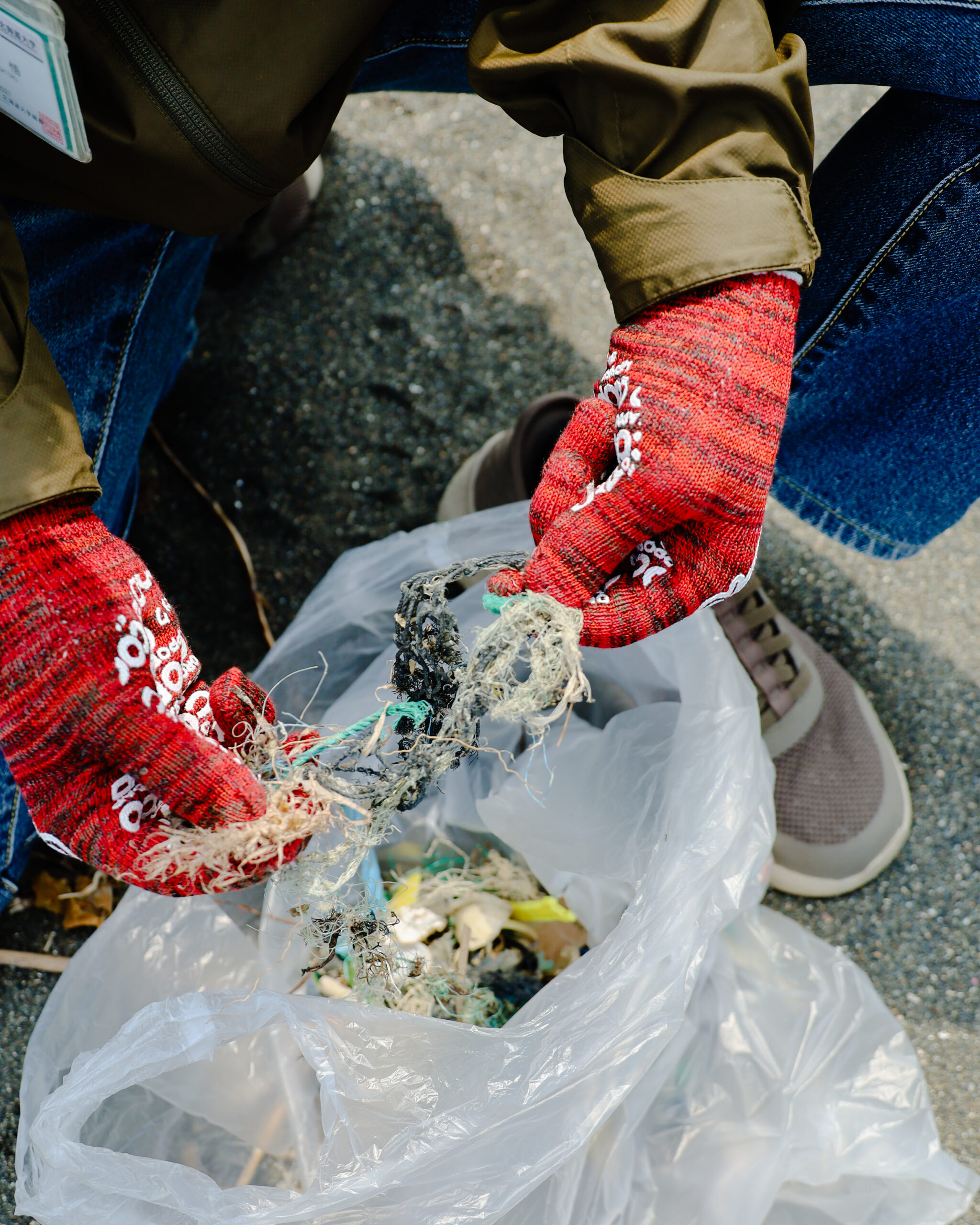
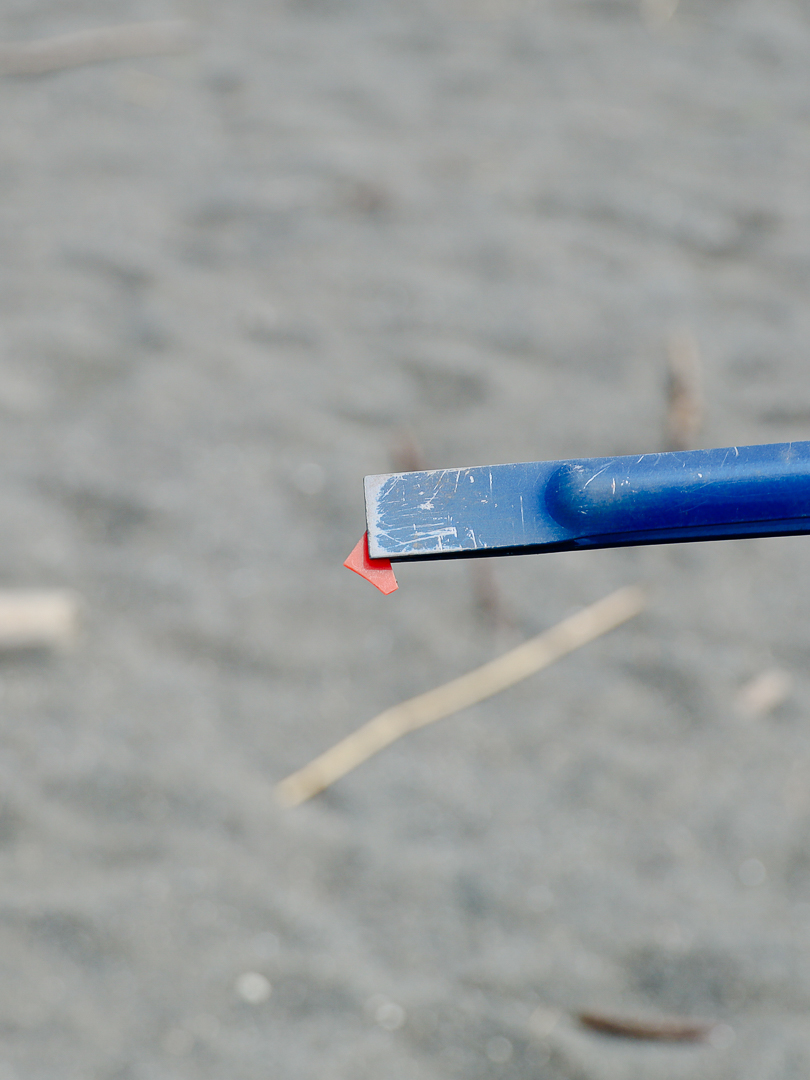
Small plastic fragments were found everywhere on the beach
He explained that plastics could remain in the environment for hundreds of years, eventually turning into microplastics that spread across beaches and oceans.
The beach may look clean, but taking a closer look, many small pieces of plastic are hidden beneath the sand. So activities like beach cleanups are valuable for learning about such realities and considering possible solutions.
More Than a Cleanup
For many student participants, the cleanup became more than just a volunteer activity.
Aomi, a Fisheries Sciences student, joined the event for the first time after learning about it through a university app.
“When I picked up the trash myself, I realized that the garbage we throw away can negatively affect animals in the ocean,” she said. “I learned how important it is not to litter.”
Another participant, Mårten, an exchange student from Sweden conducting research at the Faculty of Economics and Business, said he had participated in similar environmental activities in Sweden before coming to Japan.
“I think it’s important to reflect on how we affect the environment and how we can reduce our impact,” he said.
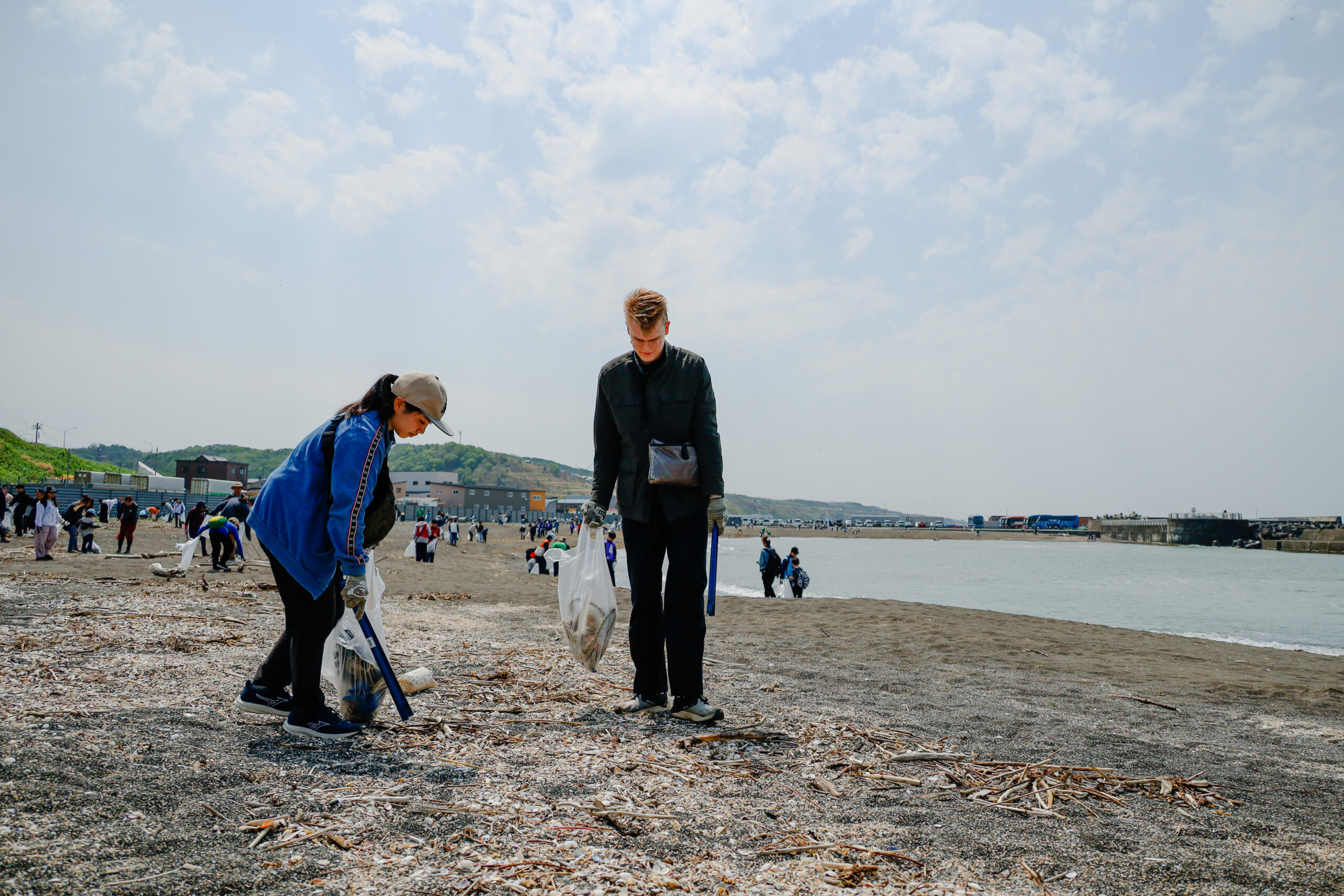
Although their backgrounds were different, both students described the experience as meaningful and said they would like to participate in similar activities again in the future.
For Prof. Kato, that shift in perspective is one of the most important outcomes of the event.
“If you participate even once, the way you see things changes. You begin noticing things you normally wouldn’t pay attention to,” he said.
By the end of the morning, bags of collected waste lined the beach. But for many participants, the experience left behind something less visible but equally important: a greater awareness of how everyday actions can affect the environment.
Photos by Natsuko Koyasu
Public Relations & Communications Division