

Two summer courses at Nitobe College show how Hokkaido University students learn across disciplines by engaging with communities, identifying problems, and developing ideas for the future.
How can a small town in Hokkaido become more vibrant despite its population decline and aging? What could a more sustainable and inclusive university campus look like? This summer, graduate students at Nitobe College explored these very different questions through courses designed to take learning beyond conventional classroom boundaries.
About Nitobe College
Nitobe College is Hokkaido University’s interdisciplinary educational program, offered alongside students’ specialized studies. Its graduate curriculum brings together students from different fields and backgrounds to develop teamwork, project management, and problem-solving skills needed to address complex challenges in society.
Taking learning into the community: Mashike Town
In Global Practical Course II, students put team-based learning and project management into practice through a real-world challenge in Mashike Town, a coastal community in western Hokkaido. Seventeen teams, comprising 66 graduate students, considered how the town could become more vibrant and attractive amid population decline and an aging population.
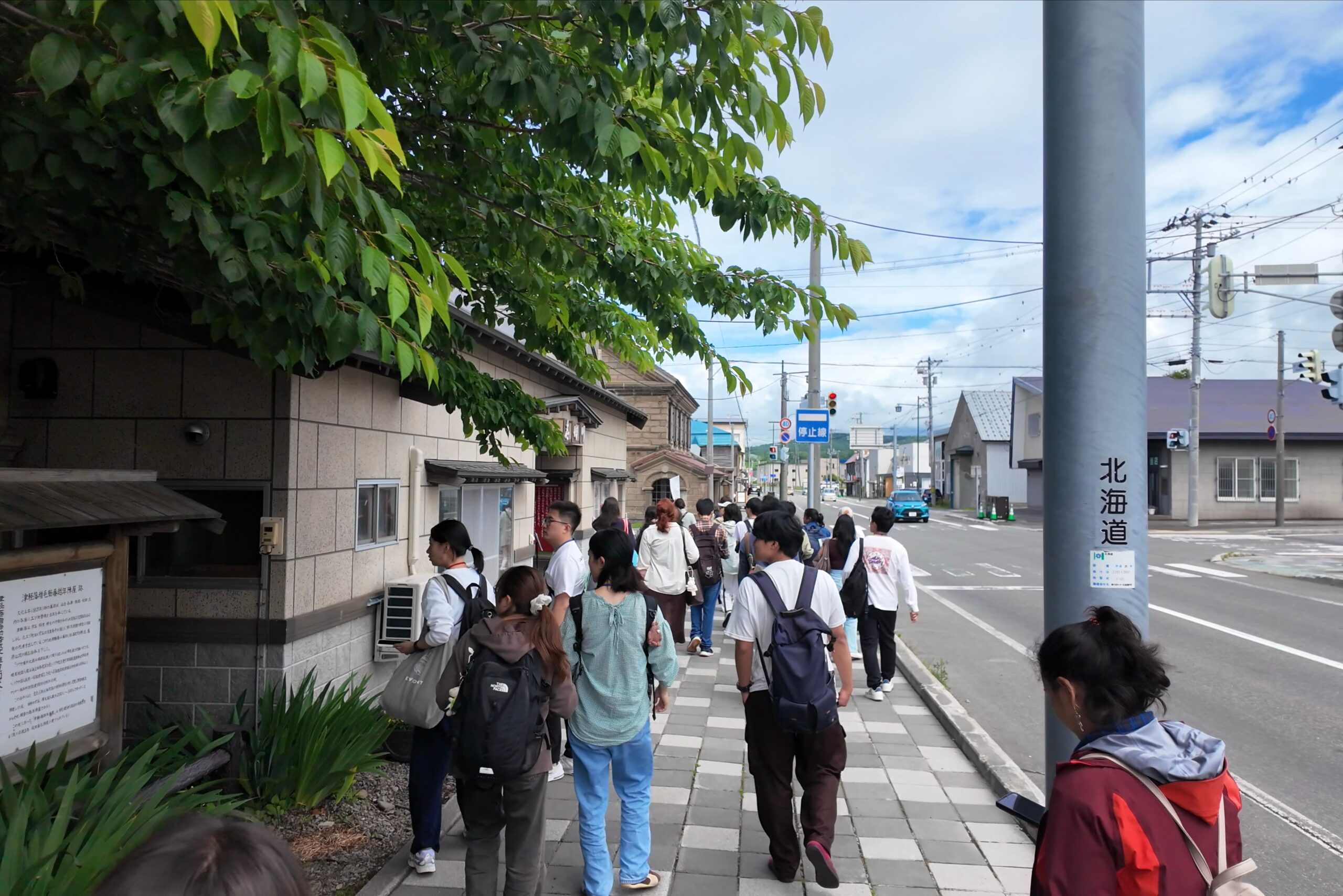
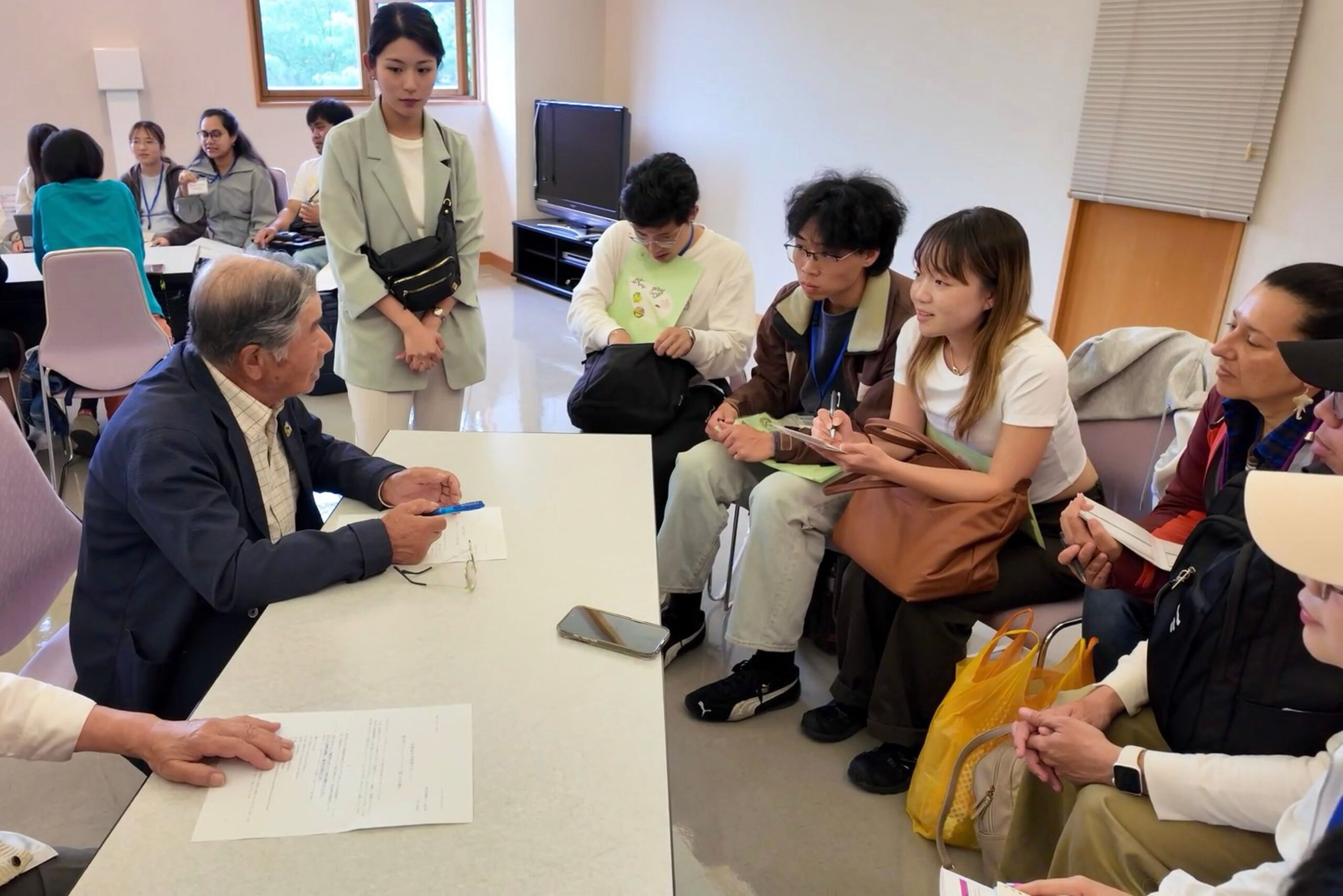
Students conducting fieldwork in Mashike Town (Courtesy of Nitobe College)
The students visited Mashike, spoke with local businesses and community members, and used what they learned to develop sustainable business ideas. Their proposals approached the town’s challenges from a range of perspectives, including tourism, food and local products, healthcare, and welfare.
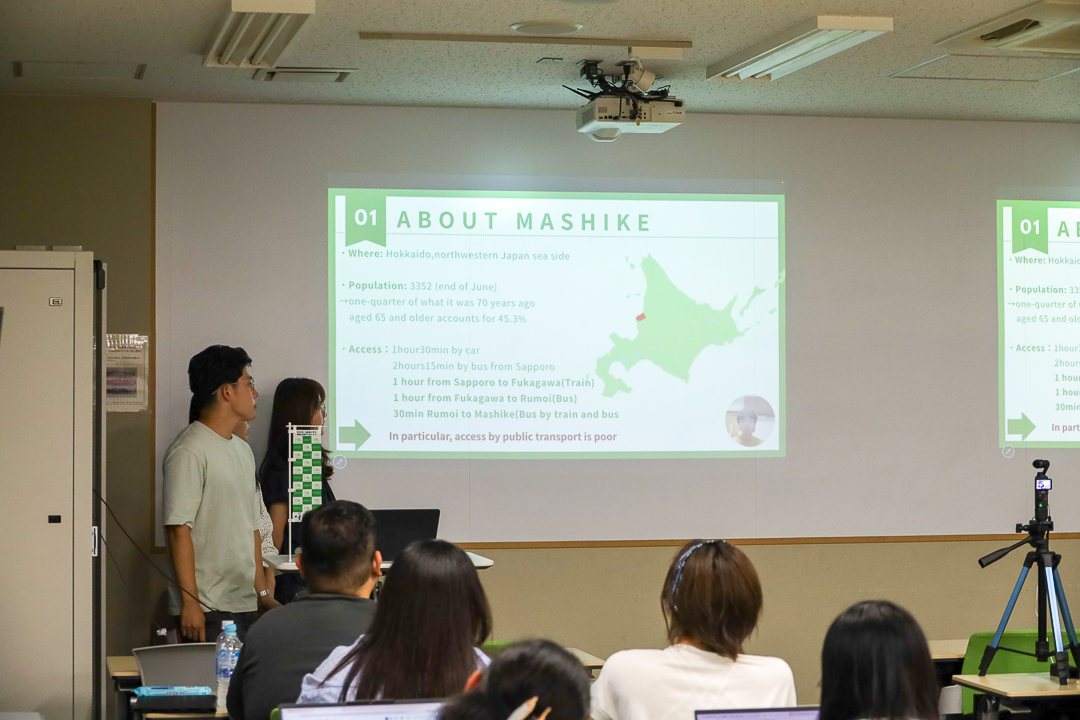
On July 28 and 30, the teams presented their ideas and recommendations, bringing together what they had learned through the course and their encounters with the local community. Among the proposals were an accommodation platform connecting visitors with local residents, an electric community shuttle, an agricultural homestay program, and a multilingual audio guide using QR codes. Mashike Town officials attended the presentations and provided feedback, with several teams invited to further explore putting their ideas into practice.
Turning the lens toward Hokkaido University
While Global Practical Course II took students beyond the campus, Global Advanced Course II of the Nitobe College Honors Program asked them to look closer to home. Four graduate student teams explored a question about their own community: what could a more sustainable and inclusive Hokkaido University campus look like?
The course focuses on problem finding. Through fieldwork, data collection, and analysis, students learn to identify original issues before considering how they might be addressed. For this project, the teams gathered perspectives from students, staff, and researchers across the campus and developed future scenarios around sustainability, international inclusion, stronger community connections, and university-wide collaboration.
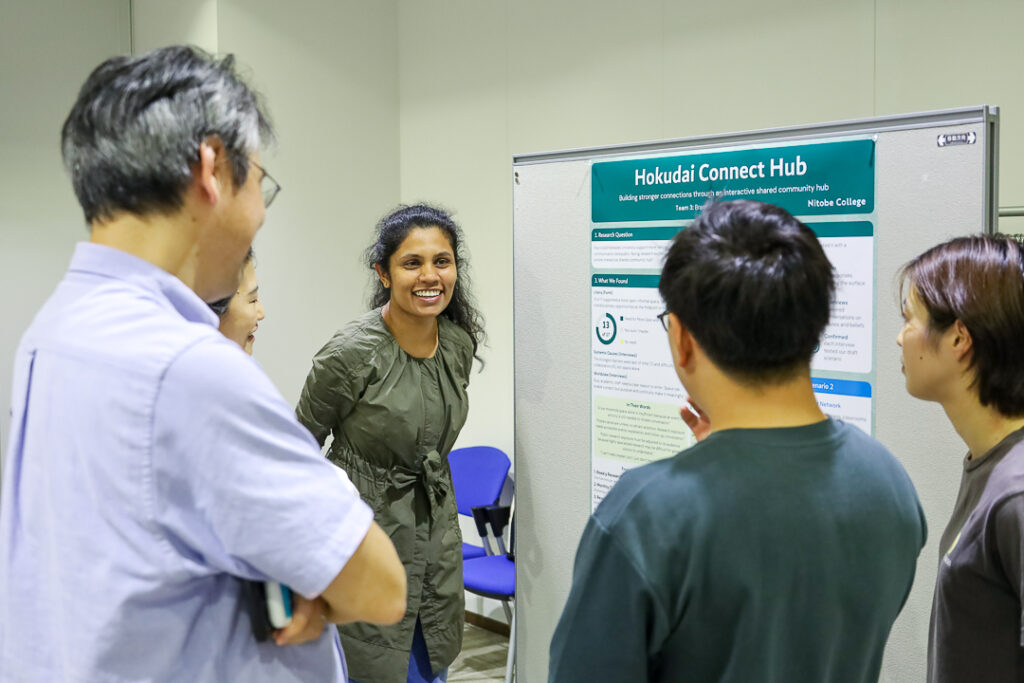
Their work culminated in the Future Forum on August 5. In a public poster session, students presented their research and scenarios while visitors listened, asked questions, and exchanged ideas with them about the future of the campus.
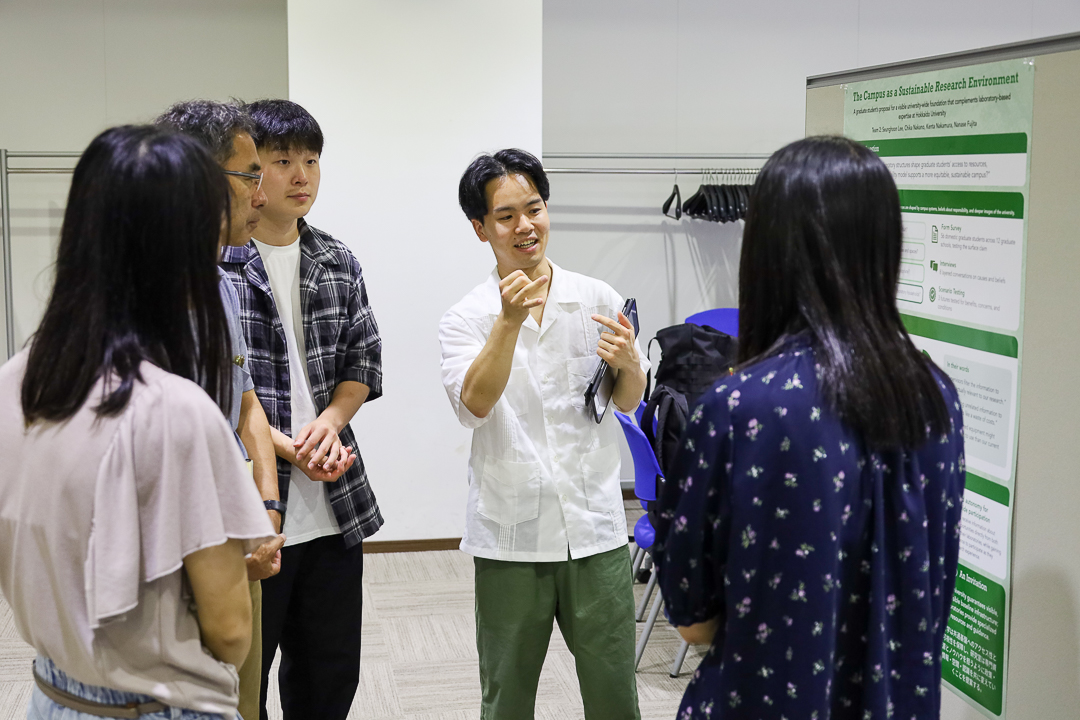
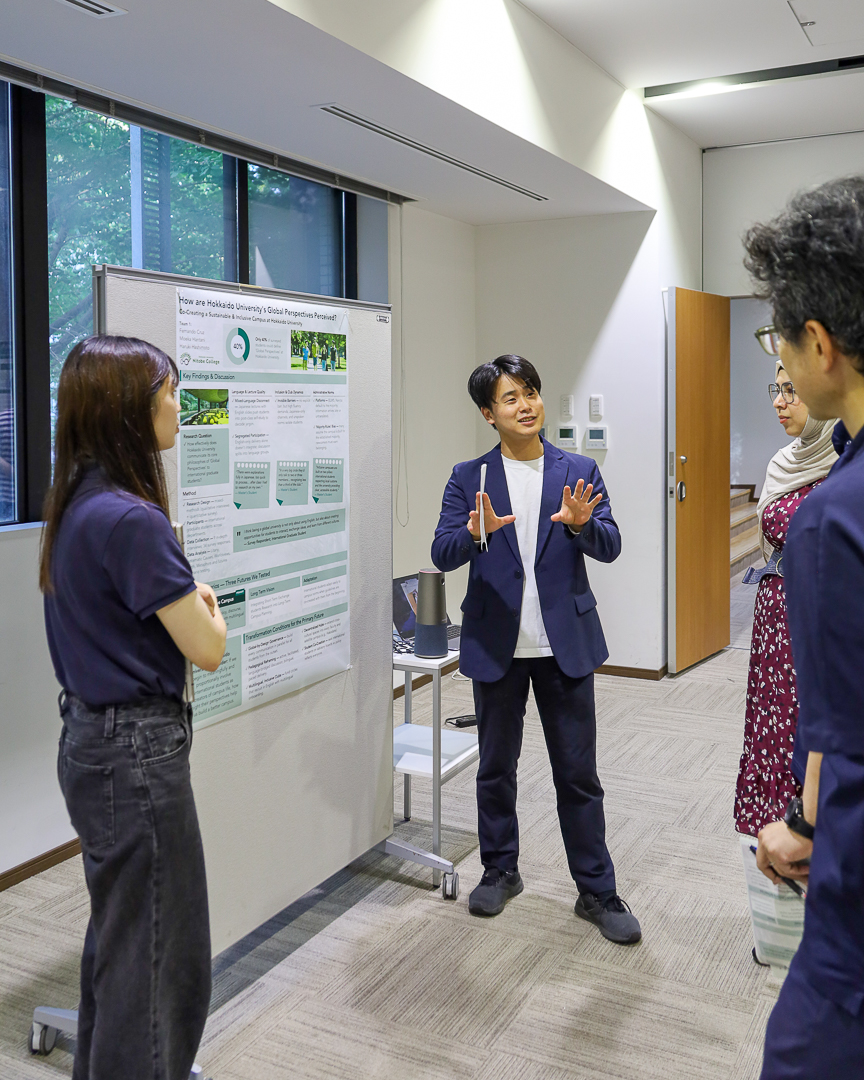
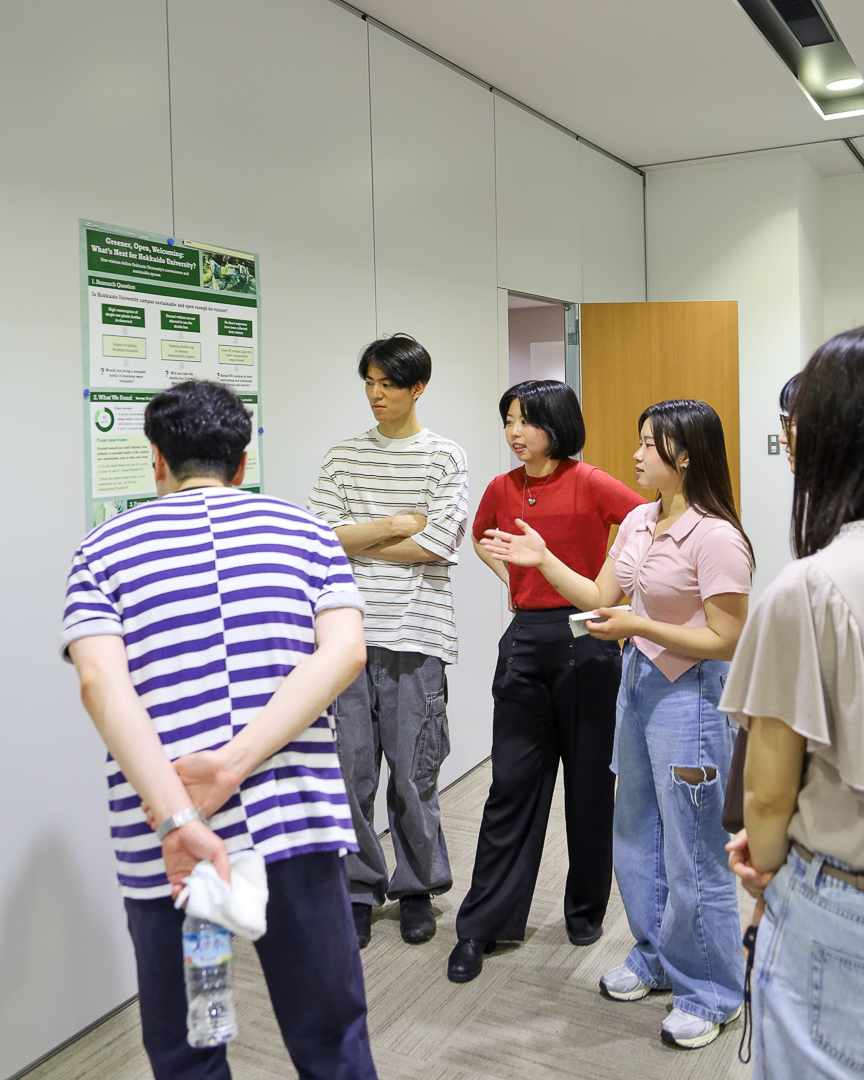
Students discussing and presenting their research and future scenarios at the Future Forum
Learning across boundaries
Mashike Town and Hokkaido University’s campus present very different challenges, but the two courses share a common approach: students work with people beyond their own fields, gather perspectives firsthand, and turn what they learn into ideas for the future.
From a town facing demographic change to the future of their own campus, these experiences show what interdisciplinary learning at Nitobe College can look like in practice. Students can learn not only from lectures, but from people, places, and problems in the world around them.
Photos by Miriam Ilsa Arfani
Public Relations & Communications Division