

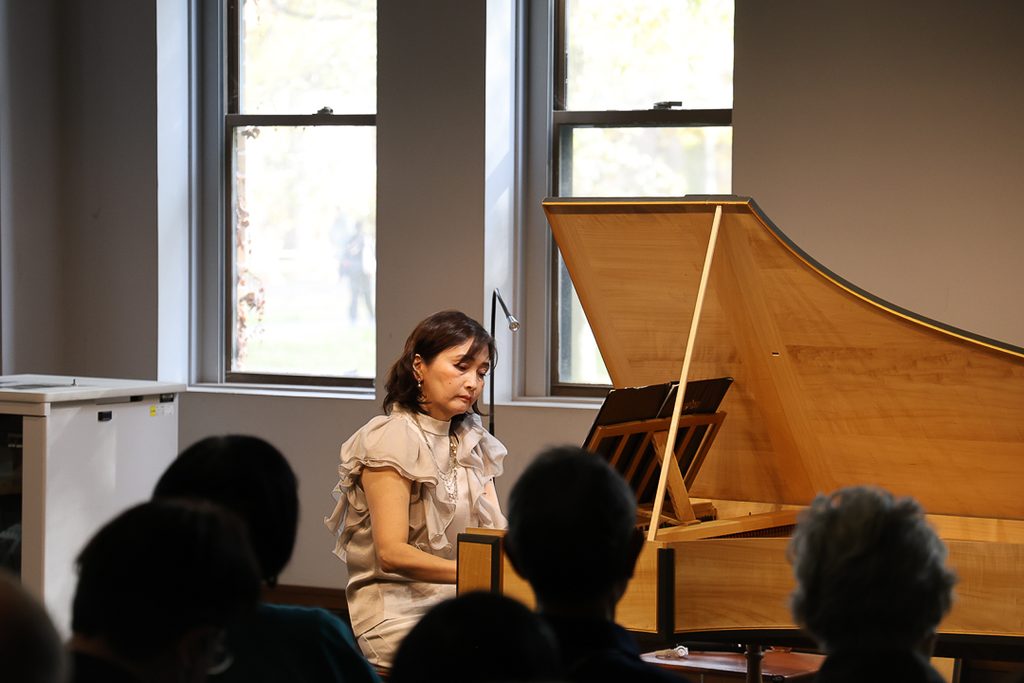
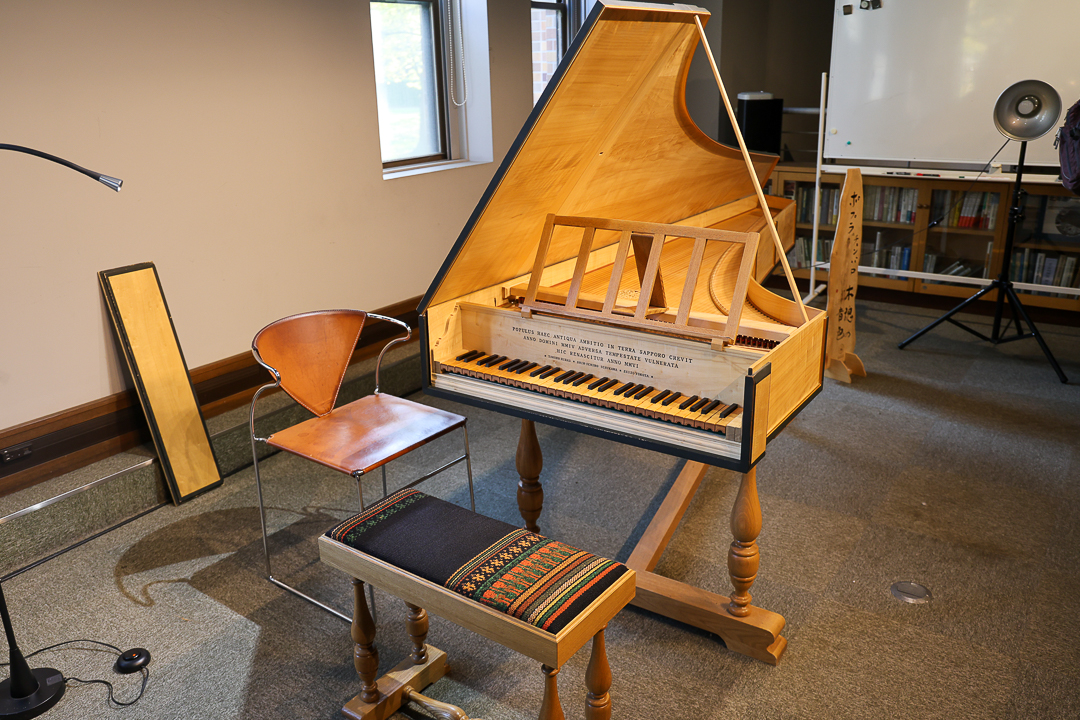
On October 31, 2026, harpsichordist Makiko Mizunaga returned to Hokkaido University for a special concert marking the 20th anniversary of the Poplar Harpsichord, an instrument crafted from trees that fell during a typhoon in 2004.
Held at the Hokkaido University Museum, the concert reunited Mizunaga with the instrument she had first performed on at its unveiling in September 2006. The occasion brought together music, memories, and a remarkable piece of the University’s history.
From Fallen Trees to a Harpsichord
The story of the Poplar Harpsichord began in September 2004, when Typhoon No. 18 swept through Hokkaido, toppling 19 trees along Hokkaido University’s iconic Poplar Avenue.
As Hokkaido University worked to restore the avenue, a professor of musicology at Hokkaido University of Education proposed giving some of the fallen wood a new life by turning it into a harpsichord, a keyboard instrument that produces sound by plucking strings. Hokkaido University then provided the wood, and harpsichord maker Seizo Yokota was commissioned to build the instrument.


Retrieval of the fallen poplar trees for the production of the harpsichord (Courtesy of Hokkaido University Archives)
Although poplar is not traditionally used to make musical instruments, the project brought together people committed to preserving the University’s beloved trees in a new form.
Following approximately two years of preparation and construction, the completed harpsichord was unveiled on September 8, 2006, at Hokkaido University’s Clark Memorial Hall. Mizunaga performed seven music pieces before an audience of approximately 500 people.
The instrument was subsequently installed at the Hokkaido University Museum, where it continues to preserve the memory of the fallen poplar.
A Musical Reunion Across Generations
Mizunaga’s connection to Hokkaido University extends beyond the instrument itself. Her great-great-grandfather, Masatake Oshima, was among the first students of Sapporo Agricultural College, the University’s predecessor, and studied under Dr. William S. Clark.
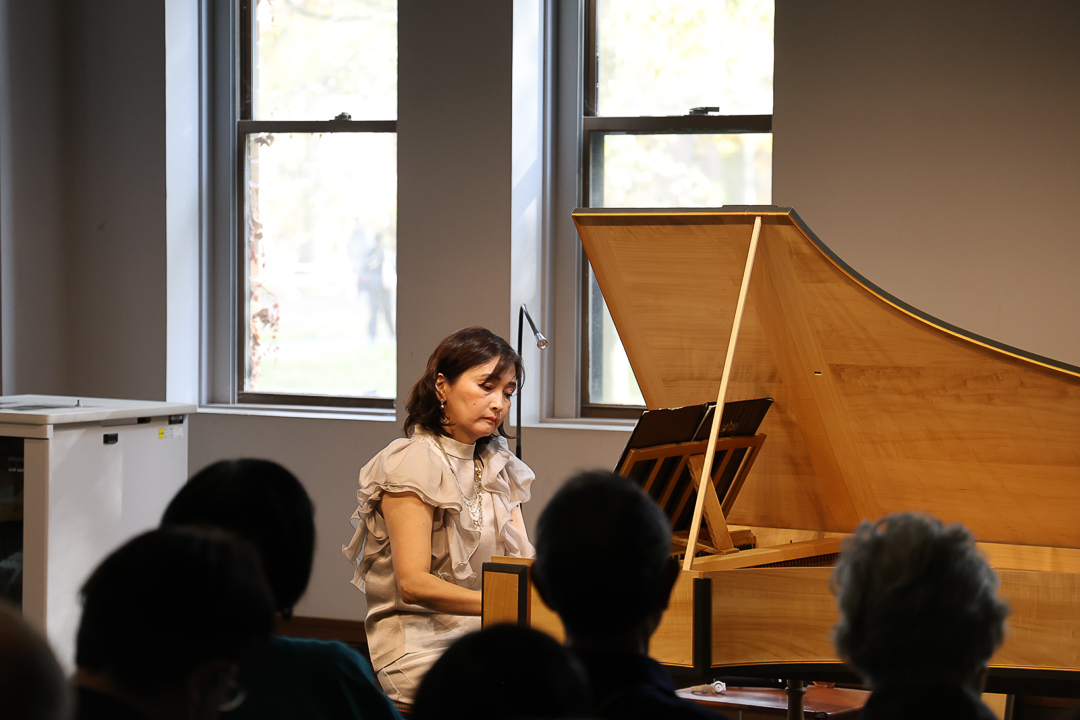
Reflecting on the 2006 unveiling, Mizunaga recalled feeling nervous as she performed on the newly completed harpsichord. Because the instrument had only recently been assembled, its sound had not yet fully developed. She remembered feeling a strong sense of responsibility to bring the instrument to life through her performance.
Twenty years later, Mizunaga returned to perform works by Baroque composers, including François Couperin, Domenico Scarlatti, and Johann Caspar Ferdinand Fischer, at the Museum’s first-floor hall.
The anniversary concert was organized by the Masatake Oshima Association, formed by Oshima’s relatives and others connected to the University’s history and Poplar Avenue restoration efforts, and co-hosted by the Hokkaido University Museum.
After the concert, Mizunaga described her reunion with the Poplar Harpsichord after ten years as a joyful and deeply moving experience. She felt that the instrument’s sound had grown richer and more expressive over the past two decades. “Musical instruments are living things,” she said. “With love and care, they remain in good condition and continue to grow.” She expressed her hope that the instrument would continue to be cherished and played for years to come.
The Poplar Harpsichord’s legacy continues beyond the anniversary celebration. A dedicated preservation support fund has been established through the Hokkaido University Frontier Foundation to help maintain the instrument and improve its storage and performance environment.
Twenty years after its unveiling, the Poplar Harpsichord remains at the Hokkaido University Museum, where it continues to be preserved and played.
Photos and video by Miriam Ilsa Arfani
Public Relations & Communications Division