Skip to content
  • catcHUp
  • Give
  • JA
    • President’s Message
    • HU Vision 2030
    • HU Global Vision 2040
    • 150th Anniversary
    • Hokkaido Universal Campus Initiative
    • Sustainability Declaration
    • Diversity, Equity, and Inclusion (DEI)
    • aynu sisam urespa ukopirkare us i/Ainu and Indigenous Peoples
    • Philosophies
    • History
    • In Numbers
    • Awards
    • Honorary Degree Recipients
    • University Symbol
  • Sustainability
  • Campus
    • General Organization
    • Governing Organization
    • Administrative Organization
  • Institutes/Offices
    • University Library
    • University Museum
    • University Hospital
    • Veterinary Teaching Hospital
    • Health Care Center
    • Training Vessels
    • Experimental Forests and Farms
    • Aquatic Research Stations
    • Archaeological Research Center
    • University Archives
    • Event and Seminar Spaces
    • Gardens and Parks
    • Shops
    • Restaurants/Dining
  • Brochures
    • Public Relations Contact
    • Press Room
    • Social Media
    • E-Newsletter
    • Law
    • Fisheries Sciences
    • Environmental Earth Science
    • Science
    • Pharmaceutical Sciences
    • Agriculture
    • Life Science
    • Advanced Life Science
    • Education
    • Media, Communication, and Tourism
    • Health Sciences
    • Engineering
    • Chemical Sciences and Engineering
    • Economics and Business
    • Medicine
    • Dental Medicine
    • Veterinary Medicine
    • Biomedical Science and Engineering
    • Infectious Diseases
    • Global Food Resources
    • Humanities and Human Sciences
    • Information Science and Technology
    • Public Policy
    • Low Temperature Science
    • Electronic Science
    • Genetic Medicine
    • Catalysis
    • Zoonosis Control
    • Slavic-Eurasian Research
    • Information Initiative
    • Chemical Reaction
    • Vaccine
    • Food and Medical
    • Joint Facilities/Research Centers
    • Advancement of Higher Education
    • Advancement of Graduate Education
    • Center for Open Education
    • Student Advice and Counseling
    • Career Center
    • Human Resource Education
    • Joint Facilities/Educational Centers
    • Nitobe College
    • One Program for Global Goals
    • Double Degree Program and Cooperative Research Guidance
    • Outbound Programs
    • Open Courseware
    • Climate Change
    • SDGs Interviews
    • Spotlight on Research
    • Tackling Global Issues
    • Find an Academic Paper
    • Find a Researcher
    • Find Grant
    • Global Research and Education
    • Integrated Innovations
    • Business-Regional Collaboration
    • Program for Forming Japan’s Peak Research Universities (J-PEAKS)
    • Cross-ministerial Strategic Innovation Promotion Program (SIP)
    • COI-NEXT
    • Undergraduate Admissions Overview
    • Modern Japanese Studies Program
    • Integrated Science Program
    • Graduate Admissions Overview
    • Application Steps
    • Study in English
    • Study in Japanese
    • Hokkaido Summer Institute (HSI)
    • Short-Term Exchange in English (HUSTEP)
    • Japanese Language and Culture (JLCSP)
    • Special Auditor & Special Research Student
    • Scholarships for Prospective Students
    • Student Fees
    • Financial Support
  • Campus Life Overview
  • Japanese Language Courses
  • Health Care
  • Student Dormitories
  • Researcher’s Accommodation
  • Sport and Recreation
  • Clubs and Societies
  • Career Support
  • Students and Staff Communities
  • University Festivals
  • Discover Hokkaido
    • Inter-University Exchange Agreements
    • Departmental Exchange Agreements
    • International Consortia
  • International Visits
    • Seoul National University
    • The University of Melbourne
    • The University of Massachusetts Amherst
  • Global PR Ambassador
    • International Student Growth
    • Number of International Students
  • Strategy and Organization
  • Sapporo Campus
  • Hakodate Campus
  • Information Center (Sapporo)
  • Shuttle Bus
  • Sapporo Campus Map
  • Hakodate Campus Map
    • Academic Information (ELMS)
    • Wi-Fi and the Campus Computer Network
    • How to Use Libraries
    • Syllabus Search
    • Logo Guidelines (internal-only)
    • About Press Releases (internal-only)
    • Starting a Social Media Account (internal-only)
    • Find Translated Database (internal-only)
    • Campus AEDs
    • Safety Confirmation System
    • Preventing Harassment
  • Information for International Colleagues
  • Information for International Students
  • HANDBOOK for International Students
  • Alumni
Hokkaido University
magazin-article

HSI Report: Designing Public Spaces for Everyone

  • Campus
  • HSI
  • Architecture
  • Engineering
  • DEI
  • Society and Well-being
  • Students
Aug 05, 2026
Miriam Ilsa Arfani

In the Hokkaido Summer Institute (HSI) 2026, graduate students from Japan and abroad learned how public spaces can be designed to better accommodate diverse users in the Universal Design for Public Spaces course. Held from June 15 to 19, the course was led by Professor Suguru Mori and Assistant Professor Ken Tsubouchi of Hokkaido University, together with Assistant Professor Gaurab Das Mahapatra of the Indian Institute of Technology Kharagpur.

Learning About Universal Design

Public spaces are meant to be used by everyone. However, small design choices—such as the height of a handrail or sign placement—can create barriers that many people may not notice in daily life. This was one of the key themes explored in Universal Design for Public Spaces. The course began with lectures introducing key ideas related to disability, accessibility, and universal design.

In his lecture, Assistant Professor Tsubouchi explained that disability is not only a matter of individual physical condition, but is also shaped by social and environmental barriers. He introduced concepts such as the medical and social models of disability, reasonable accommodation, and the idea that seemingly “equal” environments or systems can still create barriers for some people. He highlighted that universal design is not simply about showing compassion toward minorities, but also rethinking environments and systems so that more people can participate equally.
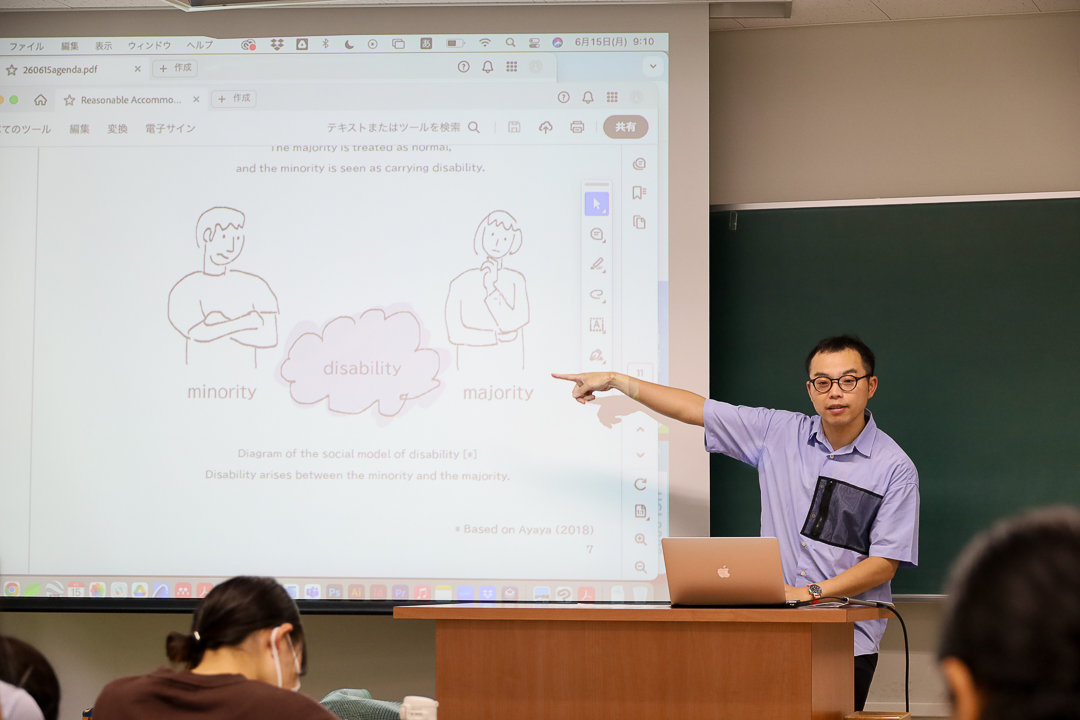
Assistant Professor Ken Tsubouchi giving his lecture

Assistant Professor Mahapatra then discussed universal design in architectural and urban spaces. He emphasized the importance of placing users at the center of the design process, explaining that universal design is not only about solving problems for people with disabilities, but about creating environments that are easier and more comfortable for everyone to use.

“The problem is not about solving the issue, but to understand the issue as well,” he said, encouraging students to look closely at how people experience public spaces before proposing solutions.
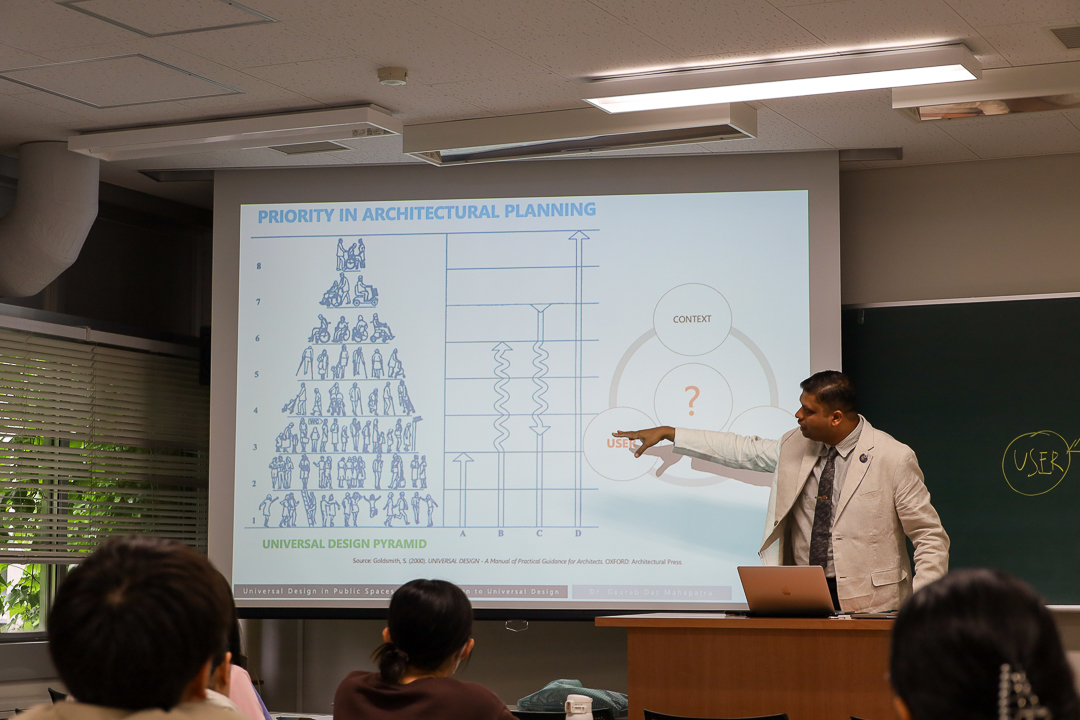
Assistant Professor Gaurab Das Mahapatra giving his lecture

Experiencing Barriers in Public Spaces

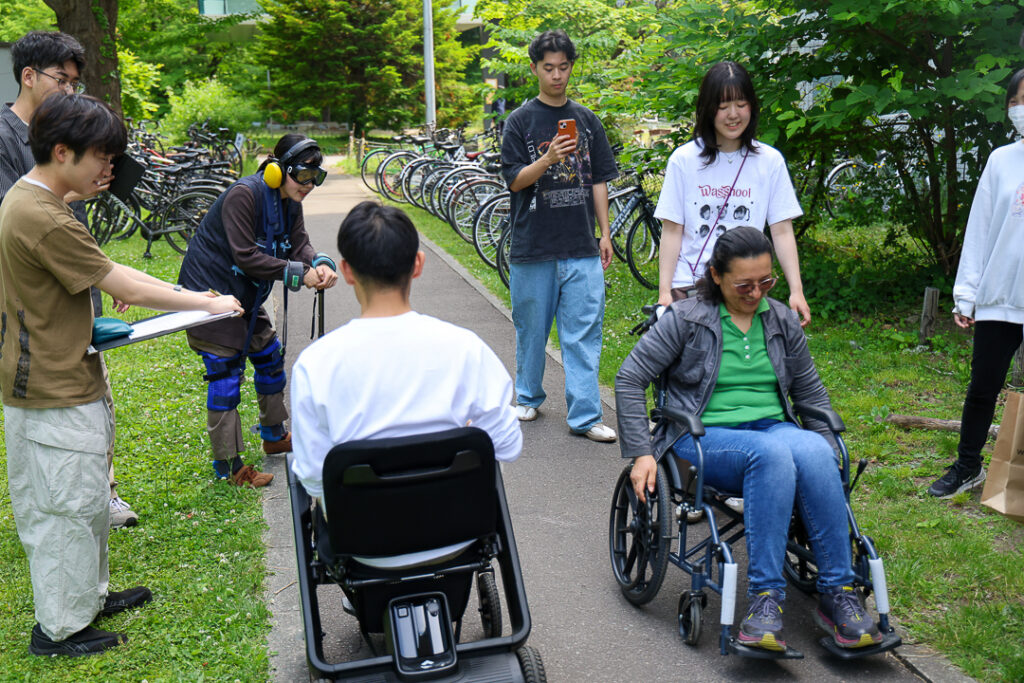
After the lectures, students took part in indoor and outdoor fieldwork around the Faculty of Engineering using simulation equipment. These activities allowed them to observe how physical or sensory constraints can reveal environmental barriers in everyday public spaces.
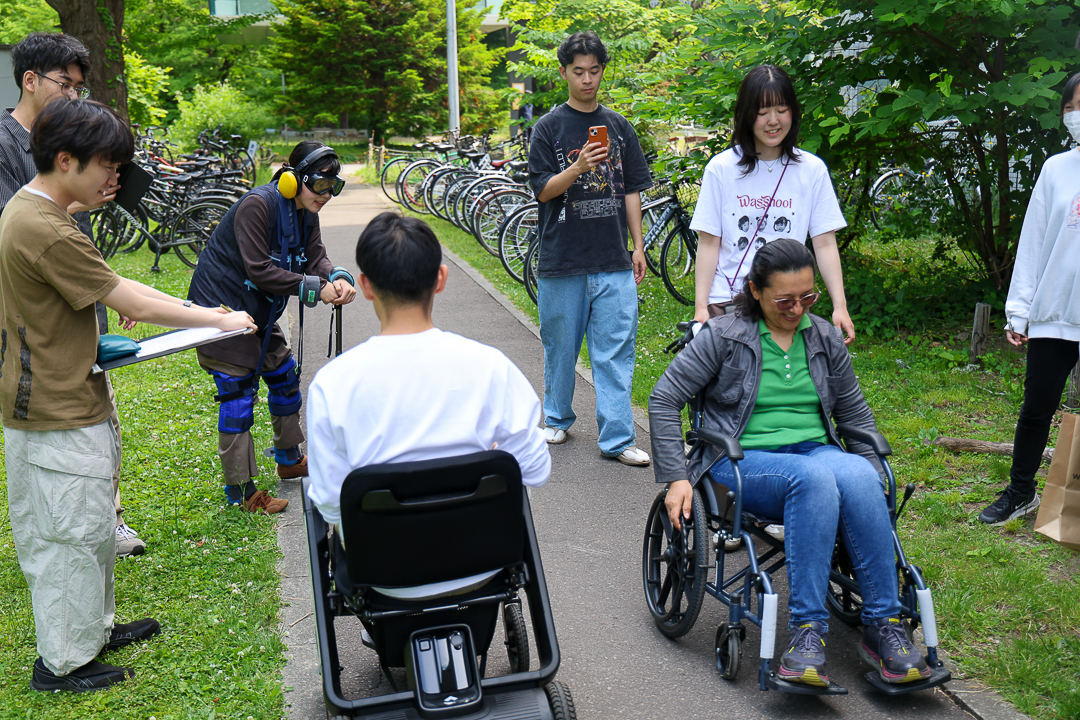
Students using simulation equipment during outdoor fieldwork

Students used wheelchairs, blindfolds and canes, elderly simulation equipment, and maternity simulation suits. Working in groups, they took turns using equipment while other members observed their movement and recorded their findings.

Students also measured physical responses, such as temperature and blood pressure, before and after the simulations. According to Assistant Professor Mahapatra, these measurements were used as supplementary indicators for discussing how physical restrictions might affect the body during movement. He explained that one goal of universal design is to create environments that reduce unnecessary physical burden and are easier for diverse users to navigate.
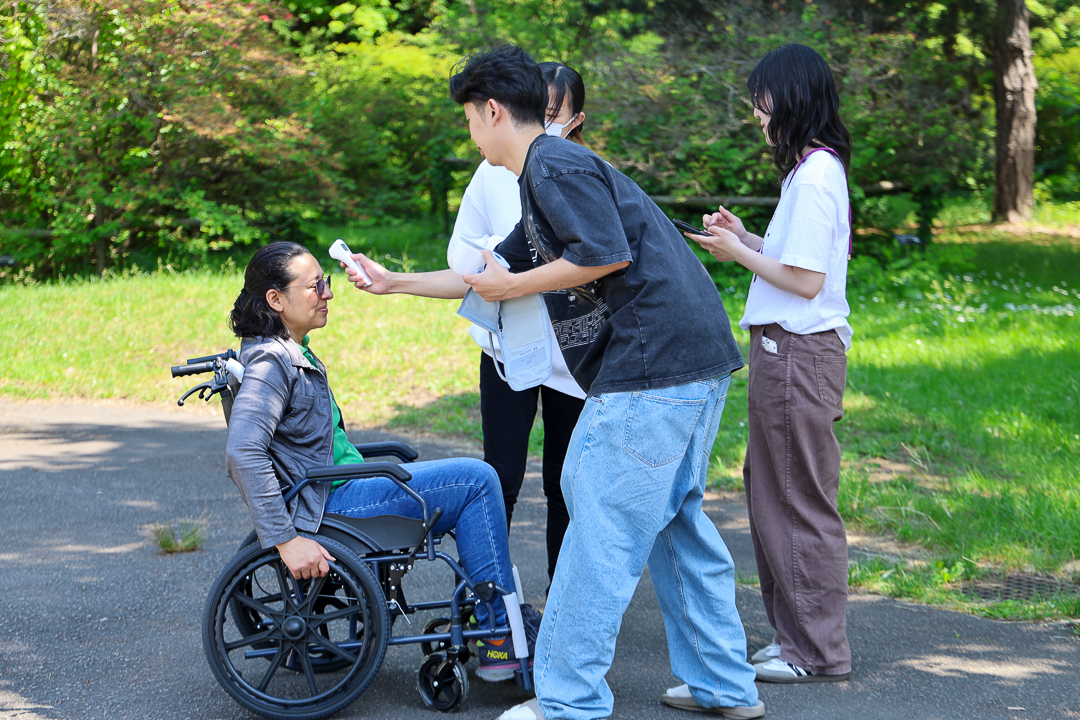
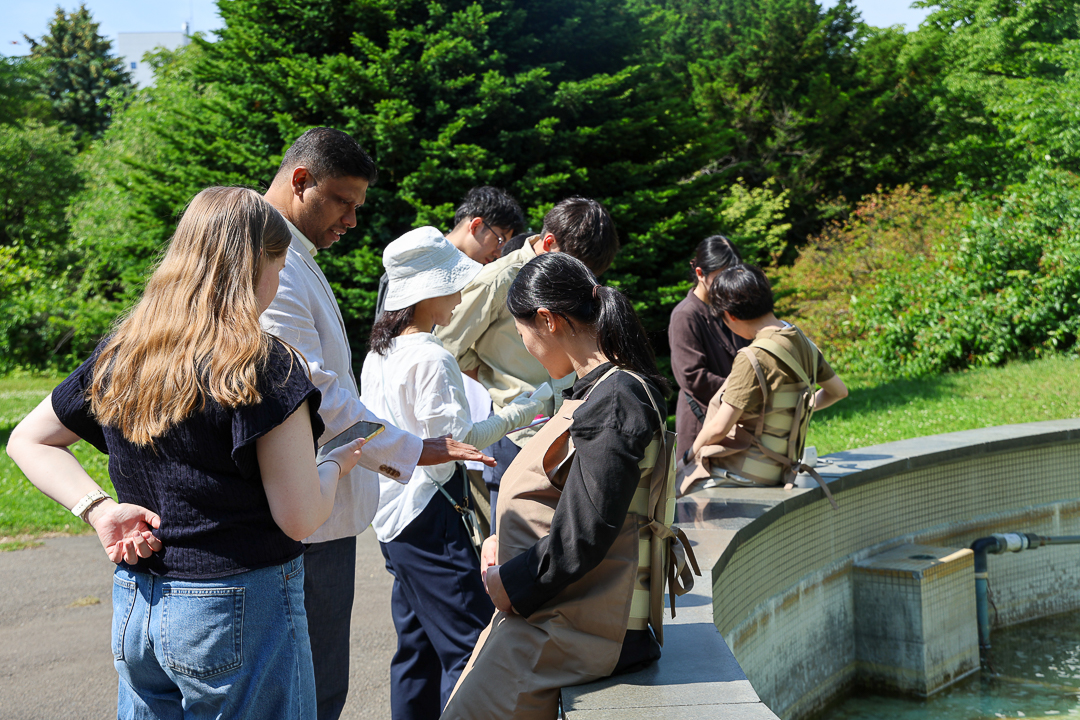
Students observing changes in physical responses with the guidance of Assistant Professor Mahapatra

Through these activities, students observed how ordinary spaces can become difficult to navigate under temporary physical or sensory constraints. Going up and down stairs, using ramps, opening doors, moving across uneven surfaces, and locating signs all became important points of observation. This encouraged them to think carefully about how public spaces are used by people with different bodies, abilities, and needs.
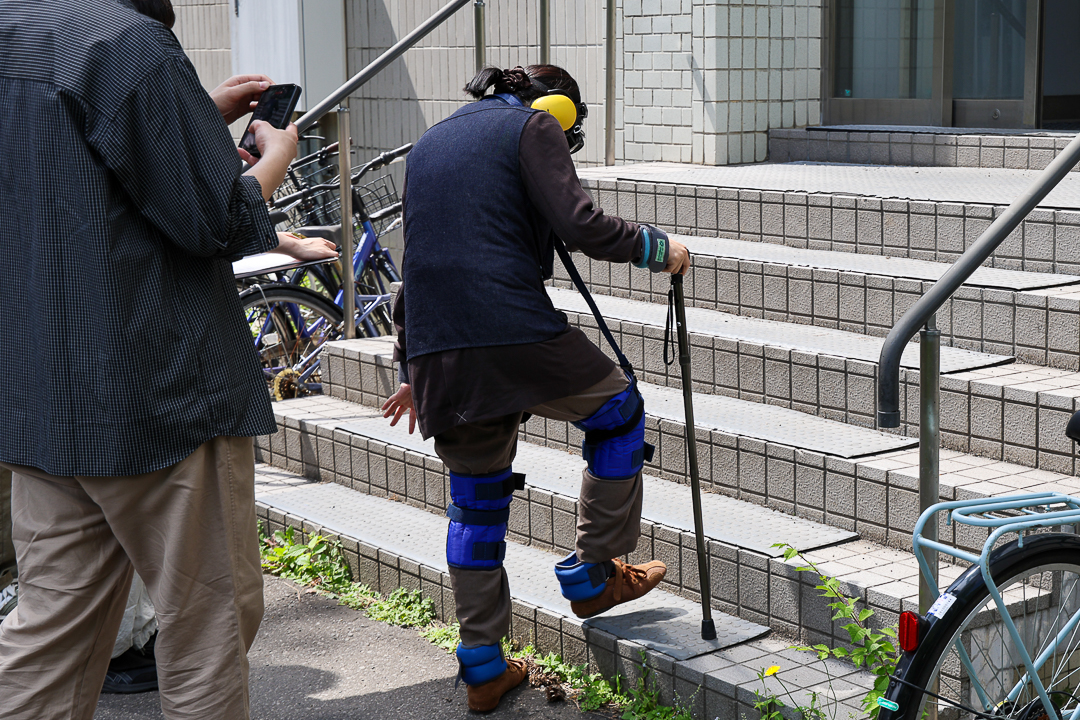
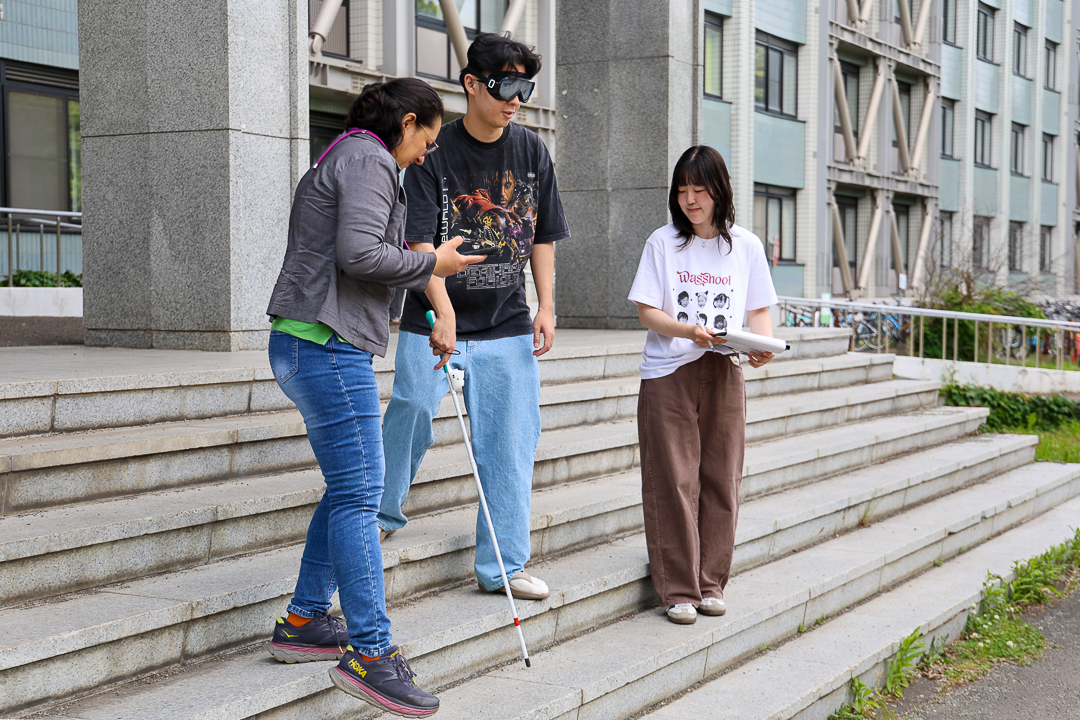
Going up and down stairs becomes one of the important observation points for students

Turning Observations into Design Proposal

On the final day, students presented their findings and proposed solutions in groups. Based on their observations from activities involving maternity suits, elderly simulation equipment, wheelchairs, and smart canes, they identified challenges such as limited visibility, uneven pavement, and obstacles along pathways.

Their proposals included adding resting areas and handrails, improving ramp design, organizing bicycle parking areas, and installing more tactile paving. During the discussion, the lecturers encouraged students to think beyond simply removing obstacles and to consider how different users interact with space in different ways.
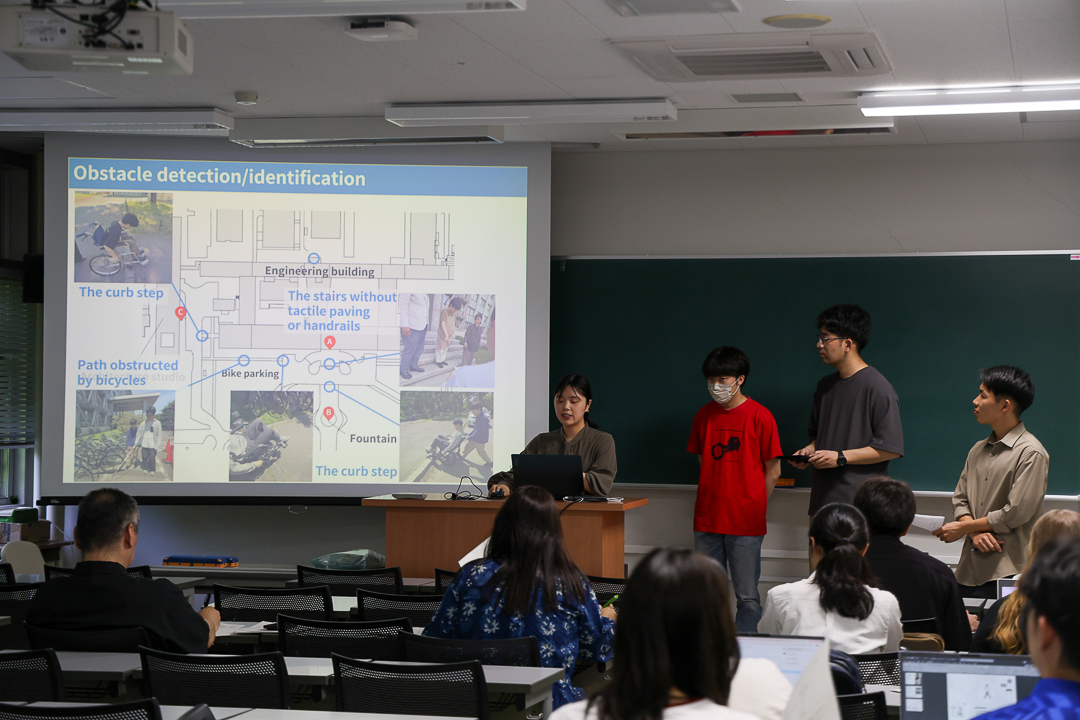
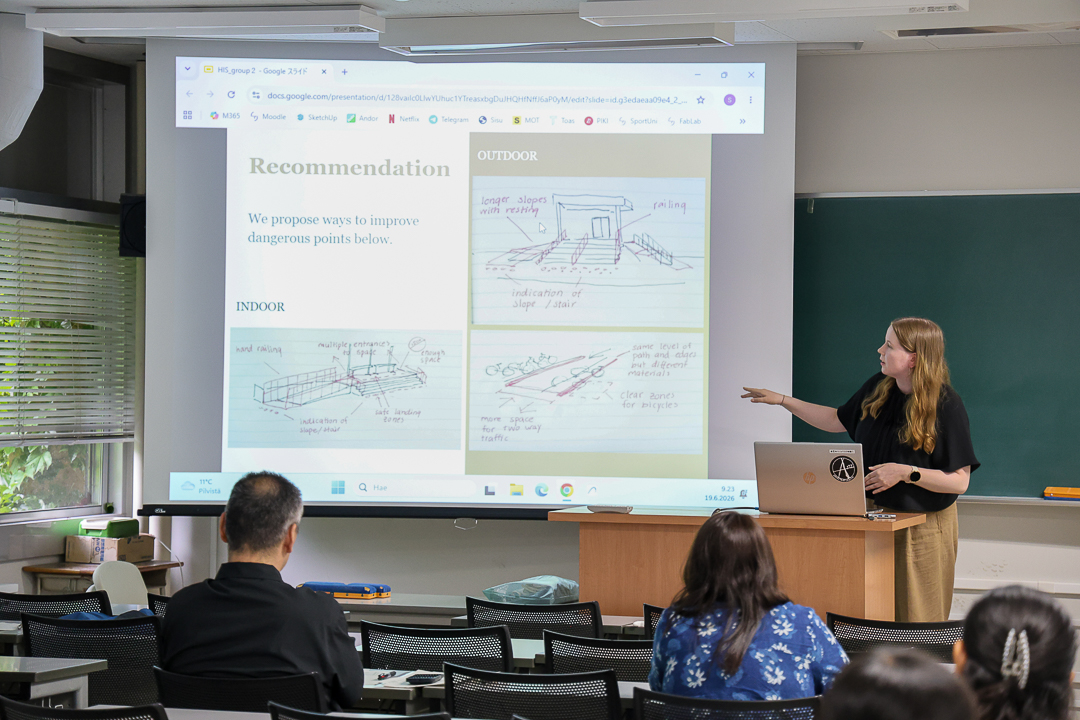
Students presenting their findings and proposed solutions

Designing for Everyone

Through this course, students learned that accessibility is not only about adding special features after a space has already been designed. Rather, it begins with understanding the diverse experiences of users from the earliest stages of design.

In his closing remarks, Professor Mori encouraged students to continue thinking about people with disabilities and the environmental barriers they may encounter beyond the course. The message reflected the broader aim of the program: to help future designers, researchers, and professionals create environments that are easier, safer, and more welcoming for everyone.
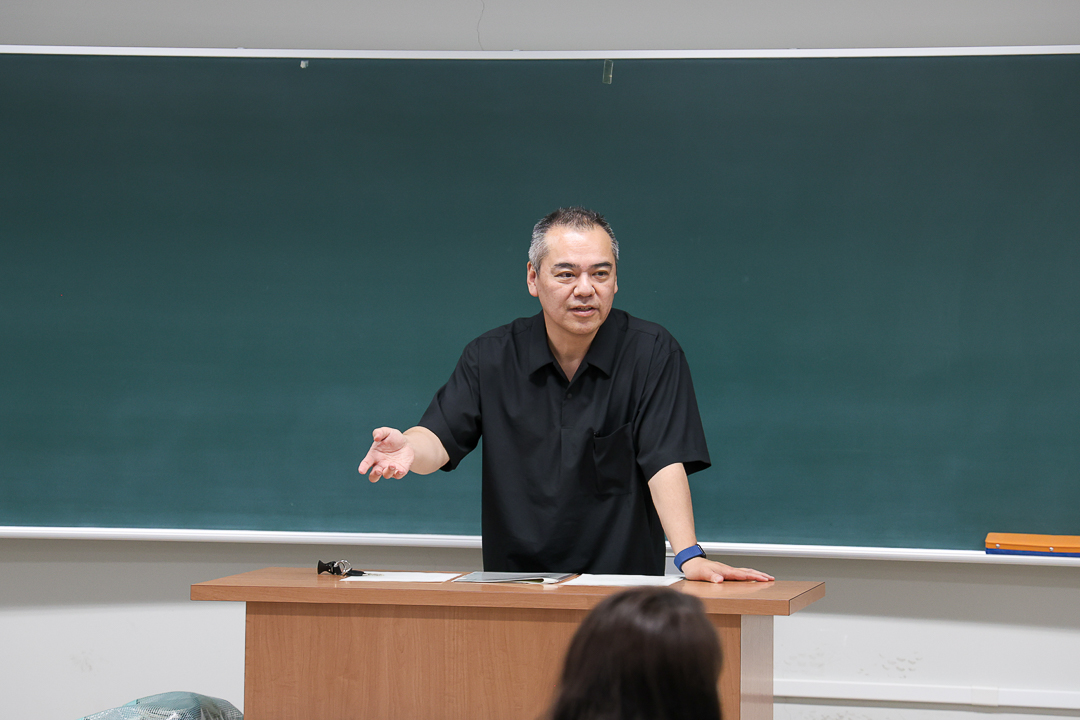
Professor Suguru Mori giving his closing remarks
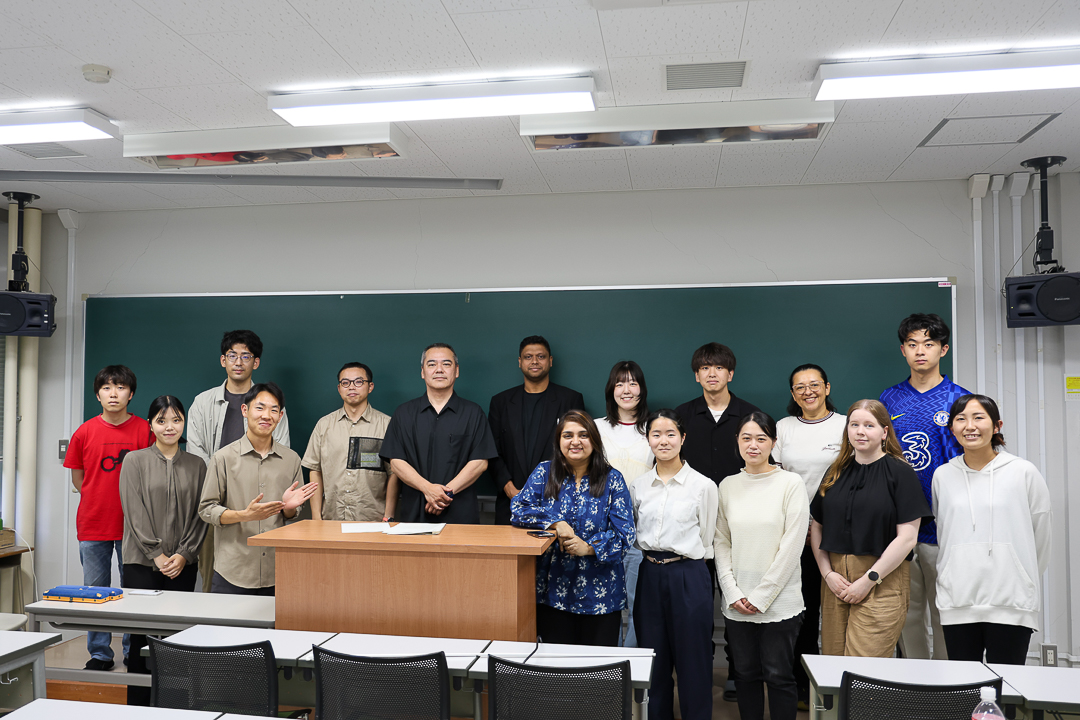
Lecturers and students of the Universal Design for Public Spaces course

HSI 2026 is currently underway and will continue until October 2026.
To learn more, visit the HSI website: https://hokkaidosummerinstitute.oia.hokudai.ac.jp

Share
  • Facebook
  • X
  • Linkedin
  • Bluesky
  • Threads
View all articles

Related

    • Campus
    HSI Report: Designing Public Spaces for Everyone
    Aug 05, 2026
    • Campus
    HSI Report: Exploring Sustainability Through Wine and Forests
    Jul 07, 2026
    • Campus
    Hokkaido University Holds 2026 Entrance Ceremony at ES CON FIELD HOKKAIDO
    Apr 10, 2026
Hokkaido University
Kita 8, Nishi 5, Kita-ku,
Sapporo, Hokkaido,
060-0808 Japan
+81-11-716-2111
  • Contact Us
  • Sapporo Campus Map
  • Hakodate Campus Map
  • Jobs
  • Give
  • Site Policy
  • Privacy Policy
  • Codes of Conduct
  • The Japan Association of National Universities

Hokkaido University